Languages
Sunday, November 22, 2026



News and Views from the Global South
Latin America & the Caribbean

Guatemalan Communities Have No Say in Exploitation of Resources
"People haven’t been coming in for the past month or so because they are afraid again, like during war-time," complained Juan Gaspar, a shopkeeper in the northwestern Guatemalan town of Santa Cruz Barillas, where a fierce battle is raging between locals opposed to a hydropower dam and the security forces.
Q&A: No Single Country Can Forecast Climate Change Alone
Cuban climate change scientists have been sharing their research findings and experience over the past few years with the rest of the Caribbean islands, using PRECIS, a regional climate modelling system, to help design adaptation policies.Prisoners’ Rights Still Absent in Argentina under Democracy
Nearly 29 years after the demise of the 1976-1983 dictatorship in Argentina, successive democratic governments have failed to find a humane way of running the prison system. Preventable deaths, torture and appalling conditions for inmates continue to be reported.
Funding Dries Up Even as Rains Worsen Cholera Deaths
As predicted, the beginning of the rainy season in Haiti brought exponential increases in the numbers of people sickened and killed by cholera.Buenos Aires Offers Same-Sex Marriage to Foreign Couples
Foreign non-residents, gay or straight, can now get married in the Argentine capital, thanks to a resolution that removed bureaucratic obstacles and streamlined the procedure.
Q&A: How Sex Education Programs Can Shape a Better Future
In Latin American countries and in the Caribbean, where income disparities are among the greatest in the world, too many people often lack access to comprehensive health services and information needed to live healthy lives.
Brazil Drives Energy Integration in South America
Energy integration in South America will be a reality "in the medium to long term," driven by hydropower and drawing on Brazil’s experience, predicts Altino Ventura Filho, secretary of planning in this country’s Ministry of Mines and Energy.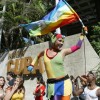
Cuban Activists Defend Sexual Rights as Human Rights
The Fifth Cuban Day Against Homophobia focused on recognising and including sexual rights as human rights, a cause increasingly advocated by activists demanding respect for sexual diversity in this Caribbean island nation.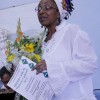
Breaking the Silence on Racism in Cuba
Gloria Rolando has been revealing hidden chapters of Cuban history since the 2010 premiere of the first part of her documentary series "1912: Breaking the Silence," about the virtually unknown story about the only legal political party to promote racial equality in this country.
Protection for Salvadoran Migrants En Route to U.S.
A law to protect Salvadoran migrants, who are frequently victims of attacks and abuses on their way to the United States, is nearing entry into force after having been approved over a year ago. All that remains is for a body made up of civil society organisations to be created to implement it.Murder of Prominent Honduran Journalist “Sends a Terrible Message”
A few short hours after Honduran President Porfirio Lobo said he had seen evidence that Alfredo Villatoro, a radio reporter kidnapped May 9, was alive, the journalist’s body was found in a residential neighbourhood on the south side of the capital.
COLOMBIA-U.S.: Trade Deal “Throws Country into Jaws of Multinationals,” Critics Say
The entry into force of Colombia’s free trade agreement with the United States was met by student protests and opposition from a segment of the business community, small farmers, and trade unionists.
Colombian River Basin Passes the Test of El Niño and La Niña
Patricia Gómez, an engineer, is leading a training workshop for a group of 11 men at the fire station in Neiva, the capital of the department of Huila in southwest Colombia.
Post-Quake Haiti Severely Dependent on Private Sector
More than two years after the January 2010 earthquake in Haiti, NGOs and private contractors are continuing to provide 80 percent of the country's social services.
Brazilian Government Sets Guidelines for Success at Rio+20
As the host of Rio+20, the Brazilian government has defined guidelines for achieving success at the upcoming world summit, whose aim is to assess and strengthen what has been done since the 1992 Earth Summit, the first global meeting on sustainable development.
No Celebration for Mothers of the Missing in Mexico
Emma Veleta and Toribio Muñoz were married 40 years ago and had seven children, four boys and three girls. They lived in the town of Anáhuac, 100 km from the capital of the northern Mexican state of Chihuahua. But on Jun. 19, 2011, as they were celebrating Father’s Day, tragedy struck.Obama’s Gay Marriage Endorsement Makes Waves in the Caribbean
It is a widely recognised cliché that when the United States sneezes, the Caribbean catches cold.
Argentina Faces the Dilemma of Unconventional Oil and Gas
Vast reserves of natural gas and oil trapped underground, whose exploitation would signify major environmental impacts, will be the greatest challenge facing YPF, the Argentine oil company that recently returned to state control.
Guatemalan Coffee Growers Get Creative
Overwhelmed by climate change, worried about speculation in international prices and still hurting from the effects of the crisis in 2000, coffee growers in Guatemala are trying in various ways to recover the production levels they achieved 12 years ago.
Native People of El Salvador Finally Gain Recognition
After decades of struggle, indigenous people in El Salvador will finally be recognised in the constitution – a first step towards recovering their community identity, which they have been denied by the state and by society at large.
Haiti Ratifies Business-Oriented Prime Minister
Almost three months after the seat was left vacant when the former prime minister resigned due to disagreements and political wrangling with the president, as of Monday, Haiti finally has a new prime minister.« Previous Page — Next Page »


The Week with IPS

NEXT STOP - SDGs
Tracking global progress towards a sustainable world
Tracking global progress towards a sustainable world

