Languages
Monday, October 19, 2026



News and Views from the Global South
Amnesty International
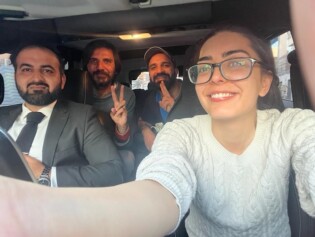
100 Days, No Outcry – The Cost of Speaking Out
“We’ve abandoned this couple completely; we have not done even 1% of what they did for us all these years!” said journalist Asad Ali Toor.
Civil Society Launch a Campaign Against Extractive Industry Exploitation and Land Grabs
Over 800 households in Ikolomani Constituency in Kakamega County, Western Kenya, fear eviction to pave the way for a British firm, Shanta Gold Limited, to begin extracting gold valued at Sh683 billion ($5.29 billion) on an estimated 337 acres of residential and agricultural land.
Venezuela Drafts Legal Stranglehold on NGOs
The Venezuelan parliament, in the hands of the ruling party, is moving towards passing a law to control non-governmental organizations (NGOs) so that, in practice, they could not exist independently.
Mozambique Reels from Repeated Attacks on Press Freedom
While Mozambique was recently rattled by an arson attack on a local media organisation, experts say that it’s only a part of a worrying pattern of continuous attacks on the media in the country.

The Sahel – ‘in Every Sense of the Word a Crisis’
The combination of rife insecurity, food insecurity and more than 7.5 million people in need of humanitarian assistance has left the Sahel a region in crisis, with the global coronavirus pandemic expected to exacerbate the situation.
Press Freedom Under COVID-19 Lockdown in Asia
Governments have made the media “a scapegoat” across Asia, targeting journalists who are simply reporting on the failures or shortcomings of their leadership during the coronavirus pandemic, press freedom experts have warned.

Slums, Camps, Terrorism: Experts Worry about Coronavirus Hitting South Asia
As coronavirus makes its way through different continents, countries, and communities around the world having claimed more than 23,000 lives, experts are ringing alarm bells about the implications of the disease as it hits South Asia, which hosts almost 2 billion of the world’s population.
Tanzania Investigative Journalist Pays Heavily for Freedom
After six months in prison, Tanzanian investigative journalist Erick Kabendera has finally been released at a cost of $118,000.
U.N. Group Launched to put Afghan Women at Centre of Peace Initiatives
Afghanistan’s first female ambassador to the United Nations this week launched a U.N. group that aims to put women at the centre of peace initiatives in Afghanistan.
South Sudan’s Authorities Allow Serious Human Rights Abuses to Flourish and go Unpunished – Report

Human rights movement Amnesty International has accused South Sudanese authorities for lack of independence as they have allowed allowing human rights abuses, war crimes and crimes against humanity to go unpunished.

The UN Has Failed Civilians
Despite the United Nations Security Council’s task of protecting civilians, millions around the world are still being displaced and killed with little to no accountability for perpetrators.
People Do Not “Deserve to Die”: Injustice of Death Penalty Persists
While figures have dropped, the “inhuman” use of the death penalty still remains too common worldwide, a human rights group said.
“A Year of Shame” for Middle East and North Africa
Human rights violations are at an all-time high in the Middle East and North Africa, and global indifference is only making it worse.
Women’s Resistance, Inequality Marks 2018
Despite the rise in women’s resistance, women’s rights continue to be sidelined and increasingly face blatant attacks, Amnesty International said.
Sudan’s Journalists Face Continued Extortion and Censorship by National Security Agency
The day before Amnesty International released a statement calling on the government of Sudan to end harassment, intimidation and censorship of journalists following the arrests of at least 15 journalists since the beginning of the year, the head of the National Intelligence Security Services (NISS) Salah Goush accused Sudanese journalists, who recently met with western diplomats, of being spies.
“Our Choices Matter More Than Ever Before” To Limit Climate Change
The release of a groundbreaking report has left the international community reeling over very real, intensified impacts of climate change which will hit home sooner rather than later. So what now?
U.N. General Assembly Kicks Off With Strong Words and Ambitious Goals
In honour of Nobel Peace Laureate Nelson Mandela’s legacy, nations from around the world convened to adopt a declaration recommitting to goals of building a just, peaceful, and fair world.
Q&A: A New Leader with a Vision to Redefine Human Rights
The human rights movement must be bigger, bolder, and more inclusive if we are to tackle today’s challenges, said Amnesty International’s first South African Secretary General.
Campaigns Promote Women’s Participation in Latin America
An alternative network in Brazil promotes women's participation in elected offices with media support. This campaign, like others in Latin America, seeks to reverse a political landscape where, despite being a majority of the population, women hold an average of just 29.8 percent of legislative posts.
Separated Central American Families Suffer Abuse in the United States
After three hours of paperwork, Katy Rodriguez from El Salvador, who was deported from the United States, finally exited the government's immigration facilities together with her young son and embraced family members who were waiting outside.
Negotiations in Miami Must not Treat Central American Asylum Seekers as Bargaining Chips
Today in Miami, the governments of US and Mexico are putting aside their well-publicized tensions of recent months and co-hosting a conference on security and governance in Central America´s Northern Triangle of El Salvador, Guatemala and Honduras, from where thousands of people flee extreme violence to seek asylum in the US and Mexico.Next Page »





The Week with IPS

NEXT STOP - SDGs
Tracking global progress towards a sustainable world
Tracking global progress towards a sustainable world
