Languages
Monday, October 19, 2026



News and Views from the Global South
Fiji
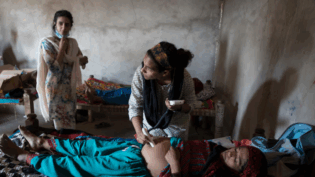
Climate Change Is Becoming a Pregnancy Hazard Worldwide, Survey Finds
Extreme heat is increasingly threatening pregnant women and newborn babies around the world, with almost all maternal health professionals surveyed across five continents saying they have cared for women or infants whose health was affected by high temperatures.
Beyond the Horizon: Raising a Generation to Protect the Blue Pacific
For generations, Pacific children have grown up with the ocean as part of everyday life. It is where families fish, where stories are passed down, where livelihoods begin and where cultures are rooted.
UN General Assembly Votes for Resolution on ICJ Advisory Ruling on Climate Obligations
Member states this week (May 20) deliberated over a draft resolution on states’ obligations in respect of climate change following the advisory opinion from the International Court of Justice (ICJ). The General Assembly agreed to take measures to uphold the ICJ’s advisory opinion for member states to meet their existing obligations to climate justice under international law and multilateral frameworks.
The GEF Leads Global Drive to Tackle Shipping Threat to Oceans
Under the warm waters off Tanzania’s Mafia Island, marine scientist Asha Mgeni hovers above a coral reef she has studied for years. Small fish dart through the currents. To most divers, the reef appears pristine. But Mgeni notices something unusual.
Snatching Victory From Jaws of Defeat Through Belém’s Mutirão Approach
Mutirão first entered the global climate discourse in Ambassador André Corrêa do Lago’s first letter to the world, which was sent in March 2025 as part of his COP30 presidency.
Tackling the Hidden Toll of Breast Cancer in the Pacific Islands
The burden of breast cancer, the most common cancer among women, is global, and the projected increase in cases in the coming decades will affect women in high- and low-income countries in every region.
Fiji’s Truth and Reconciliation Commission Aims To Restore Trust and Peace After Decades of Political Crises
Fiji, a nation located west of Tonga in the central Pacific, is renowned for its natural beauty and beach resorts. But for 38 years it has endured a political rollercoaster of instability with four armed coups that overturned democratically elected governments and eroded human rights.
States Individually Accountable For Contributions to Climate Change—Fiji
At The Hague, the United Nation’s highest court heard Fiji, a small island nation, lay out its arguments on the threat posed by climate change and the legal obligations, especially those of developed nations.
Nowhere to Hide from Climate Change
The water is nibbling away the beaches of Fiji. Not even the dead are allowed peace of mind. The graveyard of Togoru - a village on the largest island of Fiji - has been submerged. The waves are sloshing softly against the tilted tombstones covered with barnacles. The names have become illegible, erased by the sea.
Free Education Helps Combat Child Labour in Fiji
In the South Pacific nation of Fiji, free and compulsory education, introduced three years ago, in association with better awareness and child protection measures, is helping to reduce children’s vulnerability to harmful and hazardous forms of work.
President of UNGA Disillusioned by Unsustainable Development
Development should be about more than building roads or buying air conditioners, the President of the UN General Assembly, Peter Thomson told IPS in a recent interview.
Honour Our Right to Exist, Say Pacific Island Leaders at COP21
On World Human Rights Day (December 10) at the UN climate conference in Paris, small island nations from the Pacific made a passionate call to the world leaders: stop climate change and honour our right to exist on the earth.
Falling Oil Prices Trigger Initial Economic Gains for Pacific Islanders
The recent dramatic fall in world oil prices, with Brent crude plummeting from a high of 115 dollars per barrel in June last year to around 47 dollars in January 2015, is beginning to benefit Pacific Islanders who are seeing lower prices for fuel and energy.
For Women in Asia, ‘Home’ Is a Battleground
Nearly half of the four billion people who reside in the Asia-Pacific region are women. They comprise two-thirds of the region’s poor, with millions either confined to their homes or pushed into the informal labour market where they work without any safeguards for paltry daily wages. Millions more become victims of trafficking and are forced into prostitution or sexual slavery.
Diabetes Epidemic Threatens Development Gains in Pacific Islands
The rapid rise of non-communicable diseases (NCDs) in the Pacific Islands, which now cause 75 percent of all deaths, is one of the greatest impediments to post-2015 development, health ministers in the region claim.
When Ignorance Is Deadly: Pacific Women Dying From Lack of Breast Cancer Awareness
Women now face a better chance of surviving breast cancer in the Solomon Islands, a developing island state in the southwest Pacific Ocean, following the recent acquisition of the country’s first mammogram machine.
Struggling to Find Water in the Vast Pacific
Pacific Island states are surrounded by the largest ocean in the world, but inadequate fresh water sources, poor infrastructure and climate change are leaving some communities without enough water to meet basic needs.
Youth Suicides Sound Alarm Across the Pacific
Suicide rates in the Pacific Islands are some of the highest in the world and have reached up to 30 per 100,000 in countries such as Samoa, Guam and Micronesia, double the global average, with youth rates even higher.
Putting Population Management in Pacific Women’s Hands
Populations of many Melanesian countries in the southwest Pacific Islands region are expected to double in a generation, threatening regional and national efforts to improve low economic and human development indicators.
Kiribati President Purchases ‘Worthless’ Resettlement Land as Precaution Against Rising Sea
You can count the inhabitants of this isolated, tidy village of multi-coloured houses and flower bushes among global warming’s first victims – but not in the usual sense.
Fiji Leads Pacific Region on Climate Adaptation Efforts
Still a long way off in many parts of the world, climate displacement is already a reality in the Pacific Islands, where rising seas are contaminating fresh water and agricultural land, and rendering some coastal areas uninhabitable.Next Page »





The Week with IPS

NEXT STOP - SDGs
Tracking global progress towards a sustainable world
Tracking global progress towards a sustainable world
