Languages
Tuesday, November 10, 2026



News and Views from the Global South
IPS UN Bureau Report

Russian Invasion Blamed for 44 Million People Marching Towards Hunger & Starvation
The Russian invasion of Ukraine last February has triggered multiple crises in several fronts: the deaths of thousands of civilians, the destruction of heavily populated cities, the rise in military spending in Europe, a projected decline in development assistance to the world’s poorer nations; the demolition of schools and health-care facilities — and now the threat of hunger and starvation.
Pakistan’s Campaign to Contain Polio in Face of Vaccine Hesitancy
Pakistan's North Waziristan district authorities have launched an aggressive vaccination drive after a polio case surfaced after 15 polio-free months in the country. The disease was detected in a 15-month-old toddler about 15 kilometers away from the Afghanistan border. This area was considered a Taliban militant’s hub until 2014.
Women Leading Humanitarian Efforts in Ukraine, Now Include them in Leadership, say UN Women and CARE
A joint UN Women and CARE report on the gender disparities in the wake of the Ukrainian crisis calls for donors and humanitarian partners to take greater care to promote the voices of women and marginalized communities in the humanitarian effort.
Those Who Dare: Voices of Women in the MENA Region
 When it comes to gender equality and development, the Middle East, North Africa (MENA) and the Arab States region continues to be in a paradoxical situation. While within the region, several laws, policies and programming focused on gender equality are growing, women’s representation in government jobs, corporate roles, and national programming seem to be dismissed. Healthcare, education have seen improvement, most countries have become tech inclusive as well, but access to hospitals and educational institutions –at times due to social programming or gender-related policies continues to prevent women from accessing them and using them.
Ghana’s Human Trafficking Scourge
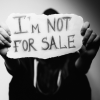
“It feels like yesterday when I was deceived by one man who claimed to be a travelling agent. He promised me a work opportunity and a good salary,” says 25-year-old Cissy, as she prefers to be called. “As a young lady coming from an average family who really needed help, I fell for his lies.”
Zimbabwe’s Press Freedom, One Step Forward, Three Steps Backward
For international journalist Jeffery Moyo, doing his job could land him in prison if Zimbabwe authorities have their way. “Journalism is a crime in Zimbabwe, and the regime is reactive to independent journalism,” says Moyo, an international correspondent for the New York Times and the Inter Press Service (IPS).[related_articles]
Give Edible Insects a Chance as an Alternative High-Quality Protein Source, say Scientists
Growing up in Samoya Village of Bungoma County in the Western part of Kenya, Elvis Wanjala has fond childhood memories of the rainy season, chasing and catching black-bellied winged termites in the rain.
Breaking Menstruation Taboos and Leaving No Girl Behind
Fourteen-year-old Hadiza smiles as she clutches a purple bag in her hands. Inside the cloth bag is a Menstrual Hygiene Management kit, an essential item that gives her dignity and enables her to continue with school even when menstruating.
UN Continues Financial Ties with a Vilified Russia Isolated by the International Community
The Russian Federation, which invaded Ukraine last February killing scores of civilians and destroying entire cities, has been condemned, vilified and ostracized by the international community. UN Secretary-General Antonio Guterres was emphatic last month when he remarked: “The use of force by one country against another is the repudiation of the principles that every country has committed to uphold. This applies to the present military offensive. It is wrong. It is against the Charter. It is unacceptable”.
Pacific Community-Led Health Missions Arrive with Critical Support to Tonga and Kiribati Grappling with COVID-19 Surges
Before the pandemic emerged in 2020, health services in many Pacific Island countries were under-resourced, under-funded and under-staffed. Now following recent outbreaks of COVID-19, advancing the capacity and development of health and medical services in vulnerable nations, such as Tonga and Kiribati, is increasingly urgent.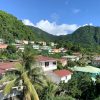
English and Dutch Caribbean Rally Around UN Sustainable Development Framework
When Dominica signed on to the United Nations Multicountry Sustainable Development Framework for the English and Dutch Speaking Caribbean (MSDCF) in March, the country joined others like Saint Lucia, St. Vincent, and the Grenadines, Suriname, and Aruba as part of a 5-year framework to plan and implement UN development initiatives.
Breaking Vicious Cycle of Trafficking for Sexual Exploitation
Desperate to escape the rural area where she was engaged in the informal economy in Kayonza, a district in Eastern Rwanda, Sharon* made a long and arduous journey to Kenya in the hope of a well-paid job.
With Violence on the Rise, Asian Americans Establish Support Groups for Help
Dr Boyung Lee, a widow and the Senior Vice President for Academic Affairs and Dean of the Faculty at Iliff School of Theology, would use a short break in her working day to walk around her neighborhood. The fresh air helped her deal with her grief and work-related stress.
Landmark UN Report Issues Stark call for Sustainable Land Management to Save Human Health
With 50% of humanity affected by land degradation, the world must move to a ‘crisis footing’ to conserve, restore and use land resources sustainably, a major UN report has said.
Poor Water Distribution Infrastructure Gives Jamaica a ‘Water Scarce’ Label
It will take billions of dollars and many years to fix a growing problem that has placed Jamaica into the unlikely bracket of being among the world's most water-scarce countries due to the unavailability of potable water.
Transgender Ukrainian Refugees Impacted as War with Russia Continues
Soon after Russia invaded her country, Anastasiia Yeva Domani found herself forced to abandon the regime of vital medicines she was taking. The transgender activist could no longer get hold of the hormone medicines she needed to regularly take in Ukraine as supply chains were disrupted and the vast majority of pharmacies were closed.
A Move to Undermine the Anachronistic Veto Powers in the Security Council Gains Traction
The five permanent members (P5) of the UN Security Council (UNSC) – UK, US, France, China and Russia – have exercised their veto powers primarily to protect their own national interests or the interests of their close political and military allies.
Road to European Dream Paved by Extortion and Exploitation
Last June, Mit Al Korama's youth gathered in front of one of their homes on a summer evening to tell stories of citizens from the village and neighboring villages who had successfully crossed the Mediterranean to Europe.
Kenyan Community Project Saving Forests, Saving Livelihoods
Despite an abundance of fisheries reserves along Kwale County’s lush coastline located on the south coast of Kenya, fishers can no longer cast a net just past the coral reef and expect an abundant crab or prawn harvest.
Migrants and Health Workers Play Complex ‘Game’ on Europe’s Fringes
Responding to several shouts Viraj emerges from the ruins of his shelter in northwest Bosnia. He is originally from India but is now squatting near Bihać in what remains of a house abandoned since the 1990s Balkans war.
Commonwealth Climate Finance Hub to Boost Belize’s Delivery of Climate Change Projects
In September 2020, at the height of the COVID-19 pandemic, the UK-based Commonwealth Secretariat announced that it had dispatched highly skilled climate finance advisors to four member nations to help them navigate the often-complicated process of accessing climate funds. Belize, the Caribbean Community’s (CARICOM) only Central American member, was one of the recipients.« Previous Page — Next Page »





The Week with IPS

NEXT STOP - SDGs
Tracking global progress towards a sustainable world
Tracking global progress towards a sustainable world
