Languages
Saturday, November 7, 2026



News and Views from the Global South
Millennium Development Goals (MDGs)
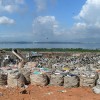
Brazil Closes Symbol of Environmental Degradation, Ahead of Rio+20
As Rio de Janeiro prepares to host the United Nations Conference on Sustainable Development, which will discuss the green economy, the Brazilian city has put an end to one of its worst environmental sins: the enormous Jardim Gramacho garbage dump on Guanabara Bay.
“Land Is Our Ally, But Its Patience Is Not Eternal”
Land degradation poses a threat to all life on Earth including humanity. To stop the enormous loss of life-giving land, the United Nations Convention to Combat Desertification (UNCCD) is pushing for a sustainable development goal of Zero Net Land Degradation (ZNLD) to be adopted at the upcoming Conference on Sustainable Development, known as Rio+20, in Brazil.
Urban Settlers Battle Evictions
Informal settlers on prime land in Papua New Guinea’s capital, Port Moresby, are now living under tarpaulin shelters amid the debris of their homes after two attempted evictions to make way for a luxury waterfront development. Undefeated, residents are now preparing a court case to challenge the legality of a lease issued to a commercial developer on land designated as a National Park.
Bangladesh Braces for HIV Epidemic
Bangladesh has shown low HIV prevalence rates so far but may be silently moving towards an epidemic, say experts pointing to underreporting and poor monitoring for the virus in the general population.
RIO+20: Canada, Last Holdout, Drops Opposition to Water as Human Right
Canada, in a dramatic political turnaround, has signaled its willingness to recognise water and sanitation as a basic human right.
After War, Economic Crisis Hits South Sudan
The United Nations has warned that despite the austerity measures put in place by South Sudan to deal with its economic woes, humanitarian agencies will have to increase relief efforts in order to keep the country’s poor alive as the financial situation worsens.

Q&A: The World Must Learn From Smallholder Farmers
As Africa's Sahel region faces a new food crisis, smallholder famers hold the key to making future development policies sustainable.
A Future With Food, or No Future At All
The upcoming Rio+20 Conference on Sustainable Development will not succeed if the crises of hunger and malnutrition are not effectively addressed. The issues are so inextricably linked with sustainable development that they have to be part of the agenda, according to a report released Wednesday by the United Nations Food and Agricultural Organisation (FAO) for the upcoming Earth Summit that will take place in Rio de Janeiro from Jun. 20-22.
Climate Change and Family Planning – Twin Issues for LDCs
The reproductive rights agenda, from improving women’s access to education to systematic family planning to reducing birth rates and combating poverty, has become a cornerstone of most industrialised nations’ development policies toward the least developed countries (LDCs), comprised primarily of sub-Saharan African states.
Q&A: North-South Divide Looms Heavily Over Rio+20 Summit
The 1992 Earth Summit in Rio de Janeiro was to a large extent derailed by a North-South divide: a battle between a coalition of rich industrial nations versus the world's developing countries led by the Group of 77.
Rio+20 is Everyone’s Conference
The United Nations Conference on Sustainable Development, otherwise known as Rio+20, is a once-in-a-generation opportunity.
Paprika – Spicing Up Malawi’s Economy
As she sits down to watch the 8pm news on TV, Mercy Kamphoni from Chamtulo Village in Malawi’s Mangochi lake district looks elated. She still cannot believe that she is the new proud owner of a television set, refrigerator and radio.Native Canadians See Way of Life Under Assault
Canada's West Coast First Nations are feeling overwhelmed by crises affecting their land rights, economic well-being and health, prompting warnings in one territorial dispute with a local energy company that the country risks a degeneration of Aboriginal-federal government relations to a level unseen in two decades.
Mauritius considers new abortion laws
 Mauritius has wants to allow abortion, but the Bill before Parliament specifies when this will be legal. Nasseem Ackbarally says arguments for and against the practice are taking centre stage in the island nation.
Audio Slide Show
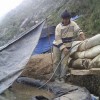
Runaway Gold Prices Spark Major Headaches for Guyana
Fabian George drank and generally used water from jungle rivers near his mountainside home for decades until world market prices for gold began climbing in recent years.
Rural Women in Peru Key to Adaptation of Seeds to Climate Change
For ages, rural women in the Peruvian highlands have been selecting and storing seeds, ensuring their preservation. But the authorities have failed to tap into this storehouse of knowledge and experience, despite the contributions it could make to the design of effective policies for adaptation to climate change, which poses a growing threat to the women’s livelihoods.ARGENTINA How to Sustain Highest Pension Coverage in Region
The Argentine pension system, renationalised in 2008, now covers more than 90 percent of people of retirement age, the highest coverage in Latin America. But analysts are concerned about its sustainability.HIV-Positive Women in Argentina Mainly Infected by Stable Partners
The immense majority of women diagnosed with HIV in Argentina in the last two years were infected through unprotected sex with their stable partners, a new report says.
Selling Ethanol Stoves in Mozambique to Generate Carbon Credits
Along a dirt road in Mozambique’s Sofala province, a long line of men on bicycles stretches into the distance, each carrying an impossibly big bag of charcoal strapped to his bike.
MALI: Food Aid Taking Too Long to Reach Needy
Her neat, bright yellow headscarf matches the rest of her outfit, but contrasts with her weary expression. Sokona Soumounou sits a little apart from the crowd queueing for assistance from the World Food Programme in the southern Mali town of Ségou.
Conference Reaffirms Reproductive Rights
While much of the world is facing a global financial crisis, made worse by government cuts in social spending, members of parliament meeting here Wednesday agreed the economic crunch is no reason for governments to relax their commitment to women’s reproductive rights and health, made 18 years ago.« Previous Page — Next Page »





The Week with IPS

NEXT STOP - SDGs
Tracking global progress towards a sustainable world
Tracking global progress towards a sustainable world
