Languages
Saturday, November 7, 2026



News and Views from the Global South
Millennium Development Goals (MDGs)

Will Water Dry Up at Summit on Sustainable Development?
The headline in a New York newspaper last March captured the essence of a future potential threat to political stability the world over: "U.S. Report Sees Tensions Over Water."
Agriculture Key to Liberia’s Youth Unemployment Challenge
With his gold chain, baseball cap, and baggy denim shorts, Junior Toe wears the uniform of Liberia’s urban youth. Spend just a few minutes with the young man and it is evident that he possesses the street smarts to match the look.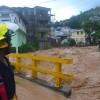
How Would You Measure Success at the Rio Summit?
When the heavily hyped three-day U.N. Conference on Sustainable Development (UNCSD) comes to a close in Rio de Janeiro Jun. 22, what would be the yardstick to measure its successes and failures?
Establishing Environmental Flows in the Zambezi
When Jose Chiburre was a boy growing up in Mozambique, he would often challenge his friends to a swim across the Incomati River. That was in the 1970s, when the river was 300 metres wide in the dry season: today, the race would be over before it begins.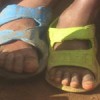
Women and children need climate change education
 70% of smallholder farmers in sub-Saharan Africa are women. Many of these are semi-illiterate, yet they are the most affected by changes in climate.
New World Bank Environment Strategy Boosts Private Sector Role
The World Bank this week released its new environment strategy for the next decade, 2012 through 2022, saying the policy framework was crafted in response to "calls from governments and the private sector for new approaches to development in light of unprecedented environmental challenges".
Water Knows No Border Between Angola and Namibia
A transboundary initiative aimed at providing clean drinking water and proper sanitation between Angola and Namibia is making steady progress.
Calls for an African Green Revolution, Only Smarter
To deal with looming food crises in the coming decades, Africa needs a Green Revolution on par with what took place in Asia during the 1960s and 1970s, according to experts in Washington.
Rural Zambia’s Drinking Supply Fraught with Danger and Disease
Bupe Bana-Victor has lived in the Mwense district of Luapula Province in northern Zambia all her life. And for her, water talk is synonymous with the Luapula River, which lies just 20 metres from her village and snakes through the entire region before it joins the Lualaba River – a tributary of the mighty Congo, Africa’s second-largest river.
Women scientists must do more to succeed in Africa
Women in science face a difficult time getting recognition; they often have to put in more to get the same recognition as men.

RIO+20: A Stalemated U.N. in Do-or-Die Session on Action Plan
After weeklong negotiations, a meeting of the Preparatory Committee (PrepCom) to finalise a plan of action titled "The Future We Want" for next week's Rio+20 summit has failed to reach agreement - and deferred a decision to a final three-day session in Brazil.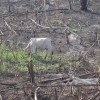
24 Policies to End the Earth Emergency
Ecologically ignorant policies are largely responsible for the interlinked crises that are unraveling the planet's life support system.
Samoan Breadfruit Makes a Splash in the Caribbean
Can a single species of tree significantly reduce hunger, unemployment and deforestation in the tropics? Researchers and scientists behind a surge in breadfruit activity think so.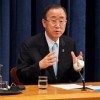
RIO+20: Earth Summit Negotiated the Size of the Zero
Amidst much political fanfare, the 1992 Earth Summit in Rio de Janeiro concluded with the adoption of the Rio Declaration on Environment and Development and the landmark Agenda 21 blueprint for a sustainable future in the 21st century.
Brazilian Street Stars Dance and Shine in Spain
Arrayed in colourful garments they have made themselves, six teenagers who used to be street kids in Fortaleza, in northeast Brazil, visited this southern Spanish city to recount their life experiences and awaken solidarity.
Family Planning and Subsistence Agriculture Key to Food Security
Papua New Guinea’s high fertility rate is exerting pressure on land and food production in a country where 80 percent of the population lives in rural communities. But the National Agricultural Research Institute (NARI) argues that traditions of subsistence agriculture provide a firm foundation to build food security for a growing population.
MDR TB on the rise in South Africa
Hospitals in South Africa are reporting increases in cases of multidrug-resistant – or MDR – tuberculosis.
Audio Slide Show
Six out of ten girls drop out of Benin school
Overcrowding and a lack of infrastructure is putting a strain on the Dangbo High School in Benin, but some 57% of female pupils drop out because of early sexual activities. Sipho Stuurman reports from the Bonou region.
Audio Slide Show 
Child Victims of Côte d’Ivoire’s Crisis Survive Off Trades
Twelve-year-old Ahmed* pauses on his crutches in the narrow lane that leads from his house to the main road, glancing at the bullet holes still visible on the walls here in the Abobo Park 18 area of Abidjan. He sighs, then speeds up again to catch the bus that will take him downtown to the Adjamé quarter.
Building a Company in Mozambique – One Peanut at a Time
When you board Mozambique’s national carrier, Linhas Aéreas de Moçambique, you will most likely be given small blue packets of peanuts to munch as the jet whisks you from the country’s capital, Maputo, to as far afield as Europe. Sugar, salt or chilli flavour. Take your pick.
Midwives Play Key Social Role in Guatemala
"Midwives in Guatemala attend to women during pregnancy, the birth and the post-partum period. They give the women warmth and support, because they speak the same language and belong to the same culture," said Silvia Xinico with the Network of Organisations of Indigenous Women for Reproductive Health.« Previous Page — Next Page »





The Week with IPS

NEXT STOP - SDGs
Tracking global progress towards a sustainable world
Tracking global progress towards a sustainable world
