Languages
Monday, September 21, 2026



News and Views from the Global South
Millennium Development Goals (MDGs)

Our Planet’s Future Is in the Hands of 58 People
In case you missed it, the Intergovernmental Panel on Climate Change (IPCC) released the third and final part of a report on Apr. 13 in which it says bluntly that we only have 15 years left to avoid exceeding the "safe" threshold of a 2°C increase in global temperatures, beyond which the consequences will be dramatic.
Sweet Dreams are Made of Rwandan Ice Cream
From all across Rwanda, and even from parts of neighbouring Burundi, people flock to the southern town of Butare to a little shop called Inzozi Nziza or Sweet Dreams. They come here for a taste of something of the unknown, something most have never tasted in their lives — the sweet, cold, velvety embrace of ice cream.
Biofortified Tortillas to Provide Micronutrients in Latin America
Latin America is one of the regions in the world suffering from “hidden hunger” - a chronic lack of the micronutrients needed to ward off problems like anaemia, blindness, impaired immune systems, and stunted growth.
Ending Modern Slavery Starts in the Boardroom
Modern-day slavery can be eradicated from multinational supply chains, but only if global businesses contribute to greater transparency and collaboration, according to new recommendations by Sedex Global and Verite.
OP-ED: Beyond the Street Protests: Youth, Women and Democracy in Latin America
Women’s empowerment and political participation are not only crucial for women: they are essential for effective democratic governance, one which promotes human rights and equity. The same can be said about the importance of boosting youth political participation.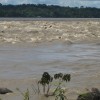
Deforestation in the Andes Triggers Amazon “Tsunami”
Deforestation, especially in the Andean highlands of Bolivia and Peru, was the main driver of this year’s disastrous flooding in the Madeira river watershed in Bolivia’s Amazon rainforest and the drainage basin across the border, in Brazil.
Q&A: Agriculture Needs a ‘New Revolution’
The Millennium Development Goals deadline of 2015 is fast approaching, but according to the International Fund for Agricultural Development (IFAD), poverty still afflicts one in seven people — and one in eight still goes to bed hungry.
CEOs at Big U.S. Companies Paid 331 Times Average Worker
In new data certain to fuel the growing public debate over economic inequality, a survey released Tuesday by the biggest U.S. trade-union federation found that the CEOs of top U.S. corporations were paid 331 times more money than the average U.S. worker in 2013.
Côte d’Ivoire’s Tech Solutions to Local Problems
When Ivorian Thierry N’Doufou saw local school kids suffering under the weight of their backpacks full of textbooks, it sparked an idea of how to close the digital gap where it is the largest — in local schoolrooms.
Is Puerto Rico Going the Way of Greece and Detroit?
Puerto Rican society has been shaken to its foundations by the announcement in February by Standard & Poor's and Moody's credit rating agencies that they had downgraded the island's creditworthiness to junk status.
Valparaíso Blaze Highlights the City’s Poverty
The blaze that tore through the Chilean port city of Valparaíso revealed the dark side of one of the most important tourist destinations in this South American country, which hides in its hills high levels of poverty and inequality.
Turtles Change Migration Routes Due to Climate Change
The critically endangered hawksbill sea turtle has few sanctuaries left in the world, and this is one of them. But in 2012 only 53 nests were counted on the beaches of this national park in Costa Rica. And there is an enemy that conservation efforts can’t fight: the beaches themselves are shrinking.
Emerging Nations Opt for Arms Spending Over Development
Secretary-General Ban Ki-moon, who has relentlessly advocated drastic cuts in global military spending in favour of sustainable development, will be sorely disappointed by the latest findings in a report released Monday by the Stockholm International Peace Research Institute (SIPRI).
Q&A: Malawi’s President Banda Confident ‘I Will Win this Election’
Malawi's President Joyce Banda is campaigning ahead of next month's elections to extend her term of office. But many believe that the massive public service corruption scandal here has weakened her chances of winning.
“Sanitation for All” a Rapidly Receding Goal
World leaders on Friday discussed plans to expand sustainable access for water, sanitation and hygiene, focusing in particular on how to reach those in remote rural areas and slums where development projects have been slow to penetrate.

Tajikistan’s Government Distances Itself from Labour Migrants
Labour migrants make up Tajikistan’s economic lifeline, but that’s a fact the Central Asian country’s leadership doesn’t seem eager to acknowledge.


Trauma Still Fresh for Rwanda’s Survivors of Genocidal Rape
Claudine Umuhoza’s son turned 19 this Apr. 1. And while he may be one of at least thousands of children who were conceived during the Rwandan genocide, he’s not officially classified as a survivor of it. But his mother is.
U.S. Urged to Push World Bank on Human Rights Safeguards
Rights advocates and community leaders, together with some U.S. lawmakers, are urging the United States to take a more robust role in pushing the World Bank to explicitly incorporate human rights into policies that dictate how and when the bank can engage in project lending and technical assistance.
Lynchings on the Rise in Argentina
The term “lynching”, which emerged in the United States and refers to vigilantism or a mob taking justice into its own hands, has now entered the vocabulary in a number of Latin American countries.
World Bank, IMF Urged to Act on New Inequality Focus
Global income inequality threatens economic and social viability, according to a World Bank report released Thursday, reiterating a new but increasingly forceful narrative from both the bank and International Monetary Fund (IMF).« Previous Page — Next Page »


The Week with IPS

NEXT STOP - SDGs
Tracking global progress towards a sustainable world
Tracking global progress towards a sustainable world
