Languages
Sunday, October 4, 2026



News and Views from the Global South
Millennium Development Goals (MDGs)
Nairobi Attack Exposes Flawed U.S. Terror Policies
In the aftermath of the worst terror attack in East Africa in three years, foreign policy scholars here are urging the U.S. government to rethink its counter-terror policy in the region.
Making Local People Stewards of the Earth
The lack of land rights is a crisis not just for local people but for all of humanity, warned organisers at an international conference here.
Robin Hood Activists Take Aim at Wall Street
Five years after the 2008 world financial crisis and two years after the Occupy movement it triggered, U.S. critics of the financial sector are coalescing around the idea of a Robin Hood Tax on financial transactions.
Q&A: Faith Groups as Partners in Development
The United Nations is considered one of the world's most secular institutions, with 193 member states representing peoples of different faiths and cultures and professing religious and agnostic beliefs.
It’s the Day to Buy Votes in Swaziland
As Swaziland goes to the polls for the second and final round of voting in its general elections on Sept. 20, giveaways have become the order of the day in this southern African nation.
Ghana’s Growing Economy Fails to Create Jobs
Ghana’s economy registered 7.1 percent growth last year but 23-year-old Jennifer Esi Avemee has had difficulty securing a permanent job since graduating in 2011. “It's very stressful,” she laments. “It's very hard to sustain yourself.”
U.S. to Require Disclosure of Worker-to-CEO Pay Gap
Regulators here are proposing that most U.S. corporations be required to provide annual public reporting on how the pay received by their chief executive compares to that of their average workers, a requirement proponents say could be a first step in reining in an unprecedented swelling in executive compensation.OP-ED: Financing of Disaster Risk Reduction Needs Urgent Reform
Over 20 years, disaster losses in developing nations have amounted to 862 billion dollars (a considerable under-estimate). During this period the international community has spent just 13.5 billion dollars on disaster risk reduction (DRR), equivalent to 40 cents of every 100 dollars of development aid – this has to change.
Nigerians Uncertain of Future in Bakassi Peninsula
Thomas Effiom, a 35-year old fisher in Jabane, a small locality in Cameroon’s Bakassi Peninsula, scoops off floodwaters from the muddy floor of his house. It is a ritual he performs each time the Atlantic Ocean overflows.
Free Lunches Come at an Environmental Cost
In spite of India’s much-publicised national renewable energy policy as part of its international commitments to reduce carbon emissions, its Mid Day Meal (MDM) Scheme, the world’s largest school lunch programme, has no energy conservation or even a fuel policy in its workings.
Climate Change Threatens Crop Yields in Brazil
Crop yields in Brazil, an agricultural powerhouse, are set to decline as a result of climate change, according to the most complete diagnosis yet of climate trends in this country.
Kenyans Seek Justice as ICC Case Falters
As Kenya’s deputy president William Ruto and co-accused journalist Joshua Sang resumed their trial for crimes against humanity at the International Criminal Court (ICC) on Tuesday, Sept. 17, many in this East African nation were debating if the trial will continue to its end as four more witnesses withdrew from testifying on Sept. 15.Proposed Global Accord Called a Disaster for Public Services
Nearly 350 international civil society organisations are urging countries taking part in new negotiations towards an agreement on “trade in services” to abandon the effort, warning that the accord would negatively impact on universal access to and national regulation of public services.
Scarcity Reveals an Inaccessible Excess
For decades Zakayo Ekeno has walked Turkana County’s arid land, herding his livestock, and his father’s before that. Yet nothing about the persistently drought-stricken land in northern Kenya could have given him an indication of the wealth beneath it.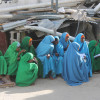
OP-ED: Getting Children Into Somalia’s Classrooms
Somalia is well-known for being a country torn apart by decades of conflict, by hunger and instability. Today, with fragile stability emerging and a new government in place, there is an opportunity to define a new future of peace, prosperity and justice.
Politics Eats Into Palestinian Breadbasket
In the Jordan Valley, contrasts are stark. Lush green agricultural fields and fenced-in greenhouses belong to the Israeli settlements that dot the landscape and benefit from the area’s abundant water supply on one hand. On the other, Palestinian farmers denied access to their lands and other resources by the Israeli authorities struggle to cultivate the most basic crops and make a living wage.
U.S. Debates Climate Impact of Development Investments
A debate is heating up here over the extent to which U.S. government-facilitated private-sector development investments should be required to take into account how those ventures impact on climate change.
Hopeful but Homesick in Peshawar Schools
“I miss my mother and cry every night,” eight-year-old Afaq Ali tells IPS. He is a Class 5 student at the University Public School in Peshawar, capital of Pakistan’s Khyber Pakhtunkhwa province and the administrative centre for the Federally Administered Tribal Areas (FATA) to its west.
Schools in Mexico: Funding but not for Phys Ed or Desks
On his first day of fourth grade, Efraín found there were no desks or benches in the classroom in his Mexico City school. His parents had to help the teacher haul in furniture from other rooms so the children wouldn’t have to start the new school year sitting on the floor.
Sliding Back to the Victorian Age
A recent report by the Centre for Analysis of Social Exclusion at the London School of Economics called attention to the fact that, at the present rate of inequality, by the year 2025, the United Kingdom will have returned to the unequal society of the end of the 19th century. In other words, we are going back to the times of Queen Victoria!
Somali President Rides Through a Bumpy Year
After his first year as president of the world’s most dangerous and failed state, Hassan Sheikh Mohamud is still grappling with limited financial resources, corruption, a lack of service delivery, and the ongoing assassinations of government officials, including attempts on his own life.« Previous Page — Next Page »


The Week with IPS

NEXT STOP - SDGs
Tracking global progress towards a sustainable world
Tracking global progress towards a sustainable world
