Languages
Saturday, October 3, 2026



News and Views from the Global South
Millennium Development Goals (MDGs)
Less Hunger, But Not Good Enough
Every year, we take a snapshot of world progress in the fight against chronic hunger. This year, the picture is looking better, but it’s still not good enough.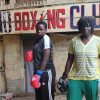
Ugandan Women Put On Their Boxing Gloves
Helen Baleke took up boxing at 16, after she was attacked by a man in Kampala’s Katanga slum. But the beating turned her into what she is today – one of only several female Ugandan amateur boxers.
Relief Brings Its Own Disasters
In Uttarakhand, the small Indian state in the Himalayan foothills that was a victim of flash floods that killed at least a thousand people in June this year and uprooted thousands of families, the story is told of a child who went every day to the helipad, believing his father will return when, in fact, the father died in the floods.
Hunger Decreases, but Unevenly, U.N. Reports
Some 842 million people still suffer from chronic hunger, according to the State of Food Insecurity in the World (SOFI 2013), published Tuesday by the three Rome-based U.N. food agencies.U.S. Government Shutdown Could Hit Foreign Aid
A deadlocked U.S. Congress proved unable to settle budgetary differences late Monday evening, leading to a federal government shutdown that could soon be felt by foreign aid programmes and their recipients.
U.S.-Africa Trade Mostly Benefits Oil, Textiles
With a key U.S.-Africa trade agreement up for renewal in 2015, advocates on all sides of the issue say current policies are rife with shortcomings that leave many African businesses out in the cold.
WTO: Stingy with the Poor, Generous with the Rich
A fight taking place in the World Trade Organisation (WTO) negotiations towards the Bali Ministerial Conference shows how the rules on agriculture allow developed countries to continue to shell out huge subsidies while penalising farmers in developing countries.
Disabled Make Do with Scraps from the Aid Table
Amidst the incomprehensible suffering that followed the 2010 earthquake in Haiti, international aid agencies rushed to provide services to the displaced and injured.People Pressure Piles up to Cleanse the Philippines
Under the reformist leadership of President Benigno Aquino III who has placed “good governance” initiatives at the heart of his administration’s agenda, the Philippines has enjoyed an unprecedented period of economic revival and political stability.
The Medicines Are Fake, the Illnesses Real
Reports of fraudulent medicines in the south-west Pacific island states of Solomon Islands and Papua New Guinea have drawn attention to the need for more public awareness of the lethal trade and its tragic consequences.
/CORRECTED REPEAT/Healthcare Loses Support in Somalia
Maryan Yusuf, 39, is weak and barely able to speak because of her excruciating pain. A few hours earlier she delivered a baby at Somalia’s Afgooye Hospital, where essential drugs are dwindling at an alarming rate.
Climate Change Report “Gives No Reason for Optimism”
Amidst rumours that global warming has slowed over the past 15 years, the new report by the Intergovernmental Panel on Climate Change (IPCC) states that each of the last three decades has been warmer than any preceding decade since 1850.
Haitian Government Applies Make-up to Misery
Pink, green, blue, red. From a distance, the thousands of brightly coloured houses look like a painting. The observer can’t see the suffering and dangers threatening the residents of the Jalousie neighbourhood – problems that are being ignored by the government, which is spending six million dollars on a massive make-up job.Bloody Days in Sudan
Activists claim that more than one hundred people have been killed and thousands injured during demonstrations in Sudan following the removal of fuel subsidies.
Survivors Question U.N. Focus on Legalising Sex Work
The age-old debate over how to regulate sex work has led to a rift between the United Nations and anti-trafficking organisations, which are pressuring the world body to rethink its position following two reports that advocate decriminalising all aspects of prostitution.
Mideast and Africa Still Holdouts on Women’s Rights
Gender equality around the world has increased dramatically over the past half-century even though the vast majority of countries continue to restrict women’s economic development in at least one way, the World Bank reports this week.
Poverty Declines as Inequality Deepens
As world leaders from 193 countries evaluate the successes and failures of the Millennium Development Goals (MDGs) during high-level meetings and special events here, the United Nations claims that extreme poverty worldwide has been cut in half.
Sponsor a University Student in Spain
Adopt a tree. Adopt a polar bear. Sponsor a child in a poor country. The concept has caught on in Spain’s troubled academic system and now people and companies can sponsor a university student.
TransBrasil Could Boost Integration in Rio de Janeiro
The TransBrasil bus rapid transit system, which will connect poor suburbs with the centre of Rio de Janeiro, will be the high-speed bus corridor that serves the largest number of commuters in the world.
OP-ED: Sustainable Development Goals After 2015
Reducing the proportion of undernourished people by half until 2015 was one of the Millennium Development Goals that the international community set in 2000. It will not be reached: At least 870 million people worldwide – and one child in five – still go hungry; this in a world where we already produce enough food today to feed nine billion people in 2050.
Ladakh Invites New Scarcities
The Ladakh of today is a different world from the one Skarma Namgiyal remembers as a child. Back then, he had taken for granted the breathtaking beauty of its landscape, the purity of the cold mountain air, and the sweet taste of water in its streams.« Previous Page — Next Page »


The Week with IPS

NEXT STOP - SDGs
Tracking global progress towards a sustainable world
Tracking global progress towards a sustainable world
