Languages
Friday, October 23, 2026



News and Views from the Global South
Politics
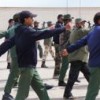
Rebels March Into New Libya With a Hangover
A few hundred police cadets in ad hoc camouflage uniforms march up and down the grounds at a training centre in the coastal town Zawiyah. "You are the people protecting the revolution and symbol of our pride," proclaims the scrawled writing on the wall behind them.
New Generation Protests Crimes of Brazil’s Dictatorship
Outside the Military Club in Rio de Janeiro, where a commemoration of the anniversary of the 1964 coup d'état was being held, hundreds of demonstrators, many of them teenagers, shouted slogans and threw eggs at arriving members in protest.
U.S.: Forming Coalitions, Tea Party Continues to Brew
In the three years since its inception, the Tea Party has cemented its place in U.S. politics, routinely making waves in political races of national interest. At the same time, some local Tea Party groups are beginning to build post-partisan coalitions that are both surprising and counterintuitive.
Displaced Guatemalan Peasants Demand Answers
"We want land where we can live and grow food to feed ourselves," said Pedro Ichich, one of several thousand indigenous farmers who marched to the Guatemalan capital to demand solutions to the ageold conflict over land.Regional Leaders Give Mali Junta Three Days to Step Down
West African heads of state meeting in Côte d'Ivoire have given Mali's military junta three days to restore constitutional order and step down – or face a range of diplomatic and economic sanctions.
The Downside of China’s Lifeline to Brazil
Over the last decade, China has become Brazil’s main trading partner and source of foreign investment. But this apparent lifeline at a time of global crisis could actually aggravate longstanding problems faced by Latin America’s biggest economy.
Hindu Girls Targeted in Coerced Conversions
Bharti, a 15-year-old Hindu girl living in the Lyari area in Karachi, left home for her sewing class last December, never to return. Three days later, her father Narain Das was told she had converted to Islam.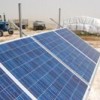
A Little Power to Some Palestinian People, For Now
A handful of makeshift homes built from small boulders and plastic tarps and secured with thick ropes sit in the isolated community of She’b El- Buttum in the South Hebron Hills. A few metres away, several rows of solar panels and two wind turbines are affixed to the rocky hilltop, providing electricity to the village’s 150 residents.Israel Shields Public from Risks of War with Iran
The government of Prime Minister Benjamin Netanyahu has been telling Israelis that Israel can attack Iran with minimal civilian Israeli casualties as a result of retaliation, and that reassuring message appears to have headed off any widespread Israeli fear of war with Iran and other adversaries.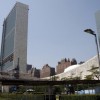
U.N.’s Mega Renovation Project Runs Short of Funds
The United Nations, which is in the process of refurbishing its 62-year-old headquarters building at a cost of over 1.8 billion dollars financed by member states, is now seeking additional funds because of huge cost overruns.
Native People in Argentina Demand a Say in Lithium Mining
Native communities in northwest Argentina turned to the Supreme Court to claim their right to be consulted about projects for prospecting and mining of lithium, regarded as the mineral of the future, located under an enormous salt flat.
BRICS Tighten United Front
At their summit in the Indian capital on Thursday, leaders of the coalition known as BRICS – Brazil, Russia, India, China and South Africa – made several noteworthy decisions that experts say hint at the converging of economic and political interests of a disparate regional bloc.
Spanish Officials Turn Deaf Ear to General Strike
Spain’s centre-right government stood firm and announced that it would not modify the labour reforms that tens of thousands of people protested Thursday in a 24-hour general strike.
Winds of Lent Blowing in Cuba
Debates in civil society, tension with internal opposition groups, demands from outside the country and inevitable comparisons with John Paul II’s visit to this socialist island in 1998 surrounded Benedict XVI’s visit 14 years later to a very different Cuba.
Drone Technology Takes Off
The Association for Unmanned Vehicle Systems International (AUVSI) held its conference this month in Israel for the first time. Do future wars by land, sea and air belong to robots?Palestinian Prisoners Fight Back With Hunger
As 29-year-old Palestinian prisoner Hana Shalabi enters day 43 of her open- ended hunger strike Thursday from a hospital bed in northern Israel, over two dozen other Palestinian prisoners have now followed suit, refusing food as a way to protest their arrest, detention and treatment in Israeli prisons.Kazakhstan Divided Over Fugitive Banker
As the trial began this week of 37 alleged participants in a strike-related riot, the man who did the most to help the striking oil workers and to publicise their cause, Mukhtar Ablyazov, remained far beyond the Kazakhstan government’s grasp.
South Africa No Longer the Gateway to the Continent
South Africa’s membership of the bloc of leading emerging economies and its unique position in Africa heralded the country’s role as a gateway into the African continent. However, trade experts question whether it can live up to this position as investors begin to increasingly look towards other African markets.Ahead of Revived Talks, US Wavers: Diplomacy or Sanctions for Iran?
A former top state department official singled out diplomatic engagement as the best available option for ending decades of "mistrust and misunderstanding" between Washington and Tehran.Scientists Claim Their Place in Struggle for Food Security
Weather events such as extreme temperatures and drought caused global agricultural losses of 11.4 billion dollars in 2011, while 12 million hectares of farmland are lost to land degradation every year, and unsustainable agricultural practices contribute to the emission of greenhouse gases.New Alternative in Senegal After Wade Defeat
Analysts say that Senegal’s outgoing President Abdoulaye Wade was made to pay for his failure to respond to popular demands, particularly arising from the high cost of basic commodities, a lengthy strike by teachers, and high youth unemployment, by losing his bid for a third term of office.« Previous Page — Next Page »





The Week with IPS

NEXT STOP - SDGs
Tracking global progress towards a sustainable world
Tracking global progress towards a sustainable world
