Languages
Monday, November 9, 2026



News and Views from the Global South
Poverty & MDGs
CUBA: Women’s Department Draws Attention to Inequality
Continuing its mission to promote gender studies and use academia to demonstrate the inequalities between women and men in Cuba, the Women’s Studies Department is celebrating 20 years of work with new challenges in terms of researching and drawing attention to the disadvantages faced by the female population.CENTRAL AMERICA: Beating Mega Challenges with Microloans
Pilar Toc, a 45-year-old Quiche Maya woman, used to work endlessly in a factory making traditional clothing in northwest Guatemala. Even so, her situation was so precarious that she could not enrol her son in school. But her life changed when she took out a microloan from a community bank.
MEXICO: Rural Women Organise to Weather Multiple Crises
Adelaida Avelino, 60, is still devastated by the loss of her corn and wheat harvest, which were destroyed by the freeze that hit the Mexican state of Tlaxcala a month ago. But at least her medicinal plants survived.PAKISTAN: Newborns at Increased Risk
A newborn baby dies every four minutes in Pakistan. It was not always so. With a sound population policy set out in the 1950s, Pakistan was second only to Sri Lanka in infant and neonatal survival rates during the 1960s and 1970s (compared to Bangladesh, India, Iran and Nepal).Biofuels, Speculators Driving Food Price Surges
A new report on global hunger pinpoints factors at the heart of spikes in food prices it says are exacerbating the unfolding food crisis in the Horn of Africa.
Q&A: Harnessing Diaspora Funds for Development Financing
When the final aid figures for 2010 were tallied early this year, industrial nations claimed a record-high 129 billion dollars in official development assistance (ODA) to the world's poorer nations.BRAZIL: ‘Green Grant’ May Do Little to Protect Amazon
The Bolsa Verde or Green Grant programme, which gives financial assistance to poor families that help preserve Brazil's Amazon jungle, may turn out to be only a drop in the ocean if legislation that undermines forest protection is adopted.ARGENTINA: Illiteracy on the Way Out
Efforts by the government and thousands of volunteers in Argentina have succeeded in slashing the illiteracy rate to just 1.9 percent, with a goal to eliminate it completely within the next four years.
LIBERIA: Mixed Reviews for Johnson-Sirleaf’s Nobel Peace Prize
As the Norwegian Nobel Committee named Liberian President Ellen Johnson- Sirleaf a joint winner of the 2011 Nobel Peace Prize, opposition party supporters were flooding the streets of Monrovia to demand that she be voted out of office in the upcoming election.For International Migrants, It May Be the Worst of Times
When Secretary-General Ban Ki-moon recently addressed the U.N. General Assembly on the impact of migration on development, he counted himself as one of 214 million international migrants who live outside their home countries.Liberian Muslims Allege Disenfranchisement
It seems all of Liberia is paying close attention to the campaign for the Oct. 11 presidential and legislative elections. But Sekou Camara is one exception.
GHANA: Woes for Disabled Persist Five Years After Act
Emmanuel Joseph and George Amoah, two disabled Ghanaians, occupy different ends of the spectrum. The former lies on a piece of cardboard in Accra Central, his half-naked body twisted and mostly paralysed, the sun beating down on him while he waits to collect three dollars, the average proceeds of a day's begging.Agencies Fight to Save U.S. Foreign Aid from Deep Cuts
Foreign aid could be one of the first items on the chopping block as the United States struggles to address trillion- dollar deficits in the coming fiscal years, a fate U.S. international development agency officials are trying hard to avoid.
BRAZIL: Suape Port Complex, the Locomotive of the Northeast
Silvio Leimig was 18 years old and had just earned his driver's licence when he visited Suape, a port 40 km from his home in Recife, the capital of the state of Pernambuco in Brazil's Northeast region, in the early 1980s.
SOMALIA: Rape – The Hidden Side of the Famine Crisis
When Aisha Diis* and her five children fled their home in Somalia seeking aid from the famine devastating the region, she could not have known the dangers of the journey, or even fathom that she would be raped along the way.Non-Traditional Teaching Promoted for Girls
Making some simple, basic changes in education policy can result in many more girls attending school, experts said at a meeting here this week on Gender Equality in Education.
Q&A: Carving Out a New Aid Order at Busan
Busan represents the possibility of an aid revolution – a time in history where an encompassing, inclusive aid framework may be possible. This is according to Tony Tujan, director of IBON International, a capacity development non- governmental organisation.
AFRICA: More Dangerous to Be a Woman than a Soldier
African women who bear the brunt of the continent’s conflicts now demand to play a defining role in peacekeeping.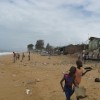
Rising Seas Gnawing at West Africa’s Coastline
Sea levels on the coasts of Côte d'Ivoire and other West African countries have risen again this year, devastating houses and other infrastructure. The search for effective solutions is lagging behind accelerating coastal erosion.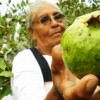
Salvadoran Campesinas Go Organic
The guavas grown by Mariana Rosales are big and bright green, and the best thing about them, she says proudly, is that she does not spend a single cent on fertilisers to produce them – something extremely rare in a country like El Salvador.Expanding Technologies Fail to Bridge Broadband Divide
Despite an overall increase in global internet usage and in the prevalence of information and communication technologies (ICTs), the gap between developing and developed countries remains vast when it comes to accessing broadband connections.« Previous Page — Next Page »





