Languages
Monday, November 9, 2026



News and Views from the Global South
Poverty & MDGs
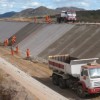
BRAZIL: Costly Water for the Poor Northeast
The visual impact is harsh: flattened hills, valleys full of mud, and kilometres and kilometres of bulldozed land - the modification of nature in Brazil's semiarid Northeast region is disturbing due to the enormous dimensions involved.
Malaria Elimination Possible Within Decades
Dr. Rick Steketee, science director at the Malaria Control Partnership at PATH, a leading nonprofit organisation dedicated to public health in the Pacific northwest city of Seattle, isn't alone when he says that elimination of the infectious disease is a possibility.
Q&A: ‘Soil is Key to Global Warming, Food Security’
Luc Gnacadja, in his second three-year term as executive secretary, United Nations Convention to Combat Desertification (UNCCD), is widely seen as delivering on his commitment to manage the world's drylands.Brazil Active in Effort to Widen Global Access to Medicines
Brazil is keen to take part in the international effort to expand access to medicines and to produce its own drugs, and will start by becoming the world supplier of medicines to treat Chagas disease.Future of Microfinance Is Bigger Than Just Loans
Microfinance initiatives to fund development could benefit from reinvigorating their aims and taking on new, integrated approaches, according to experts at the 2011 International Forum on the Social and Solidarity Economy in Montreal.
SOUTH KOREA: Drylands Meet Deserts Gender
Delegates to the United Nations Convention to Combat Desertification’s (UNCCD) meeting underway in this South Korean city are convinced that women, though affected most by desertification, hold the key to addressing hunger through land regeneration.Climate Solutions Need Strong Decision-Making
The year 2010 endured 950 natural disasters, 90 percent of which were weather-related and cost the global community well over 130 billion dollars.
Potential Vaccine Halves Malaria Risk for Children
In a major breakthrough Tuesday, researchers announced that the vaccine candidate RTS,S reduces the risk of malaria by half in children ages five to 17 months, first results from a continuing phase three trial showed.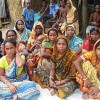
BANGLADESH: Reducing Poverty Hinges on Microcredit – Yunus
Reducing poverty in Bangladesh will depend critically on sustaining the successes of the country’s microcredit (MC) programmes, says Muhammad Yunus, the economist who shared the 2006 Nobel peace prize with his creation, Grameen Bank.
SOMALIA: Death Threats Fail to Stop Women’s Basketball
When Al-Shabaab militants called the Somali national women's basketball team captain, Suweys Ali Jama, and told her she had two options: to be killed or to stop playing basketball, she decided that neither was really an option at all.
Qatar Launches New Global Award to Promote Education
The internationally-renowned Nobel Prizes have been awarded annually for superlative achievements in physics, chemistry, medicine, literature and peace.
Looking to the Sahel for Lessons in Pushing Back Deserts
Nearly all our food comes from the Earth's limited food- producing lands, but those lands continue to be degraded, guaranteeing far higher food prices and less food in the future, experts warn.
DR CONGO: No End to Mass Rapes: “It’s a Miserable Life”
Angeline Mwarusena, 61, sits on a small wooden bench in front of her hut, head bent, shoulders slumped. Her voice is barely audible. Four years ago, three soldiers from the Democratic Forces for the Liberation of Rwanda (FDLR) entered her home, hit her and raped her repeatedly. One after the other.Entrepreneurs Could Develop Africa and the World
He started with four rabbits and a will to succeed. Seven years later, Samuel Agossou has built a home for his family and employs a dozen other young people in his business.
DR CONGO: Lasting Effects of War Destroy Children’s Future
Five years into democracy, with the elections just a few weeks away, the majority of Congolese children continue to face a bleak future.GUATEMALA: Little Headway against Rampant Malnutrition
"If we can manage it, we buy something at the butcher's every 15 days, even if it's only a bone, although we normally just eat maize and beans," says Marvin Fajardo, a small-scale farmer and father of three from the southern Guatemalan province of Escuintla.
LATIN AMERICA: High Food Prices Present Challenges and Opportunities
The global food crisis, which threatens to aggravate hunger and poverty, makes it necessary for agriculture to diversify, adapt to climate change and raise productivity, say FAO and experts.CUBA: More and More Women in the Fields
When Sara Gutiérrez began working her land, she knew a lot about hairdressing, her first profession, but nothing about agricultural techniques. "The first crops were really bad, until I learned how to get good yields even in difficult conditions," she said.CENTRAL AMERICA: Diversifying Farming to Fight Hunger
The countries of Central America have set their sights on research and innovation in the production of tomatoes, cassava, potatoes and avocados to increase food supply and combat hunger, which mainly affects rural areas.
PERU: Campesinas Protect Traditional Diversity of Food Crops
Dina Apomayta is heir to the 3,500-year legacy of the Andean cultures of Tiwanaku and Lupaca, which venerated the land. And she and many other rural women in Peru continue to nurture the agricultural biodiversity that has been handed down from generation to generation.
Women in Rural Argentina Speak Out on Climate Change
Rural and indigenous women in northern Argentina, hit hard by the expanding agricultural frontier, deforestation and the spraying of toxic pesticides, spoke out about their problems and set forth proposals for discussion at the next global summit on climate change.« Previous Page — Next Page »





