Languages
Sunday, September 27, 2026



News and Views from the Global South
Poverty & MDGs

Kenya’s Empty Bread Basket
Jane Njeri from the semi-arid lower Mukurweini district in Kenya’s Central Province has taken to boiling wild roots to feed her five children.
Poverty Wages Unraveling Cambodia’s Garment Industry
Cambodia’s garment industry is regularly plagued with strikes and protests. But when armed security forces opened fire on striking workers in the capital city of Phnom Penh on Jan. 3, killing five and injuring dozens, it suddenly became clear that this was not just another protest.
Economic Crisis in Mali’s North as the South Recovers
Under the harsh Sunday afternoon sun, Daouda Dicko washes his client’s clothes on the shore of the Niger River, which runs through Mali’s capital, Bamako. “I started doing this to survive two years ago. Now, I am used to it and I don’t mind the extra money it brings,” Dicko, who also works as a gardener, tells IPS.
Egypt’s Generals Face a Watery Battle
Heavy reliance on water intensive crops, a major upstream dam project for the Nile basin, and rising groundwater levels pushing at pharaoh-era monuments will be pressing issues for the next Egyptian president - whether military or civilian.
Advocacy Groups Split on Republican Immigration Guidelines
Pro-immigration reform advocates here are seeking to capitalise on new federal momentum on the issue after conservative lawmakers ended months of dithering late last week and released an initial set of principles that they would be interested in pursuing in broader negotiations.
Moral Monday Protests Inspire Truthful Tuesdays
Moral Monday, the populist movement in North Carolina that saw a diverse coalition of thousands of progressive activists descend upon the state legislature, is now spreading throughout the U.S. South.
Prosecution of Forced Sterilisations in Peru Still Possible
Shelving the case of the forced sterilisations of more than 2,000 women in Peru during the Alberto Fujimori regime was a surprise move by the prosecutor in charge. What happened? An IPS investigation found that legal avenues to pursue justice have not been exhausted.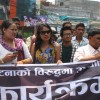
Dalit Women Face Multiplied Discrimination
Maya Sarki, a resident of Belbari in eastern Nepal, was returning home one summer evening last year when she was attacked. She was forced down on the ground and her attacker attempted to rape her.
Gender Counts in the Aftermath of Disaster
The rise in natural disasters in the Caribbean due to climate change has led to increased suffering for both men and women, much of it as a consequence of socially constructed roles based on gender, experts say.
Mali’s Displaced Still Have Nothing To Return To
In her traditional orange headdress, Agaichetou Toure sits quietly in a waiting room in Kalaban-Koura, a popular neighbourhood on the outskirts of Mali’s capital Bamako.
U.S. Reforming “Outdated” Overseas Food Aid
U.S. lawmakers are in the final stages of approving reforms to a half-century-old system of providing overseas food assistance that critics say is outdated, inefficient and sometimes harmful to local economies in developing countries.
CELAC Summit Targets Inequality
Heads of state and government at the Second Summit of the Community of Latin American and Caribbean States (CELAC) made a joint commitment to reduce poverty, hunger and inequality, and declared their region a “zone of peace”.
Education Is Key to Bachelet’s Chile
For 14-year-old Isadora Riquelme and thousands of other Chilean teenagers, the chance of getting the university education they want depends on the reforms that Michelle Bachelet has promised to undertake when she takes office as president again in March.
Nowhere to Come In From the Cold
As the temperature dips to zero degrees Celsius, a chill has set into the lives of people like 44-year-old Rasool Khan at the Jalozai camp for internally displaced persons (IDPs) in Pakistan. Huddled in tiny tents, with just a plastic sheet over their heads and no heat, they pass sleepless nights in the bitter cold.USAID Vows Inclusion in Fight Against Extreme Poverty
The United States' main foreign aid funder, USAID, released a mission statement Wednesday that includes new focus on ending extreme poverty while also promising to be more inclusive in incorporating civil society and other input in its decision-making.
U.S. Sanctions Closing Doors to Iranian Students
Even as the United States and European Union begin to lift some sanctions on Iran, U.S. law continues to prohibit some businesses that provide non-controversial services, such as online education, from operating in Iran and other countries.
A Tale of Two Worlds
As violence rips through South Sudan and ongoing conflict plagues the Central African Republic and Syria, developing countries stand at a difficult crossroads – struggling to grow economically and politically, yet fielding deep inequalities within their own borders.Pacific Nations Need Help Away From Aid
Long-term dependence on development aid in Pacific Island nations, many of which have been independent for 30-40 years, continues to cause concern.
Brazil’s Prison Violence Worsens in Maranhão
Nearly every day, violence breaks out in a Brazilian prison. In January the focus has been on the northeastern state of Maranhão, where orders issued from behind bars wreaked havoc in the streets of its capital city, illustrating the scope of national prison anarchy.
Human Trafficking Survivors Urge U.S. to Take Action
Advocacy groups and some legislators are calling on the U.S. government to mandate an increase in corporate supply chain transparency, with the aim of cutting down on the estimated 14,000 to 17,000 people trafficked into the United States each year and the tens of millions enslaved globally.
Moroccan Women Porters – Heroism and Hardship on the Border
Before sunrise, a Moroccan woman waits her turn at the pedestrian border control separating her country from the Spanish city of Melilla. Hours later she crosses over, takes up an 80-kilo bundle of merchandise and carries it back to her country, for a payment of less than six dollars.« Previous Page — Next Page »


