Languages
Monday, October 12, 2026



News and Views from the Global South
Preventable Diseases - Africa

HEALTH-AFRICA: If Men Were Dying En Masse…
Maternal mortality rates in Africa constitute a "monumental tragedy" that requires urgent attention by African governments, health experts say.
SANITATION-ZAMBIA: Back Policy With Funding
Water- and sanitation-related diseases cost communities dearly, particularly in rural Zambia.
HEALTH-LIBERIA: Rainy Season Deadly for Pregnant Women
As heavy rain hammers the grass thatch roof of her mud hut, Goromah Borbor huddles inside and quietly describes how her daughter Annie died while giving birth.HEALTH-KENYA: Affordable New Weapon Against Cervical Cancer
Faced with an increase in the number of cervical cancer cases, Kenya has adopted a simple, cheap yet effective visual inspection method of detection. Ideal for low resource settings, the test is offering reprieve to thousands of women who die annually from the disease.
ZAMBIA: 'Clear Lack of Commitment to HIV'
A United Nations mid-point review of Zambia's efforts towards reaching the Millennium Development Goals (MDGs), released in September, has revealed that HIV/AIDS might prevent the southern African country from meeting the targets.
HEALTH-ANGOLA: "It's Normal Here That Children Die Young"
Angelina Silva doesn’t remember the exact dates when her sons died. She just remembers their ages.ZAMBIA: Malaria Prevention Pays Off
Huge investments in malaria control and prevention have prevented as many as 75,000 child deaths over the past five years.
Q&A: Harmonise the Efforts of African Scientists
As many as 100 million people in Africa suffer from schistosomiasis, a chronic illness caused by a parasite associated with freshwater snails. The schistosoma flatworm causes a debilitating illness that can damage internal organs, and stunt growth and cognitive development of children.HEALTH-AFRICA: Financial Crisis Scapegoat for ARV Stockouts?
Shortages in supply of antiretroviral (ARV) drugs are caused by lack of political will and bad supply management, not by the global economic crisis, health experts say.
ZAMBIA: Farmers Resort to Human Waste for Fertiliser
The economy's down, the price of fertiliser's up. And Zambian farmers are stealing sewage for their vegetable gardens.
HEALTH: Diabetes Wreaks Havoc in Mauritius
Every year 400 Mauritians undergo amputations, another 400 have heart surgery; 175 people's eyes are under the knife every week - all due to a disease that is easily prevented, Type 2 diabetes.TRADE: 2010 Soccer World Cup May See More Snorting than Kicking
It is the middle of the day but 25-year-old Lyle Arendse of Athlone on the Cape Flats, Cape Town’s sprawling hinterland, is at home. He left school nearly 10 years ago and has since been unemployed. "It is because of drugs -- tik (methamphetamine or "crystal meth") and heroin -- that I left school," he acknowledges.HEALTH-ZIMBABWE: No Treatment for Sick as State Doctors Strike
Before, Zimbabwean families would take their ill relatives to rural clinics where medication was readily available and payment plans lenient. But now they are taking them there to die.
MALAWI: High-Risk Sex Among Those Who “Do Not Exist”
A study on men having sex with men (MSM) in Malawi shows that, as elsewhere in the developing world, this vulnerable group is at greater risk of contracting HIV and AIDS than the general population. Moreover, their risk status is exacerbated as governments fail to target them for health services or information to stem HIV transmission.
ZIMBABWE: No Water, Just a Bill
City council turns off the water. National minister in charge says turn it back on. Domestic and commercial users alike dispute their unpaid bills. The shadow of a cholera epidemic looms over it all. Must be Harare.RIGHTS: Disfiguring Disease Linked to Right to Food
Noma, an ulcerous disease whose name comes from a Greek word that means "to devour" because it literally eats away at malnourished children's faces in just a few months, is found in the developing world, mainly in Africa.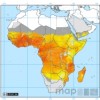
HEALTH-AFRICA: Better Tools to Target Malaria
Roughly a billion dollars a year is spent fighting malaria. Using this money most effectively calls for a detailed understanding of exactly who is at risk - enter the Malaria Atlas Project (MAP).
HEALTH: Fighting AIDS in Conservative Mauritania
Campaigners against HIV/AIDS in Mauritania face an uphill task to put their messages across, especially those that deal with safer sex and condom use. Campaigners have to cut corners in order to avoid angering the country's powerful religious clerics.HEALTH-AFRICA: TB Vaccine In The Pipeline
For the first time in eighty years, a new Tuberculosis (TB) vaccine has entered the efficacy stage of a clinical trial. While the developers are optimistic about the outcome, lung health and TB experts are warning against being overly excited.
HEALTH-AFRICA: Early ART: A Stitch in Time…
A global call to put people living with HIV on antiretroviral therapy (ART) at an earlier stage of their illness is intensifying, but most developing countries, especially in Africa, are struggling to meet the current recommendations.HEALTH-AFRICA: HIV Laws Do More Harm Than Good
In Sierra Leone, a mother who transmits HIV to her child can be fined, jailed for up to seven years, or both. Human Rights Watch reports that in 2008, several men were arrested in Egypt simply for being HIV positive. New legislation is currently being discussed in Angola that could lead to a three to ten year jail sentence for those who knowingly pass on HIV.« Previous Page — Next Page »





The Week with IPS

NEXT STOP - SDGs
Tracking global progress towards a sustainable world
Tracking global progress towards a sustainable world
