Languages
Sunday, September 27, 2026



News and Views from the Global South

Genes are Gems for Food Security
What can savvy global financial market traders learn from humble smallholder farmers in developing countries? Risk management in the face of climate change.

Examining the Depths of Ethiopia’s Corruption
Ethiopia may be one of the fastest-growing, non-oil producing economies in Africa in recent years, but corruption in this Horn of Africa nation is a deterrent to foreign investors looking for stable long-term partnerships in developing countries.
Iranians Vote for Hope and a Change of Course
Iran's Jun. 14 presidential election results, announced the day after voting was held, were nothing less than a political earthquake.
Caribbean Looks at Financial Approach to Combat Climate Change
The Caribbean has the unenviable reputation as one of the most disaster-prone regions in the world, a situation exacerbated by climate change and vulnerability that experts warn could have significant economic consequences if unaddressed.
Award Spotlights Indian Women Helping Women
Jassiben, a self-employed potter from Nana Shahpur village in western India, loves summer despite the heat waves and frequent power cuts, because summer days always mean great business.
Small Farmers Buffeted by Climate Change
The U.N. Food and Agriculture Organisation (FAO) has long warned that a quarter of the world’s farmland is “highly degraded".
In Swaziland, Seeds Beat Drought
The overcast sky is a sign that it might rain, and Happy Shongwe, a smallholder farmer from rural Maphungwane in eastern Swaziland, is not exactly happy.
No Quick Fixes to Sorcery-Related Violence
Following worldwide outrage over a spate of brutal sorcery-related murders in Papua New Guinea, the government has rolled out a new hard-line approach to spiralling crime in this southwest Pacific island state.
Advancing the Development Goal Posts
With the Millennium Development Goals (MDGs) expiring in less than 1,000 days, new goals are needed that prioritise support for smallholder farmers to better access markets and increase productivity, nutrition and incomes.
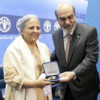
Award Spotlights Indian Women Helping Women
Jassiben, a self-employed potter from Nana Shahpur village in western India, loves summer despite the heat waves and frequent power cuts, because summer days always mean great business.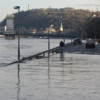
EUROPE: Floods Are Here to Stay
Record floods in Central and Eastern Europe have highlighted some of the challenges of climate change for the continent, as well as the floods’ potential to spur populist politics.
Sowing a Healthier Future
“If there was enough political will to defeat hunger, we would defeat it right now - immediately,” says Enrique Yeves, chief of corporate communications at the U.N. Food and Agriculture Organisation (FAO).
Legal Pressure Increases on Unpaid Internships in U.S.
A landmark court decision this week has challenged the controversial existence of unpaid internships, highlighting calls for greater clarity on the legal definition of an internship.
EUROPE: Floods Are Here to Stay
Record floods in Central and Eastern Europe have highlighted some of the challenges of climate change for the continent, as well as the floods' potential to spur populist politics.
Despite Arms Announcement, U.S. Syria Strategy Remains Unclear
Despite Thursday's announcement that President Barack Obama has decided to provide direct military assistance to Syrian rebels, what precisely the administration has in mind remains unclear.Argentina’s Rail Tragedy Shows Changes Coming Too Slowly
The latest railway tragedy in the Argentine capital, the third in less than two years on the same commuter line, brought to light the severe limitations of a hybrid public-private system, despite the changes underway.
U.S. Government Looks to Trim Massive Penal Code
A Congressional task force started work Friday to review the massive U.S. federal penal code and cull statutes deemed to be overlapping, ineffective or otherwise unnecessary.
Outrage Over Safety Issues at Indian Nuke Plant
The Tirunelveli district in the southern Indian state of Tamil Nadu may seem idyllic, dotted with lush green fields, but upon closer inspection one sees signs of a battle that does not appear to be abating.
TerraViva Comes to FAO
Dear Reader: TerraViva, a special publication of the IPS news agency, the leader in coverage of development issues, civil society and the emerging South, is once again circulating, this time in the meeting rooms and hallways of the FAO building.
Former War Zone Craves Democracy
For the first time since Sri Lanka’s 30-year-long civil conflict drew to a bloody finish in May 2009, casting an eerie hush over the Northern Province that had grown accustomed to the sounds of war, there is a buzz in the air generated by the prospect of provincial elections that hold the promise of radical change.
U.S. Moving Toward Controversial New Role in Global Energy Market
Energy specialists say that advancements in fossil fuel extraction technologies have sparked a "revolution" in U.S. energy production, especially given radical recent changes in the global energy market and the U.S. role within it.« Previous Page — Next Page »


The Week with IPS

NEXT STOP - SDGs
Tracking global progress towards a sustainable world
Tracking global progress towards a sustainable world
