Languages
Tuesday, November 10, 2026



News and Views from the Global South
Opinion

Pensions for All
October 1st is the International Day of Older Persons. Just another day? Perhaps, but it should remind us that the world’s population is ageing, brought about by the combined effects of declining mortality and fertility rates and longer longevity. By mid-century, one out of five people will be over 65 compared to over one in ten now.
Industrialization for a Sustainable Future
World leaders are recognizing the crucial role of industrialization in eliminating absolute poverty and promoting sustainable development. This was especially evident at the recent G20 Summit in Hangzhou, China, which I attended as a member of the delegation of the United Nations Secretary-General, Ban Ki-moon. The gathering demonstrated the growing consensus on the need for renewed efforts to facilitate inclusive and sustainable industrialization as one of the main drivers of economic growth and structural transformation in Africa, and especially the least developed countries (LDCs).
To Effectively Combat Climate Change, Involve Women
London’s Waterloo Bridge over the River Thames is famously known as the “Ladies Bridge,” for it was built largely by women during the height of World War II. On another continent, women fighting a different war have built an equally remarkable structure: a 3,300-meter anti-salt dyke constructed by a women’s association in Senegal to reclaim land affected by rising levels of salt water.
Making the Goals: Why Sustainable Development Must Be Integrated Development
By recognising how closely connected the different aspects of sustainable development are, the Sustainable Development Goals (SDGs) create an important opportunity - and challenge - for a more coordinated approach to implementing development policies.
South Sudan and Uganda’s Intertwined History of Violence
Uganda has and continues to play a major role in fueling the conflict in South Sudan. The recent events in South Sudan have brought that moral challenge into a very sharp focus.
Unregulated Promotion of Mining in Malawi Brings Hazards and Hardships
Nagomba E. is no longer young; her hip is giving her trouble and her back is stooped from years of bending over her corn and rice fields. Yet every morning, at the crack of dawn, the wiry 74-year-old sets out on a strenuous half-hour walk to fetch water from a nearby river so that her ailing husband can take a bath. Despite her limp, Nagomba moves fast and with the sure-footedness of a mountain goat.A Historic Day in Colombia
Betsaida and her family abandoned their home and a small business in the port of Tumaco, in the Pacific of Colombia, and were forced to follow the road that more than 7 million displaced Colombians have as a result of the armed conflict. Their story, and that of millions of victims of the war, is at the heart of what the United Nations Organization is and does. Seventy-one years after its creation, the universal aspiration to end war, reaffirm the fundamental human rights and promote social progress is latent and more crucial than ever.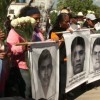
Two years on, Peña Nieto cannot brush off Ayotzinapa stain
There are certain events that mark a turning point in a country. The way a government decides to handle them defines the way they will go down in the history books.The Right to Development at 30 Years
It’s had a very useful if sometimes controversial past and it will have great relevance for many more years ahead. That’s the sense one has about the Declaration on the Right to Development as it is commemorated 30 years after its adoption by the United Nations General Assembly in 1986.
Population Growth Extremes: Doublers and Decliners
While the world’s population of 7.4 billion is growing at 1.1 percent per year – about half the peak level of the late 1960s – enormous differences in demographic growth among countries are increasingly evident and of mounting concern to countries and the international community.
Jobs Are Crucial for Peace, Stem Radicalization and Violent Extremism in Kenya
Today 21 September 2016 is the International Day of Peace. Kenya has the largest number of jobless youth in East Africa, putting a strain on the economy’s growth and also threatening peace and security when hopeless youth gravitate towards violent extremist groups.
No One Is Indispensable in a Democracy
I have put a great deal of thought into whether or not to return to politics. Groups from different political parties, and without party affiliation, have expressed their concern over the current situation in the country and have offered me their support. And the opinion polls indicate that I would have a chance at a third presidential term.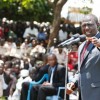
The Public Benefit Organisations Act Will Help Kenya’s March Towards the Sustainable Development Goals
The Sustainable Development Goals (SDGs) in Kenya was launched on 14 September 2016, Representing President Uhuru Kenyatta, the Cabinet Secretary of the Ministry of Devolution and planning Mr Mwangi Kiunjuri, said Kenya was way ahead of implementing the SDGs through its Vision 2030, and the devolved system of GovernanceCaribbean: Rethinking Progress in Sustainable Development Era
Caribbean countries make a special case for development. The high and increasing exposure to hazards, combined with very open and trade-dependent economies with limited diversification and competitiveness portray a structurally and environmentally vulnerable region, composed, in the most part, of middle income countries.
Corruption and Wildlife Trafficking: the Elephant in the Room
Wildlife trafficking is high on conservation and political agendas. It is also increasingly high on the global crime agenda. Rightly so: corruption was identified recently by the UN Office on Drugs and Crime as the main enabler of wildlife trafficking – one of the largest transnational criminal activities in the world.
Fossil Fuels: At What Price?
We often read comparisons between the prices of solar energy or wind energy with the prices of fossil fuels. It is encouraging to see that renewables are rapidly becoming competitive, and are often cheaper than coal or oil. In fact, if coal, oil and natural gas were given their correct prices renewables would be recognized as being incomparably cheaper than fossil fuels.
Finding the Sweet Spot of Africa’s Agriculture
Africa is a continent where, at least outwardly, we like to celebrate our diversity—the rich variety that can be found in our many cultures, languages, fashions, flora and fauna. That’s why it’s perplexing to see such a large segment of the African population depending on a very small number of food crops, like maize, rice and wheat.
Islam Right Now
Watching Christianity nearly a century–fundamentalist Christians fighting ritualistic Christians fighting secularism, generally moving fundamentalism–>ritualism–>secularism–maybe the same for Islam? Their similarities make “Islam right now” a repetition of Christianity; their differences shout, Watch Out! Let us see where this leads us.
Honduras Still a Death Trap for Environmental Activists Six Months after Berta Cáceres’ Slaying
Chills ran down Tomás Gómez Membreño’s spine when he first heard about the brutal murder of his renowned friend and ally, the Honduran Indigenous leader Berta Cáceres, six months ago this week.
Revisiting the Journey to the Sustainable Development Goals
It’s been almost one year since heads of state and government adopted ‘Transforming Our World: The 2030 Agenda for Sustainable Development’ - the ambitious agenda which contains 17 sustainable development goals (SDGs) and 169 targets during a special session of the UN General Assembly on 25 September 2015.
Can the Middle East Make Economic and Social Progress?
Why do some countries grow faster than others? How do we engineer an economic miracle? Some economists believe that manufacturing growth is like cooking a good dish—all the needed ingredients should be in the right proportion; if only one is under- or overrepresented, the ‘chemistry of growth’ will be sub-optimal. Rapid economic growth can only happen if several necessary conditions are met at the same time.« Previous Page — Next Page »





The views expressed in these articles are those of the authors and do not necessarily represent the views of, and should not be attributed to, IPS-Inter Press Service

The Week with IPS

NEXT STOP - SDGs
Tracking global progress towards a sustainable world
Tracking global progress towards a sustainable world
