Languages
Monday, November 9, 2026



News and Views from the Global South
Active Citizens
Golf Plays Against Local Democracy
More than 10,000 people living in the coastal Adriatic town Dubrovnik have done what many others in the region could never. They are holding a referendum on a controversial development project that they believe endangers their city.Timbuktu Reclaims Its Treasures
Despite uncertainty and the ongoing conflict, Mali will work to rebuild and safeguard its cultural heritage, says the West African country’s minister of culture Bruno Maïga.
UN Looks, Sri Lanka Ducks
It has now become an annual affair. When the Geneva based UN Human Rights Council readies itself for the first of its annual regular sessions in February, the government in Sri Lanka gets ready to ward off yet another attempt to scrutinise its rights record.
OP-ED: Making Cities Safe for Women and Girls
There is no city or country in the world where women and girls live free of the fear of violence. No leader can claim: This is not happening in my backyard.World’s Nuclear Environment Remains Politically Toxic
The world's nuclear environment has increasingly turned politically toxic, replete with threats, accusations and open defiance of Security Council resolutions.
Q&A: “Neoliberalism Negates Human Rights”
Thousands of people marched through the streets of cities across Portugal "against exploitation and impoverishment" caused by the government's austerity cuts, in a protest organised by the General Confederation of Portuguese Workers (CGTP), the country's largest trade union.
Correa Calls for Irreversible “Citizens’ Revolution”
Ecuador's President Rafael Correa secured yesterday his third term in office by a landslide, after vowing to radically deepen his project of citizens' revolution by making the changes achieved thus far "irreversible", fully achieving the goals of eradicating poverty, transforming the model of production and consolidating the "rule of the people”.India Tightening Child Labour Laws
After one of the six males under trial for the rape and subsequent death of a 23-year-old woman was deemed an adolescent and therefore entitled to leniency, juvenile rights activists have found themselves pitted against irate members of the public demanding death sentences for all the perpetrators.
Switzerland Checks Mercenaries, Partially
The Swiss government has presented a draft law regulating the private military industry but critics argue the law is toothless.
Gangnam Style Finds a Tragic Touch in Gaza
“We wanted to do something to bring focus to the plight of Palestinian political prisoners, of which there are around 5,000 in Israeli jails, including hunger strikers, children, women,” says Mohannad Barakat, 30, one of seven Palestinians who have made a Palestinian version of the Gangnam style.
Indigenous Youth Step up to Protect Their Roots
Indigenous youth from some of the world's oldest living cultures are stepping forward to steer their communities past the threat of disappearance and into an age of coexistence with an increasingly globalised world.Argentine Rights Violators under “House Arrest” Stroll the Streets
In spite of repeated violations of house arrest by people convicted of crimes against humanity during Argentina's dictatorship, some activists remain in favour of this lenient alternative to prison, but they want better oversight by the courts.
Climate Rally Draws “Line in the Sand” on Canadian Pipeline
The largest climate rally in U.S. history is expected Sunday in Washington DC with the aim of pressuring President Barack Obama to reject the Keystone XL tar sands pipeline.
Yemen’s Youth Denied the Revolutionary Change
This week in Sana’a thousands of Yemenis – mostly youth - crowded the highway near the landmark ‘Change Square’ to celebrate the second anniversary of the revolution. Adjacent to the university, this was the site of a tented encampment that drew tens of thousands of demonstrators throughout 2011.
Climate Change Added to U.S. Government “High Risk” List
For the first time, a U.S. government auditor has added climate change to a list of issues that pose the greatest financial risk to the government and country. It is also warning that Washington is markedly unprepared to deal with the scope of the problem.
Tenants in Spain Win First Battle against Evictions
Public outcry against evictions this week led Spain's parliament to accept a popular initiative against mortgage-related evictions for unpaid debts, which in the past seven days have led to four suicides.
Q&A: Venerable Sierra Club Gets Radical on Tar Sands
The term “civil disobedience” takes its roots from an 1849 essay by U.S. poet, philosopher and environmentalist, Henry David Thoreau, originally entitled “Resistance to Civil Government”.
Virtually At Sea in the Pacific
The Pacific Islands have some of the lowest rates of Internet penetration in the world, yet tech-savvy urbanites are behind the emergence of a number of social media sites dedicated to generating public debate and demanding government accountability. However, without real action, online forums speaking truth to power are constrained in impacting political and social reforms in the region.
Female Journalists Walk on Eggshells in Sri Lanka
The year was 1998 and porters at the wholesale vegetable market in the Sri Lankan capital Colombo had gone on strike, virtually suspending vegetable distribution in the city and its suburbs.
Land Is Life, and It’s Slipping Away
Nean Narin, a humble man and father of three children, says his family is going hungry. Narin lives in the village of Boeung Kak, situated on the edge of Cambodia’s capital, Phnom Penh. For years, he and other villagers relied on the Boeung Kak Lake for fish and plants, which they would eat and sell.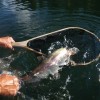
Trout Trump the Taliban
The rivers in northern Pakistan’s Khyber Pakhtunkhwa (KP) province were once thick with trout. Spanning hundreds of kilometres, these water bodies played host to the exotic fish, first introduced by the British in the early 1900s, which eventually became a staple in the diets and livelihoods of the province’s 20 million residents.« Previous Page — Next Page »





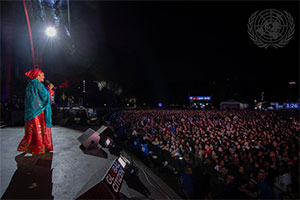 Global Citizen Festival in New York. Credit: UN Photo/Eskinder Debebe
Active citizens are committed to social change because they know that it is achievable. However, major political challenges face active citizens across the world. For example, in authoritarian regimes in Latin America where the hegemonic party has been in power for decades on end, protestors and human rights activists face enormous repression and struggle to materialize their advocacy into concrete results. The same can be said for Africans, where a shift towards elected government in recent decades has yet to translate into an effective voice in decision-making. Now, the Strengthening Citizen Demand for Good Governance, which uses evidence-based approaches – funded by DFID's Governance and Transparency Fund – seeks to raise their voices.
In 2025, the CIVICUS Monitor’s People Power Under Attack report revealed that civic freedoms are severely limited in 122 of 198 countries and territories, and only 7.2% of the global population now lives in countries where civic space is open. Through partnership with the Overseas Development Institute (ODI) and CIVICUS, IPS reporters across the continent will seek to define the extent and limits of state capability, government accountability and the responsiveness of leaders to the needs of citizens.

The Week with IPS

NEXT STOP - SDGs
Tracking global progress towards a sustainable world
Tracking global progress towards a sustainable world
