Languages
Monday, November 9, 2026



News and Views from the Global South
Active Citizens

Investments Go Green in Peru
Peru’s economic growth is largely dependent on its wealth of natural resources, which provide over 50 percent of the country’s gross domestic product (GDP) and 80 percent of exports. In view of this fact, the government is developing a project for the valuation and protection of this natural bounty.
Rural Water Projects Depend on Women
During the dry season, when dirt roads are cracked from the relentless heat, the sight of women walking miles, balancing pots of water on their heads, is common in rural Sri Lanka.
Sustainable Transport Gets a Boost in Latin America
Latin America's big cities should cooperate with each other in order to overcome shared challenges in transport issues, such as sustainability and a more human-centered approach to urban development, experts say.
Challenges Dog Community Radio, Finally on Air in El Salvador
For the first time in El Salvador, a community radio is broadcasting under its own licence. The struggle continues, however, for legislative change that will give these kinds of broadcasters more airspace.
Iraqi Women Seek a New Liberation
From full literacy declared in the seventies, Iraq is down to 40 percent literacy for women. From the first woman prime minister and the first woman judge in the Middle East in 1959, Iraq has slipped to a place where an abnormal number of widows struggle, and where child marriages are on the rise. Hanaa Edwar is putting up a fight to win Iraqi women their freedoms again.
The Ugly Face of Street Justice in Sierra Leone
On a steamy, starless night in Sierra Leone’s capital, Freetown, a teenager runs desperately down a potholed street before being violently brought to the ground by a bystander. As word spreads that a thief has been caught, young men come running from all directions.
Solar-Powered Water Pumps Struggle to See the Light
When twenty-nine-year-old Kartik Wahi graduated from the Kellogg School of Management in Chicago, Illinois in 2010, he wasted no time in returning to India to self-finance a start-up company to market solar-powered irrigation pumps.
Mideast Energy Crisis Looks For Light at the End of the Tunnel
When Jordan's Queen Rania Al Abdullah took the podium to address world political and business leaders at a back-to-back energy and water summit here, she said she was representing a country that relies on imports for over 90 percent of its energy needs.
Kurdish Rights Back in Focus in Turkey
After over a year without accountability for a Turkish aerial bombing that killed 34 Kurdish men and boys, Turkey has come under heavy criticism for what many say is a widespread culture of impunity, especially when it comes to the treatment of its Kurdish citizens.Despite Immigration Reform, Travel Still Tricky for Cubans
Maria Lourdes, a Cuban, has two passports, one from the island and another from Spain, but until now traveling was only a dream.
Bloody Entertainment Draws Thousands
It’s the time of the year when people of Hajo, a small town 30 kilometres from Guwahati, capital of the eastern Indian state Assam, get eager to witness the famous Bulbul fight. The Red vented Bulbul is a familiar bird on the Indian subcontinent.
Alternative Media Fights Back in Argentina
Sustained by editors and readers convinced that another kind of communication is possible, independent magazines are growing and strengthening in Argentina, offering a view different from the mainstream media coverage of political, cultural and advocacy issues.
Morphine Kills Pain but its Price Kills Patients
It took Gily Ncube’s daughters two weeks to sell enough chickens to raise the 18 dollars needed to buy the morphine tablets their mother takes every four hours.
People Pay for Research Against Migrants
Publicly funded research is paying towards security systems that the EU is inviting major multinationals to put together to keep unwanted migrants out.
Slum Dwellers Say “No” to Blood Money
With less than two months before Kenyans head to the polls for what is shaping up to be the most competitive and polarised general election in the country’s history, many fear that this East African country of over 40 million has not seen the last of electoral violence.
More Aging U.S. Coal Plants Hit the Chopping Block
Georgia Power, a subsidiary of Southern Company, one of the largest utilities in the U.S. south, plans to retire 15 coal and oil-fired energy generating units at four different plants, in the latest sign that a national campaign against coal is gaining traction.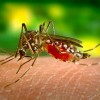
Brazil Measures Rain Against Dengue
Mosquitoes that transmit dengue fever need clean, still water and warm night temperatures to reproduce and thrive. That is common knowledge, but now scientists in Brazil have managed to measure the relation between increased rainfall and temperatures and the risk of dengue epidemics in this city.
Education Fights Militants and Military
Eight-year-old Muhammad Akram was forced to quit school when he was in the second grade, when the Taliban destroyed the small, government-run school that he and his brother had been attending.
Government “Continuity” Winning Over in Venezuela
While Hugo Chávez is being treated for serious illness in Havana, the premise of government "continuity" is winning out in his home country, along with plans to postpone his swearing-in ceremony for a new term as president of Venezuela, due to take place on Thursday Jan. 10.
Chilean Archaeologists and Environmentalists Fight Dakar Rally
Archaeologists, environmentalists and the National Monuments Council are battling the Dakar Rally, an annual off-road race, in northern Chile, an area with a rich archaeological and natural heritage that has already lost dozens of sites key to understanding Chilean and South American prehistory.U.S. to Take Closer Look at Flood of Corporate Political Spending
Civil society actors and the some corporate groups here are reacting with excitement to indications that the U.S. Securities and Exchange Commission (SEC), which regulates the country’s stock exchanges, is likely to take up discussion over new rules that would mandate the public disclosure of all political spending by U.S.-listed public corporations.« Previous Page — Next Page »





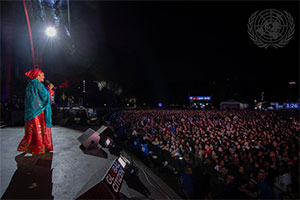 Global Citizen Festival in New York. Credit: UN Photo/Eskinder Debebe
Active citizens are committed to social change because they know that it is achievable. However, major political challenges face active citizens across the world. For example, in authoritarian regimes in Latin America where the hegemonic party has been in power for decades on end, protestors and human rights activists face enormous repression and struggle to materialize their advocacy into concrete results. The same can be said for Africans, where a shift towards elected government in recent decades has yet to translate into an effective voice in decision-making. Now, the Strengthening Citizen Demand for Good Governance, which uses evidence-based approaches – funded by DFID's Governance and Transparency Fund – seeks to raise their voices.
In 2025, the CIVICUS Monitor’s People Power Under Attack report revealed that civic freedoms are severely limited in 122 of 198 countries and territories, and only 7.2% of the global population now lives in countries where civic space is open. Through partnership with the Overseas Development Institute (ODI) and CIVICUS, IPS reporters across the continent will seek to define the extent and limits of state capability, government accountability and the responsiveness of leaders to the needs of citizens.

The Week with IPS

NEXT STOP - SDGs
Tracking global progress towards a sustainable world
Tracking global progress towards a sustainable world
