Languages
Monday, November 9, 2026



News and Views from the Global South
Active Citizens

U.S. Company Accused of Greenwashing Cameroon ‘Land-Grab’
Environment groups are accusing a New York-based agricultural company, Herakles Farms, of going forward with plans for a 73,000-hectare palm-oil plantation and refinery in southwest Cameroon despite a lack of government authorisation, two court injunctions, and in the face of significant community opposition.
Families of ‘Disappeared’ and Forensic Institute on Good Terms Again
Relations between the families of people “disappeared” by Chile’s 1973-1990 dictatorship and the forensic institute, which have been tense since a 2006 scandal when the state body admitted that it had misidentified 96 of the 126 bodies found in a common grave in 1991, are beginning to mend.
Ruling Against Thermoelectric Plant Sparks Debate
A Chilean Supreme Court decision ordering a halt to the construction of the Castilla thermoelectric power plant has sparked a debate over the country’s energy security.
Angola’s “Free and Fair” Elections Could Be Contested
Question marks hang over the legitimacy of Angola’s general election as Africa’s second-longest serving leader Jose Eduardo dos Santos has won a five-year term in office following his party’s landslide victory.
Debate on Asbestos Safety Reaches Brazil’s Supreme Court
Brazil’s Supreme Court is assessing the level of risk posed by asbestos to human health, while industry defends its use under controlled conditions, and associations of people with asbestos-related diseases argue that it should not be used under any circumstances, even with regulations.Taiwan Verdict Exposes Death Penalty Dangers
The end of Taiwan’s most controversial death penalty case this week has “punctured the myth that the judicial system never makes mistakes in death penalty cases,” Judicial Reform Foundation (JRF) executive director Lin Feng-cheng told IPS.
Israelis Brace Dubiously for War With Iran
Parviz Barkhordar says he loves both Israel and Iran. For many, this dual affinity might seem contradictory, but according to Barkhordar, it makes total sense.‘Super’ Cabinet Seeks to Save Myanmar
After months of speculation and rumours, President Thein Sein of Myanmar (earlier Burma) has created a “super” cabinet to try to salvage his besieged administration – riven with divisions and inertia. Currently he is embroiled in a constitutional crisis – a battle for power between the president and the parliament – that threatens to paralyse the government until it is resolved. This has left the president increasingly isolated, with only the army offering concrete support.
Papua New Guinea Poll ‘Free but not Fair’
Papua New Guinea’s national election, which ended a ten-month leadership duel between National Alliance Party and veteran post-Independence leader Sir Michael Somare, and Peter O’Neill, leader of the People’s National Congress Party, has come to a close with O’Neill announcing his new coalition government.
U.S.: Rights Groups Denounce Dropping of CIA Torture Cases
U.S. human rights groups have roundly condemned Thursday's announcement by Attorney General Eric Holder that the Justice Department will not pursue prosecutions of Central Intelligence Agency (CIA) officers who may have been responsible for the deaths of two prisoners in their custody.
Q&A: “Another Chile Is Possible, with Greater Democracy and Social Rights”
It is essential for young people in Chile to assume a more active role in politics, especially in two key electoral processes: the municipal elections in October and the legislative and presidential vote in 2013, says student leader Camila Vallejo, who has not ruled out running for a seat in parliament herself.Taiwanese Officials Get Away With Murder, Legally
Human rights activists warn that Taiwan government prosecutors have sent a message that torture is permissible by refusing to indict a former defence minister and eight other former military officers behind the wrongful execution of a young Air Force private by torturing him into confessing rape and murder.
Peru Identifies Civil War Victims – at Snail’s Pace
Of the 69,000 people killed during the 1980-2000 armed conflict in Peru, at least 16,000 were buried in secret unmarked graves. So far, only 2,064 of these bodies have been recovered, and just 50 percent have been identified, according to a new report.OP-ED: Radical Salafis Overrunning the Syrian Revolution
The recent visit by Abd al-Halim Murad, head of the Bahraini Salafi al-Asalah movement, to Syria to meet with Syrian rebels is an attempt by him and other Gulf Salafis to hijack the Syrian revolution.Intervention in Eastern Congo a Rising Priority for Activists
As the situation in eastern Democratic Republic of Congo (DRC) continues to deteriorate in the wake of an armed rebellion that began in April, some activists have strengthened calls for foreign military intervention.
Palestinian and Israeli Kids Play a Serious Game
On a sunny summer afternoon, kids start arriving with their parents at a park near Ein Rafa, a Palestinian village in the south of Jerusalem. The Arabic speaking kids stay in one cluster at first, and the Hebrew speaking kids chat among themselves. Soon a ball appears, and before long all the kids intermingle in a fast-paced game of Chinese football.
Study Damns Mekong Dams
Impoverished Laos is unlikely to cancel a Thai project to build a mega dam across the Mekong River at Xayaburi, despite warnings from the International Union for Conservation of Nature (IUCN) that it could devastate the region’s rich biodiversity.
Feed Europe, Feed the World
A huge moment for reform of the industrial farming system in Europe has many stakeholders on edge. Farmers who are feeling the crunch of rising input costs – from fertilisers to fuel – believe they can benefit greatly from a transition to more traditional and sustainable farming methods.
Feminine Creativity in the Face of Natural Disasters in Cuba
Blanca Lima raises all her appliances above flood level, puts boxes of clothes on top of wardrobes, and fills the shelves she installed near the ceiling with all kinds of objects. In less than an hour, she is ready to evacuate her home in case of a flood in the Cuban capital.
Activists Protest Shell’s Arctic Oil-Drilling Plans
By mid-September, the Royal Dutch Shell Oil (Shell) group hopes to begin exploratory oil drilling in the Arctic Ocean off the coast of northern Alaska, provided it can secure federal permission from the U.S. government and overcome other logistical obstacles. But a prominent environmental group warns that drilling will do "irreparable damage" to the area.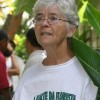
Activists Alarmed at Release of Dorothy Stang’s Murderer
The release from prison of the Brazilian rancher found guilty of ordering the 2005 murder of U.S.-born rainforest activist and nun Dorothy Stang has alarmed human rights defenders, who warn that it could set a dangerous precedent in other cases involving land disputes and the rights of poor farmers.« Previous Page — Next Page »





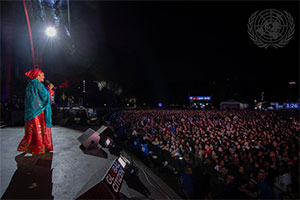 Global Citizen Festival in New York. Credit: UN Photo/Eskinder Debebe
Active citizens are committed to social change because they know that it is achievable. However, major political challenges face active citizens across the world. For example, in authoritarian regimes in Latin America where the hegemonic party has been in power for decades on end, protestors and human rights activists face enormous repression and struggle to materialize their advocacy into concrete results. The same can be said for Africans, where a shift towards elected government in recent decades has yet to translate into an effective voice in decision-making. Now, the Strengthening Citizen Demand for Good Governance, which uses evidence-based approaches – funded by DFID's Governance and Transparency Fund – seeks to raise their voices.
In 2025, the CIVICUS Monitor’s People Power Under Attack report revealed that civic freedoms are severely limited in 122 of 198 countries and territories, and only 7.2% of the global population now lives in countries where civic space is open. Through partnership with the Overseas Development Institute (ODI) and CIVICUS, IPS reporters across the continent will seek to define the extent and limits of state capability, government accountability and the responsiveness of leaders to the needs of citizens.

The Week with IPS

NEXT STOP - SDGs
Tracking global progress towards a sustainable world
Tracking global progress towards a sustainable world
