Languages
Saturday, November 14, 2026



News and Views from the Global South
Active Citizens
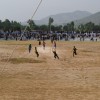
Where Sports Replace Terror
Pakistanis are no strangers to sports-related violence; in fact, many have come to expect scuffles and conflict, especially following a major cricket match. In the country’s northern Federally Administered Tribal Areas (FATA), however, cricket has become a tool to promote peace.Egypt Army Chief Calls for Nationwide Rallies
Egypt's army chief Abdel Fattah al-Sisi has called for nationwide rallies to give the military a mandate to confront what he termed violence and terrorism following the removal of President Mohamed Morsi.
Thou Shalt Not Eat Meat… On Mondays At Least
Nutritionists are promoting an 11th commandment in Mexico: “Thou shalt not eat meat… at least one day a week.”
Poland’s Shale Gas Bubble ‘Bursting’
Since Jun. 3, inhabitants of the village Zurawlow in Grabowiec district in southeastern Poland have been occupying a field in their locality where the U.S. company Chevron plans to drill for shale gas. The farmers’ resistance is just the latest blow to shale gas proponents in the country.
Indonesia Comes under Fire for Fires
With a propensity to devour everything in their path and spiral quickly out of control, leaving behind swathes of scorched earth, forest fires are considered a hazard in most parts of the world. In Indonesia, however, fires are the preferred method for clearing large areas of land for massive plantations of commercial crops.
Support for FGM Slowly Eroding, Global Report Finds
The United Nations children’s agency UNICEF released a report Monday that gives the most complete picture of female genital mutilation/cutting (FGM/C) ever published.
Making Peace with Our Futures
Future studies, like peace-development-environment studies, is an interdisciplinary, international effort to get a grip on key issues, divided into ‘preferred futures’ – utopias – whose?; ‘predicted futures’ – forecasting – who does it, for whom?; and ‘future practice’ – scenarios bending the predicted toward the preferred – by and for whom?
Undocumented Workers Find Courage in Solidarity
Ataur was 18 when he left Bangladesh and arrived in the United States in 1991 as an undocumented migrant. He took two jobs at the same time, earning about 35 dollars a day in total.
Egyptians Dispute the Meaning of Democracy
The events of Jun. 30 have split Egyptians into two categories. For those in the first, what happened that day was an army-supported public uprising to fulfill the objectives of the revolution of Jan. 25, 2011 and topple a president who broke promises and worked only to benefit his own group, the Muslim Brotherhood.
Imported Torture Haunts Poland
The only sign of life at Szymany’s "international airport" are mosquitoes eager to suck blood out of a rare visitor. The gate is locked with a rusted chain and a padlock.
Tensions Rise as Walmart Refuses to Pay “Living Wage”
Proponents of a proposed higher “living wage” requirement for workers at large retailers here in Washington are stepping up their campaign, urging the city’s mayor to sign pending legislation into law.
Fight over NSA Spying Spills into U.S. Courts
A wide variety of individuals and organisations have filed lawsuits challenging the National Security Agency (NSA) and other federal agencies and officials for conducting a massive, dragnet spying operation on U.S. citizens that was recently confirmed by whistleblower Edward Snowden.OP-ED: Egyptian Muslim Brotherhood: Exclusion Breeds Radicalism
The Egyptian military’s removal of the democratically-elected President Mohamed Morsi and the Muslim Brotherhood from power upended the MB’s 20-year old political participation programme. If the new regime aims to achieve genuine reconciliation and political consensus, the MB and its supporters must be included in the restructuring of Egyptian politics.
When Israelis Boycott a Settlement
As the European Union delegitimises the settlement enterprise further by officially announcing that, effective Jul. 30, its 28 member states are required to differentiate between pre-1967 Israel and Israeli-occupied territories, Israelis supportive of a two-state solution vigorously lead their own boycott campaign against Ariel, a settlement town of 20,000.
Santos Says Colombia Doesn’t Need U.N. Human Rights Office
The Colombian army killed Marta Díaz’s son Douglas in 2006, dressed him in combat fatigues and reported him as a FARC guerrilla killed in a shootout. Díaz searched for him everywhere, in prisons, hospitals and morgues, until she finally managed to track down his remains in 2008.
Japan’s Uneven Conservation Efforts
Efforts to protect the critically endangered Iriomote wildcat, a spotted, shy, feral creature native to the tiny Iriomote Island that forms part of the Okinawa Prefecture in southern Japan, are becoming a highly respected model of conservation here, where the government’s uneven track record in protecting imperiled species has frustrated wildlife activists for decades.
Survivors of Clergy Sexual Abuse Press Vatican for Answers
Mary Caplan was just 14 years old, and her father was dying of cancer. When she went to the local priest in her hometown of Jersey City to ask for prayers and help, he sexually abused her, and went on to do so for the next two and a half years.
Haitian Women Still Waiting for a Seat at the Table
More than two years ago, Haiti's parliament approved a landmark amendment to the country's 1987 constitution to ensure that women fill at least 30 percent of elected and appointed positions at the national level.
Egypt May Not go the Algeria Way
The ouster of Egypt's first freely elected president by the military has led some to warn of a possible Algeria-style civil war. Local analysts, however, dismiss the likelihood of the "Algeria scenario" occurring in Egypt.
Are Middle Class Protests Fallout from Poverty Alleviation?
The rise of the "global middle class" is widely attributed to the gradual eradication of extreme poverty in the developing world, even as the United Nations says that millions of people in countries such as India, China and Brazil have graduated from the ranks of the indigent.
Community Theatre Confronts Gender Stereotypes
The play opens with a man and his mother waiting impatiently at the dining table in the family home. A woman rushes in after a busy day at the office with takeaway dinner packets, followed by her son and daughter who walk in expecting their mother to serve them a meal.« Previous Page — Next Page »


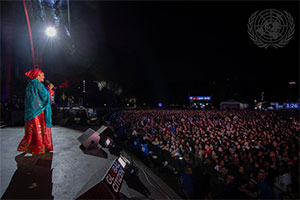 Global Citizen Festival in New York. Credit: UN Photo/Eskinder Debebe
Active citizens are committed to social change because they know that it is achievable. However, major political challenges face active citizens across the world. For example, in authoritarian regimes in Latin America where the hegemonic party has been in power for decades on end, protestors and human rights activists face enormous repression and struggle to materialize their advocacy into concrete results. The same can be said for Africans, where a shift towards elected government in recent decades has yet to translate into an effective voice in decision-making. Now, the Strengthening Citizen Demand for Good Governance, which uses evidence-based approaches – funded by DFID's Governance and Transparency Fund – seeks to raise their voices.
In 2025, the CIVICUS Monitor’s People Power Under Attack report revealed that civic freedoms are severely limited in 122 of 198 countries and territories, and only 7.2% of the global population now lives in countries where civic space is open. Through partnership with the Overseas Development Institute (ODI) and CIVICUS, IPS reporters across the continent will seek to define the extent and limits of state capability, government accountability and the responsiveness of leaders to the needs of citizens.

The Week with IPS

NEXT STOP - SDGs
Tracking global progress towards a sustainable world
Tracking global progress towards a sustainable world
