Languages
Wednesday, September 30, 2026



News and Views from the Global South
Active Citizens

Sowing Water by Restoring Ancient Ditches in the Peruvian Highlands
In the highlands near the capital of Peru, more than 3,000 metres above sea level, ageold water recovery techniques are being used to improve access to water for 1,400 families, for household consumption and for crops and livestock.
People Power: Why Mobilisations Matter Even in a Pandemic
It has been one year since the police murder of George Floyd, an outrage that resonated around the world. The killing forced people to the streets, in the USA and on every inhabited continent, to demand respect for Black lives and Black rights, proving that protest was essential even during the pandemic.
– Mining giant Rio Tinto Face Environmental, Human Rights Complaint in Papua New Guinea –
On the occasion of World Environment Day, 5 June 2021, drawing from IPS’s bank of features and opinion editorials published this year, we are re-publishing one article a day, for the next two weeks. The original article was published on January 4 2021

Myanmar: Protestors Plea for International Help as Analysts Fear Full Military Might
Myanmar activists have called on the international community for help as security forces loyal to the military continue their draconian sweep against the civil disobedience campaign that has brought the country to a standstill since the Feb. 1 coup. The pleas come as analysts, commentators and diplomats who know Myanmar fear that more bloodshed is almost inevitable.
Lebanon: A Lion Pit for Journalism
Our deadliest nightmare is back: Political assassinations in Lebanon is back with the horrific murder of Luqman Slim, a vocal critic of Hezbollah. Slim’s assassination is the first killing of a high-profile activist and outspoken journalist in years. What do the political assassinations in Lebanon tell us about the history of this country?
UN Peacebuilding Commission must Prioritise Protecting Youth Activists Facing Retaliation
The United Nations Peacebuilding Commission must prioritise the protection of youth activists who face retaliation from state and non-state actors, said UN Youth Envoy Jayathma Wickramanayake.
Is Turkey a Proof that Religion and Democracy Cannot Coexist?
Over the years, Turkey has survived three Coup d'état in which its military forces took power, in 1960, 1971 and 1980. The coup in 1997, was carried out in a “post-modern way”, where generals sat down with the then prime minister, Necmettin Erbakan and forced him to resign. However the turning point in Turkey has been the failed coup attempt in July 2016, which has till date been one of the bloodiest coup attempts in its political history, leaving 241 people killed, and 2,194 others injured.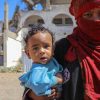
A Counter-Narrative? Ruminations Around Holocaust Memorial Day
For more than two decades, the mantra was “PVE” (preventing violent extremism) and/or “CVE” (countering violent extremism). Millions of dollars were spent, new NGOs and think tanks emerged, government policy papers were drafted, countless books and articles were published, large and small scale initiatives developed - indeed almost an entire industry in development and foreign policy spaces thrived.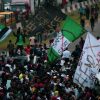
Q&A: What Nigerian Feminists Hope will Come Out of the #EndSARS Movement & Pandemic
As Nigeria’s biggest city, Lagos, reportedly experienced a massive shortage of oxygen cylinders last week — with demand increasing fivefold in one of the city’s main hospitals just as the country recorded some of its highest number of coronavirus cases — its youth leaders are concerned about the impact on vulnerable women.
Volunteerism in the Decade of Action
After the pioneer Global Technical Meeting on Volunteerism last July, a recently-held on-line follow up helped gathering new insights from experts and practitioners from the world on how to move forward with positioning volunteering at the center of development agenda.
Imprisoned Saudi Activist and Other Rights Defenders Seek Justice in 2021
Two events generated significant interest and global solidarity in the final days of December 2020. A court in Saudi Arabia handed down a five years and eight months sentence to activist Loujain Al-Hathloul for publicly supporting women’s right to drive. Nicholas Opiyo, Ugandan human rights lawyer and defender of persecuted members of the LGBTQI community and political opponents of the president was arbitrarily detained on trumped up charges of ‘money laundering.’ Nicholas Opiyo was granted bail on 30 December following an outpouring of global support for his activism for justice. In handing out the verdict to Loujain Al-Hathloul, the court partly suspended her sentence raising hope that she might be released from prison in a couple of months due to time already served.
Mining giant Rio Tinto Face Environmental, Human Rights Complaint in Papua New Guinea
Local communities in the vicinity of the abandoned Panguna copper mine, have taken decisive action to hold the global mining multinational, Rio Tinto, accountable for alleged environmental and human rights violations during the mine’s operations between 1972 and 1989.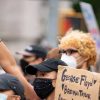
USA Downgraded as Civil Liberties Deteriorate Across the Americas
Few images better illustrate the recent decline in civil liberties in the United States than that of peaceful protesters near the White House being violently dispersed so Donald Trump could stage a photo-op.
If Your Civic Space is Closed, your Human Rights Dissolve
On Human Rights Day, civil society calls for the protection of civic space as a fundamental freedom, as more than 80% of the world’s population live in countries where civic space is closed, repressed or obstructed.
The Importance of Investing in Volunteerism
The International Volunteer Day will approach soon and the 5th of December will become a day to celebrate the actions of millions of volunteers from all over the world, in the south as well in the north of the world.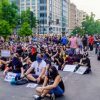
Amid COVID-19, What is the Health of Civic Freedoms?
More than half a year after the World Health Organization declared the COVID-19 outbreak a pandemic, governments are continuing to waste precious time and energy restricting human rights rather than focusing on fighting the virus.
Community Hydropower Dam Illuminates Life in Salvadoran Villages
Ermelinda Lobos's life has improved substantially since she and the rest of the people in her small village, hidden in the mountains of northeastern El Salvador, worked hard to build a mini hydroelectric plant and become self-sufficient in energy.
‘Leave No one Behind’: How Inclusive is World Leaders’ Call to Climate Action?
Wrapping up Climate Week at the United Nations General Assembly, global leaders called for climate action that may be “ambitious but achievable” and called for climate measures that would “leave no one behind”. But some climate activists remain concerned about how this can be achieved.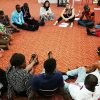
The Culture of Peace: Change our World for the Better in the Age of COVID 19
Last year, we paid tribute to the 20th Anniversary of the 1999 Declaration of the Program of Action on a Culture of Peace. Today, we need to ask ourselves if we had genuinely carried out our moral responsibilities to transition from a culture of hatred and violence to a culture of tolerance and peace.
Sierra Leone – Why Everyone is Not Celebrating the New Media Law
Last week, Sierra Leone’s parliament voted to repeal the country’s 55-year-old libel law, which criminalised the publication of information that was deemed defamatory or seditious, and which had been used by successive governments to target and imprison media practitioners and silence dissenting views. But not everyone is convinced it was in the best interest of media freedom.
Indigenous Farmers Harvest Water with Small Dams in Peru’s Andes Highlands
A communally built small dam at almost 3,500 meters above sea level supplies water to small-scale farmer Cristina Azpur and her two young daughters in Peru's Andes highlands, where they face water shortages exacerbated by climate change.« Previous Page — Next Page »


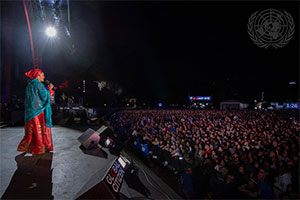 Global Citizen Festival in New York. Credit: UN Photo/Eskinder Debebe
Active citizens are committed to social change because they know that it is achievable. However, major political challenges face active citizens across the world. For example, in authoritarian regimes in Latin America where the hegemonic party has been in power for decades on end, protestors and human rights activists face enormous repression and struggle to materialize their advocacy into concrete results. The same can be said for Africans, where a shift towards elected government in recent decades has yet to translate into an effective voice in decision-making. Now, the Strengthening Citizen Demand for Good Governance, which uses evidence-based approaches – funded by DFID's Governance and Transparency Fund – seeks to raise their voices.
In 2025, the CIVICUS Monitor’s People Power Under Attack report revealed that civic freedoms are severely limited in 122 of 198 countries and territories, and only 7.2% of the global population now lives in countries where civic space is open. Through partnership with the Overseas Development Institute (ODI) and CIVICUS, IPS reporters across the continent will seek to define the extent and limits of state capability, government accountability and the responsiveness of leaders to the needs of citizens.

The Week with IPS

NEXT STOP - SDGs
Tracking global progress towards a sustainable world
Tracking global progress towards a sustainable world
