Languages
Sunday, October 18, 2026



News and Views from the Global South
Conferences

Elites Will ‘Consider Inequality’
With no acute crisis on the radar, this year's Annual Meeting of the World Economic Forum (WEF) will move away from the response mode of the past years and “look for solutions for the really fundamental issues,” its founder Klaus Schwab said at the pre-meeting press conference.
Global Trade Winds Leave the Poor Gasping
For years, it was the power chamber at the headquarters of the World Trade Organisation (WTO) in Geneva - the Director General’s Conference Room, more popularly known as the Green Room, where a handful of delegates would gather for important discussions and meetings.
Local Action Against Climate Change a Beacon of Hope
In Maputo, a port city on the Indian Ocean in Mozambique, 44 percent of the 1.2 million inhabitants live in poverty, making them even more vulnerable to the effects of sea level rise, floods and cyclones. But despite their severe poverty, their day-to-day experience gives them practical knowledge on how to deal with climate change effects.
Storm Brews at U.N. Climate Talks
Hundreds of representatives from various NGOs walked out of the negotiating rooms at the United Nations climate talks in Poland on Thursday in protest against the reluctance by developed nations to commit towards achieving a global climate treaty.
Cleopatra Drives in Haiyan’s Climate Change Message
Cleopatra is the name chosen for the younger sister of Haiyan, the cyclone that wreaked havoc in the Philippines last week. This latest storm caused massive floods and left 16 dead and hundreds displaced in Sardinia, Italy.G77 Walk-out at COP19 as Rich Countries Use Delaying Tactics
The G77+China group of 133 developing countries negotiating a new international deal at COP19 in Warsaw to combat climate change walked out of the talks in the wee hours of Wednesday morning to protest developed countries’ reluctance to commit to loss and damage.
Driving Home the Link Between Gender and Climate Change
Tuesday was Gender Day at the COP19 climate summit in Warsaw, and many of the events that took place in the National Stadium focused on the topic of gender and its relation with climate change, and tried to shed a light on problems that require action from policy-makers.
Coal Tries to Clean Up Its Image
An International Coal and Climate summit organised by the Polish Ministry of Economy and the World Coal Association kicked off Monday in the Polish capital Warsaw in parallel to the United Nations Climate Change Conference COP19, amid outcry from environmentalists who accused COP host Poland of bias in favor of the coal industry.
Brazil Headed Towards an Energy Revolution
Energy consumption and production are undergoing fundamental shifts but the world is still on course to a 3.6 degree C hotter climate according a report released during the U.N. climate talks in Warsaw.
Concerns Over Role of Corporates at Climate Talks
As deliberations continue in earnest at the 19th United Nations Conference on Climate Change in Warsaw, negotiators from the Global South welcome a focus on financing adaptation – but reject a new emphasis on a role for the private sector.
Developing World Pushes for Rescue of U.N. Carbon Credit Fund
Negotiators from Least Developed Countries are calling for the United Nations climate body to urgently establish a rescue fund to save Kyoto Protocol’s Clean Development Mechanism from collapse.
U.S. Fights G77 on Most Counts at Climate Meet, Leaked Doc Shows
The U.S. delegation negotiating at the U.N. international climate change conference in Poland is pushing an agenda of minimising the role of “Loss and Damage” in the UNFCCC framework, prioritising private finance in the Green Climate Fund, and delaying the deadline for post-2020 emission reduction commitments, according to a State Department negotiating strategy which IPS has seen.Israel’s Nuclear Ambiguity Prodded
As Palestinian-Israeli peace talks and nuclear talks on Iran’s disputed nuclear programme continue, a unique international conference, “A Middle East without Weapons of Mass Destruction (WMDs)”, was held in Jerusalem.
OP-ED: Act Now, Act Big to End Sexual Violence in DRC
Imagine an orphanage where over 300 children born out of rape have been abandoned because of the shame and stigma associated with sexual violence. Imagine a town where, in the last year, 11 infants between the ages of six months and one year, and 59 small children from one to three years old, have been raped.
Groups Target Food Waste to Eliminate Hunger
If all food loss and waste around the world could be recovered, half the world's population, or 3.5 billion people, could be fed. Yet people throw away a third of food produced globally, an issue that inspired the theme of these year's World Food Day, sustainable food systems for food security and nutrition.
Programme to Boost Small Farmers Fights for Continuity
When it launched in 2007, the FAO programme known as Food Security through Commercialisation of Agriculture (FSCA) tried to adopt an approach that differed from on-going efforts to achieve food security, which focused primarily on food production.
‘Deserts Can Save Forests’
It may take development of the deserts to save forests, say experts, who stress that desert ecology needs to be preserved and enhanced.
Montevideo Consensus Urges Countries to Change Abortion Laws
Representatives of 38 countries of Latin America and the Caribbean meeting this week in the Uruguayan capital urged governments in the region to consider modifying their laws on abortion, which are among the most restrictive in the world.
Q&A: “We Are Building Sexual Citizenship”
Latin America and the Caribbean should play a central role in the construction of “sexual citizenship” - a concept that covers a series of population-related issues, rights and guarantees that this region helped build since the United Nations first emerged, says Brazilian expert Carmen Barroso.
Latin America’s Youth Face Hurdles to Jobs and Safe Sex
Shortcomings in the educational system in Latin America and the Caribbean fuel inequalities that remain hurdles to access to the labour market and safe sex for a large part of the region’s youth.
Indonesia Comes under Fire for Fires
With a propensity to devour everything in their path and spiral quickly out of control, leaving behind swathes of scorched earth, forest fires are considered a hazard in most parts of the world. In Indonesia, however, fires are the preferred method for clearing large areas of land for massive plantations of commercial crops.« Previous Page — Next Page »





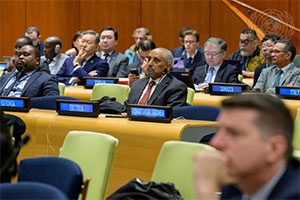 General Assembly Meets to Hear Briefing on UN80 Initiative. Credit: UN Photo/Manuel Elías
Global development conferences are continuing to produce critical frameworks for South-South cooperation and multilateral reform. In January of 2024, the 3rd Global South Nexus (GSN) International Conference was held in Odisha, India, with its theme being “Creating Responsible Professionals for Advancing SDGs: Inputs from Global North and South.” The 2025 UN SDG Report provided a midpoint assessment of the 2030 Agenda, with only 35% of targets on track and 18% having reversed. The 2025 UN Climate Change Conference (COP30) in Belém, Brazil, agreed to mobilize $1.3 trillion annually for climate action by 2035, operationalize the loss and damage fund, triple adaptation finance, and launched the Belém Mission to 1.5°C. In 2025, the Partnership for Economic Policy (PEP) convened its annual Policy Conference in Nairobi, Kenya, addressing the issue of “Financing and Inclusivity in Green Energy Transition in the Global South.” As the Global South advocates increasingly for a South-South framework alongside North-South cooperation, international conferences on sustainability aim to bridge economic and social divides between developed and developing countries in achieving the UN SDGs. Furthermore, to mark the UN’s 80th anniversary, the UN80 Initiative was launched to reshape how the UN system works so that every mandate, dollar, and decision creates greater impact for the global system.

The Week with IPS

NEXT STOP - SDGs
Tracking global progress towards a sustainable world
Tracking global progress towards a sustainable world
