Languages
Sunday, October 18, 2026



News and Views from the Global South
Conferences

Japan’s Uneven Conservation Efforts
Efforts to protect the critically endangered Iriomote wildcat, a spotted, shy, feral creature native to the tiny Iriomote Island that forms part of the Okinawa Prefecture in southern Japan, are becoming a highly respected model of conservation here, where the government’s uneven track record in protecting imperiled species has frustrated wildlife activists for decades.
Economics and Population Policies Go Hand In Hand in Latin America
Nearly 20 years after the landmark U.N. conference on population and development, the countries of Latin America have an opportunity to make headway with a new agenda on these issues, thanks to the favourable economic context that has made it possible to reduce social inequalities.
Q&A: “The Middle Class Is Making Its Voice Heard in Brazil Today”
The protests on the streets of Brazil are the result of the expansion of the middle class, who want their demands to be heard, said Rebeca Grynspan after visiting the country to inaugurate the World Centre for Sustainable Development.
Media Scholars Decry Financial Crisis, Call for Action
Communications scholars from around the world deplored the global financial crisis and called on their peers to take more active roles in the search for solutions at a recent four-day conference in Dublin, Ireland.
Job Creation Looming Challenge for Post-2015 World
In the aftermath of the global economic crisis and with three years to go until the 2015 deadline of the Millennium Development Goals, global leaders are struggling to formulate a post-2015 agenda that can address the widespread dilemmas of employment and inclusive growth.
TerraViva Comes to FAO
Dear Reader: TerraViva, a special publication of the IPS news agency, the leader in coverage of development issues, civil society and the emerging South, is once again circulating, this time in the meeting rooms and hallways of the FAO building.
U.S. Moving Toward Controversial New Role in Global Energy Market
Energy specialists say that advancements in fossil fuel extraction technologies have sparked a "revolution" in U.S. energy production, especially given radical recent changes in the global energy market and the U.S. role within it.Ukraine Injects Addicts With Hope
As former presidents, senior diplomats and experts meet in the Lithuanian capital to discuss a litany of rights abuses, lethal epidemics and social destruction caused by repressive drug policies in Eastern Europe and Central Asia, pockets of hope for drug reform are emerging across the region.
Behind the Climate Finance Headlines
Developed countries report that they delivered more than 33 billion dollars in Fast Start Finance (known as FSF), beyond the pledges they made at COP 15 in Copenhagen in 2009. Recent analysis suggests that the funding delivered may have exceeded 38 billion dollars. But that is not the whole story.
Mexican Climate Fund Short of Cash, Slow Off the Mark
The Climate Change Fund set up in November in Mexico faces enormous challenges such as the enforcement of anti-corruption standards, which make it unlikely that concrete actions will begin this year, according to civil society organisations.
Tackle Malnutrition Now
Between 2010 and 2012, 868 million people worldwide were deemed hungry by a conservative definition. This figure represents only a small fraction of the world’s population whose health and lives are blighted by malnutrition.
Japan Seeks to Remake Asia-Africa Relationship
Acutely aware of China’s strong presence in resource-rich Africa, Japan, the world’s third largest economy, is beefing up its relations with the continent. Participants at a high-level donor conference hosted by Japan this week stressed the need for closer engagement, not through the traditional grants and assistance loans that have hitherto defined the relationship, but rather through trade and investment led by the Japanese private sector.
Q&A: “The State Does Not Lose Sovereignty If It Respects Indigenous Rights”
"There is a belief that consent is about saying yes or no, about who wins," observed James Anaya, the United Nations special rapporteur on indigenous rights. But consultation with indigenous peoples is a matter of “creating open processes where they can voice their opinions and influence decisions, and where there is the necessary will to seek consensus.”
Sex Educators Struggle to Break Taboos
Liberian journalist Mae Azango says she spent a year living “like a bat, going from tree to tree” with her daughter in order to escape religious fanatics who were threatening to kill her for exposing the practice of female genital mutilation in her home country last year.
Native People More Than Just Park Rangers
Some good-byes can actually mean the start of a long road working together. That was how it felt at the end of the World Indigenous Network (WIN) conference in this northern Australian city.
Youth Say Coca-Cola Is Easier to Find Than Condoms
“If I am thirsty and want a bottle of Coca-Cola I can get it, no matter where in the world I am. Why can’t I get contraceptives or sexual heathcare?” asked Carlos Jimmy Macazana Quispe, a youth representative from Peru currently in Kuala Lumpur for the third edition of the Women Deliver global conference on the "health and well-being of women and girls."
Sharing Indigenous Knowledge from All Ends of the Globe
This city in northern Australia brought them together to share their experiences this week. They are indigenous Shipiba people fighting indiscriminate logging in Peru’s Amazon jungle region and delegates from the Ando-Kpomey community in Togo, which created and protects a 100-hectare forest.
Guardians of the Land and Sea Meet in Darwin
“Are you a park ranger?” IPS asked. “No, I am one of the owners of the territory,” Ángel Durán responded in a firm voice. The Bolivian indigenous leader is in this northern Australian city along with 1,200 other native delegates from over 50 countries for the World Indigenous Network (WIN) conference.
Tackling Crime Takes on Import As Urban Populations Rise
As people around the world continue to migrate into cities, swelling urban populations, they have sparked growth in another area: crime and security issues.
Q&A: Reworking Finance to Serve People and the Environment
The wake of the global financial crisis, as many national governments in Europe cut back on services to citizens and used public money to rescue banks, taught many people a valuable lesson.
Brazil Lagging in Fight against Human Trafficking
In contravention of international law, in Brazil trafficking in human beings remains invisible and unpunished, which encourages the practice of trafficking for sexual exploitation, forced labour, illegal adoption and the trade in human organs, according to experts.« Previous Page — Next Page »





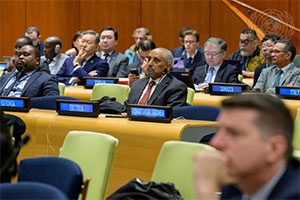 General Assembly Meets to Hear Briefing on UN80 Initiative. Credit: UN Photo/Manuel Elías
Global development conferences are continuing to produce critical frameworks for South-South cooperation and multilateral reform. In January of 2024, the 3rd Global South Nexus (GSN) International Conference was held in Odisha, India, with its theme being “Creating Responsible Professionals for Advancing SDGs: Inputs from Global North and South.” The 2025 UN SDG Report provided a midpoint assessment of the 2030 Agenda, with only 35% of targets on track and 18% having reversed. The 2025 UN Climate Change Conference (COP30) in Belém, Brazil, agreed to mobilize $1.3 trillion annually for climate action by 2035, operationalize the loss and damage fund, triple adaptation finance, and launched the Belém Mission to 1.5°C. In 2025, the Partnership for Economic Policy (PEP) convened its annual Policy Conference in Nairobi, Kenya, addressing the issue of “Financing and Inclusivity in Green Energy Transition in the Global South.” As the Global South advocates increasingly for a South-South framework alongside North-South cooperation, international conferences on sustainability aim to bridge economic and social divides between developed and developing countries in achieving the UN SDGs. Furthermore, to mark the UN’s 80th anniversary, the UN80 Initiative was launched to reshape how the UN system works so that every mandate, dollar, and decision creates greater impact for the global system.

The Week with IPS

NEXT STOP - SDGs
Tracking global progress towards a sustainable world
Tracking global progress towards a sustainable world
