Languages
Monday, November 16, 2026



News and Views from the Global South
Civil Society

Are Indigenous Women Key to Sustainable Development?
"We, indigenous women want to be considered as part of the solution for sustainable development, because we have capabilities and knowledge, " said Tarcila Rivera, a Quechua journalist and activist for the rights of indigenous people in Peru, at a press conference on the Empowerment of Indigenous Women.
Reaping the Gender Dividend
For the first time, an all-female flight crew recently operated a Royal Brunei Airlines jet from Brunei to Jeddah in Saudi Arabia. Such a feat certainly appears noteworthy in a country where gender segregation is pervasive. When women are still not permitted to drive a car; where there are separate entrances for men and women in banks, is there a possibility of an all-female crew operating a Saudi Airlines plane from Jeddah to Brunei? Not immediately, as there are disturbing signs that the limited gains on the gender front might face reversals.
Corruption Threat to Pacific Island Forests
The vast rainforests of Papua New Guinea (PNG) and the Solomon Islands in the southwest Pacific Ocean are crucial for environmental sustainability, survival of indigenous peoples and the wider goal of containing climate change. But forest degradation, driven primarily by excessive commercial logging, most of which is illegal, is a perpetual threat.
Myanmar’s Rohingya Humanitarian Crisis
The persisting humanitarian crisis of the Rohingya minority in Myanmar has been a global concern after two bouts of organised mass violence against them in 2012. While the Rohingya persecution has been going on for nearly four decades, Myanmar’s reforms launched in 2011 facilitated the international media’s coverage of the mass violence.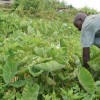
Improving Rural Livelihoods Boost Agrarian Economies
For two decades, Dickson Kamau only grew maize on his 0.5 hectare (ha) of land earning himself the nickname Kamau wa mbembe or Kamau who owns maize in his native Kikuyu language.
Rural Costa Rican Families Flourish in the Shade
Before they got involved in farming, Luis Diego Murillo and Xinia Solano paid their bills and put food on their table with Luis’s salary as a foreman on construction sites, an unstable job that kept him on the move.
Tribute to a Slain Environment Activist
Berta Isabel Cáceres Flores, was in her early 20s when she co-founded the Council of Popular and Indigenous Organisations of Honduras (Cophin), a group that campaigned for the rights of indigenous communities in the Central American nation.
Fat’s Heavy Burden on the World Economy
About 2.1 billion people are regarded as overweight or obese today, or almost thirty per cent of the world’s population. With over 800 million people estimated to be chronically hungry in the world, it appears that the number of overweight is more than 2.5 times the number of undernourished.
Turkey’s Crackdown on the Press
On the evening of March 4, heavily armed police forced their way into the headquarters of the Turkish daily Zaman. The hundreds of protesters that had gathered in front of the building in an Istanbul suburb in solidarity with their newspaper were violently dispersed.
Palestinian Refugees from Syria
In the safety of his sister's bare flat in Beit Hanoun, Gaza, 42 year-old Iyad Yusef still shakes his head in disbelief when he recounts the journey that from war-torn Syria, brought him and his family to the relative safety of the blockaded strip.
Clean Clothes – Fashion Free of Slave Labour in Argentina
In Argentina, there are now 20 brand names that guarantee that their garments are produced by workers in decent working conditions, thanks to the Clean Clothes network, aimed at eradicating slave labour in the garment industry, which illegally employs some 30,000 people in sweatshops around the country.
Enriching Education in Bangladesh
About a year ago, seven year-old Afroza Khatun dropped out of school as her mother could not continue supervising her homework. The interruption in her grade II lessons was soon noticed by a teacher of an information education centre known as ENRICH, a state-funded programme which aims at supporting children who drop out to continue their education from the primary level (up to grade II).
Repressive NGO Act
Nearly two weeks after controversially winning a fifth term, it has emerged that Uganda’s President Yoweri Museveni has signed another repressive law which restricts the operations of thousands of NGOs working in the country.
Rural Community Fights a Second Dam and a New Expropriation of Land
In 1976, the construction of a hydroelectric dam destroyed farmland in the rural municipality of Chicoasén in southern Mexico. Forty years later, part of the local population is fighting a second dam, which would deprive them of more land.
Women “Water Friends” Script a Success Story
Prema Bai, 58, bends her head and pushes hard her wheelchair on the village road. In the early afternoon, the village of Mamna appears almost deserted although it is home to 742 families and is located in Uttar Pradesh - India’s largest and most populated state. Thanks to a severe drought, every man and woman under 50 has fled Mamna in recent weeks, leaving behind the elderly and women with very young children. “They thought we were like cattle, a burden in this hard time because we only eat but yield no returns,” says Bai whose two sons and their wives also migrated to Agra -- a city 255 km away -- to work in a brick kiln.
Public Primary Boarding Schools in Pastoral Communities
Jonathan Tipapa is a nine year-old boy whose daily journey to and from school exposes him to many dangers that have seen him come close to dropping out of school -- like many of his friends who can be seen running after cows even on school days. He attends Enkutoto primary school in the expansive Narok South Constituency in the Rift Valley region, approximately 70 miles from the capital Nairobi.
Tanzania Farmers, Pastoralists Launch Forum to Resolve Water Conflicts
At a remote village of Itunundu in Iringa, farmers and pastoralists recently met to discuss the best way to share land resources while charting out a strategy to prevent unnecessary fights among themselves. No one in the village ever imagined that this meeting would ever take place as the two groups had for long considered themselves enemies: they often clashed for water and pastures to feed their animals thus causing deaths and loss of property.
Schools are in for Summer
“We are extremely jubilant over the rebuilding of our school that the Taliban destroyed it in 2013, due to which we used to sit without a roof,” Mujahida Bibi, a student of 8th grade in Government Girls Middle School North Waziristan Agency, told IPS.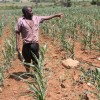
Anti-Retrovirals but No Food
Silindiwe Moyana, an HIV positive mother of five from Chipinge east of Zimbabwe, cannot hide her anxiety. She was worried she might not survive this year as drought-induced starvation stalks her and her family. The country is in the throes of a devastating drought which has compromised the nutrition of people living with HIV.
Faith Leaders Join the Fight against Child Marriage
Anger is an inner demon that one must have a strong grip on, believes Virayya Shastri - head priest of Maddi Madugu Anjaneya Swamy temple in southern India’s Mahbubnagar district. But mention ‘child marriage’ and the priest finds himself struggling to stay calm. ““Early marriage ruins a girl’s body and scars her mind. There is no way you can call yourself a believer when you support such a thing,” says the priest turned anti-child marriage advocate.
Zika Epidemic Offers Sanitation a Chance in Brazil
Three decades of dengue fever epidemic did not manage to awaken a sense of urgency in Brazil regarding the need for improving and expanding basic sanitation. But the recent surge in cases of microcephaly in newborns, associated with the Zika virus, apparently has.« Previous Page — Next Page »


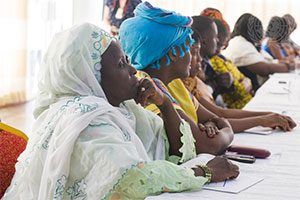 Representatives of Civil Society, Sierra Leone. Credit: UN Photo/Eskinder Debebe
Civil society faces mounting threats worldwide, even as it remains essential for democratic accountability, especially in countries struggling with economic instability and social inequality. However, at the same time, nations with weak democratic governance structures also systemically suppress the power of civil society. Human rights activists across the Global South frequently challenge issues such as political persecution and gender oppression, but in return face state-sanctioned punishment for their advocacy. Imprisonment and exile are common mechanisms of punishment that seek to erode the strength of civil society. The 2026 World Press Freedom Index has reached its lowest level in 25 years, with more than half of the world’s countries now falling into the "difficult" or “very serious” category for press freedom. IPS seeks to highlight the work of civil society across the Global South as well as the challenges that they face.
Updated by Yilan Batista and Shuli Wong August 2026

The Week with IPS

NEXT STOP - SDGs
Tracking global progress towards a sustainable world
Tracking global progress towards a sustainable world
