Languages
Friday, October 9, 2026



News and Views from the Global South
Education

Water and Sanitation: Bridging the Gender Gap on India’s Seas
Jeeja Behera, 34, the wife of a fisherman in the village of Sannapatna in India’s cyclone prone Puri district, dreads the onset of the cyclone season between October and January every year due to the lack of water, sanitation and hygiene in cyclone shelters.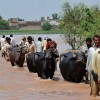
Climate Negotiators Discussing Warming and Migration Links
Stirred by the exodus of hundreds of thousands of refugees from Syria, where global warming exacerbated a drought that fueled warfare, links between climate change and human displacement have finally been thrust into news reports and political debates.
Permeable Dams Prevent Land Loss and Save Mangroves in Suriname
Suriname’s coastline is eroding so quickly scientists predict the country’s maze of mangroves could disappear in just 30 years unless there is urgent action on climate change.
Pakistan Moves to Stop Biodiversity Loss
Pakistan has framed a biodiversity conservation and protection plan aimed at stemming biodiversity loss, restoring ecosystems and promoting sustainable use of natural resources for the wellbeing of the present and the future generations.
Mother-to-Child AIDS Transmission Dealt a Blow in Zimbabwe
With the battle to combat HIV/AIDS intensifying in Zimbabwe, the Prevention of Mother to Child Transmission initiative (PMTCT) has increasingly become a success weapon in the war on transmission of the once dreaded disease to the country’s unborn babies, despite some mothers testing positive for the disease.
In Botswana: Leaving the Corporate Office to Work the Land – and Finding Opportunity
Beauty Manake moves around these days with a “million dollar” smile on her face. The 31-year old woman from Botswana now runs a thriving vegetable and livestock farm, as well as an agribusiness consultancy group.Opinion: Ending Child Marriage – What Difference Can a Summit Make?
The long-awaited African Girls’ Summit on Ending Child Marriage is here.
Women Suffer Psychological Problems After Living Under Taliban
“My two sons were killed by Taliban militants mercilessly three years ago. My husband died a natural death two year back. Now, I am begging to raise my two grandsons,” Gul Pari, 50, told IPS.
Hunger Heralds Climate Change’s Arrival in Botswana
A perfect storm of lower rainfall and a growing population beckons for Botswana. But others find climate change is already in the fields and paddocks. “As climate change ushers in more stress on the water sector, it is increasingly a concern that losses in rangeland productivity will result in food insecurity, especially in rural areas,” a country analysis report unveiled recently on Botswana states.
Analysis: Are Young People the Answer to Africa’s Food Security?
Are you young, energetic, creative, ambitious and need a job? Africa's agriculture sector needs you!
Where Technology and Medicine Meet in Rural Zambia
 When health officer Kennedy Mulenga was faced with a male patient developing breasts at the remote Ngwerere Clinic 30km north of the Zambian capital, Lusaka, he logged onto Virtual Doctors to get help solving the medical mystery.

Solar Power Keeps the Midnight Oil Burning at the University of Dodoma
Power cuts wreak havoc on most lives, but when you have an exam the next day and you have to do well, without light to study by you are stuck. But those dark days in the dorm may soon be over.US Universities Home to Record Number of Foreign Students
The number of international students in US colleges and universities has continued to increase, reaching nearly one million in the current 2014-2015 academic year, according to the latest figures released by the International Institute of Education (IIE).
Opinion: China’s New South-South Funds – a Global Game Changer?
South-South cooperation is usually seen as a poor second fiddle to North-South aid in the world of development assistance. Indeed, developing countries’ policy makers themselves insist that South-South cooperation can only supplement but not replace North-South cooperation.
From Bangladesh to Bihar
Times are a-changing for Bihar, a state popularly described as a state of mind. The recent elections have brought back Nitish Kumar as the chief minister for the fifth time. Since his first innings as a developmental CM from 2005, he has transformed Bihar from being an archetype of India’s backwardness to one of its fastest growing states. Besides improving governance, he has also politically empowered women in that benighted state. Not surprisingly, the women’s vote was decisive for his electoral success. He now has the historic opportunity to shift gears towards sustainable gender-based development.
Latin American Legislators, a Battering Ram in the Fight Against Hunger
Lawmakers in Latin America are joining forces to strengthen institutional frameworks that sustain the fight against hunger in a region that, despite being dubbed “the next global breadbasket”, still has more than 34 million undernourished people.
School Meals Bolster Family Farming in Brazil
“That law should have existed since the end of slavery, which threw slaves into the street without offering them adequate conditions for working and producing, turning them into semi-slaves,” said Brazilian farmer Idevan Correa.
Opinion: Integrating Water, Sanitation and Health are Key to the Promise of the UN Global Goals
The 193 member states of the United Nations have adopted an ambitious 15-year sustainable development agenda, the 2030 Global Goals.
Opinion: Renewed Optimism or Higgledy-Piggledy Vision?
The 17 sustainable development goals (SDGs) and the whopping 169 targets were adopted in the largest ever United Nations Summit, attended by Prime Ministers, Presidents and the Pope, among other luminaries, in New York. These goals encompass world peace, the environment, gender equality, elimination of poverty and hunger and much, much more.
Opinion: Food Loss & Waste Has Got to Do a Lot with Sustainable Development
More than 150 world leaders will meet in New York this weekend to adopt the Sustainable Development Goals (SDGs), a set of global targets intended to end extreme poverty, fight inequality and injustice, and curb climate change. The SDGs will help set the global development agenda for the next 15 years, focusing attention on the opportunities that will allow for more a sustainable future.
Latin America to Adopt SDGs, Still Lagging on Some MDGs
In the last 15 years, Latin America and the Caribbean have met several key targets included in the Millennium Development Goals (MDGs), such as reducing extreme poverty, hunger and child mortality, incorporating more girls in the educational system, and expanding access to clean water.« Previous Page — Next Page »





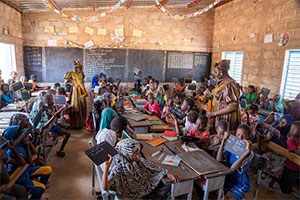 Two teachers work in a classroom in Forces Vives School in Dori, Burkina Faso. Credit: UNICEF/UNI978361
Safe and uninterrupted education is a fundamental right for all children. Education is paramount to global development, as it has been proven that investing in education – especially for girls and children – contributes significantly to economic growth and prosperity. Although more than 1 billion children go to school, many are subjected to conditions that are not conducive to a proper learning environment, including makeshift facilities, a lack of supplies, violence in classrooms, inadequate sanitation, untrained instructors, and widespread school closures. Since 2015, there have been immense gains in education with an increase of 109 million children in school. However, as of 2023, 272 million children are still out of school.
High poverty levels in developing countries also impede children’s access to a proper education. For example, from the early to mid 2000s, Sub-Saharan African nations witnessed a dramatic decline in trained teachers due to inadequate funding in the education sector. Furthermore, major cuts to United States international aid threaten an estimated 23 million additional children's access to education, as USAID‑funded school programmes across Africa and Asia face closure.
Various other factors contribute to the decline of education, notably hunger, which has increased as conflict and climate change interfere with global food production and dissemination. Meanwhile, certain social and cultural practices also impede children’s access to education, with gender inequality, discrimination, child labour, and child marriages preventing millions of children from attending school. Economic conditions such as the inaccessibility of higher education also affect disenfranchised communities across the world. In extreme situations, such as warfare where educational facilities are destroyed in their totality, notably in Gaza and Sudan, entire generations of children might grow up without access to education. Rebuilding educational infrastructure is a long and arduous process, especially when violence persists across generations, and this significantly stunts the development of societal prosperity and stability.
IPS is dedicated to telling the shocking truths about worldwide education through impassioned opinion pieces and comprehensive articles, highlighting global issues that impede worldwide education and the courses of action being taken by organizations such as UNICEF and Education Cannot Wait.

The Week with IPS

NEXT STOP - SDGs
Tracking global progress towards a sustainable world
Tracking global progress towards a sustainable world
