Languages
Friday, November 20, 2026



News and Views from the Global South
Food and Agriculture

BRAZIL: Development Trumps Environment on Election Agenda
With Brazil's elections only about a fortnight away, there is already a clear winner: "developmentalism." This position espoused by the two main presidential candidates has relegated pressing environmental issues to a lowly place on the campaign agenda, in spite of the fact that the third contender represents the Green Party (PV).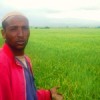
ETHIOPIA: New Wheat Variety to Deal with Wheat-killer Diseases
Like most farmers in Ethiopia, Jundi Hajji expected that the profit from his wheat harvest would be sufficient to feed his family of eight until next year's harvest.
HAITI: Hurricanes and the River Flowing
In the evening the lowering clouds burst. Through the night they loosed their torrents on the southeastern coast of Haiti.Hunger Drops Mere Half a Percent over Last Decade
Ten years after setting the goal of halving the proportion of people suffering from poverty and hunger by 2015, only mixed success can be found for the U.N.'s Millennium Development Goals (MDGs), and the degree of success is dependent not only on what country is examined but which evaluation is used.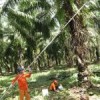
BRAZIL: Small-scale Palm Oil Production Is Women’s Work Too
"This isn't women's work," they told her. But Benedita Nascimento is now one of the most outstanding success stories of a family farming programme involving palm oil production in Brazil's eastern Amazon jungle.MEXICO: Experts Denounce Slant in Corn Subsidies
The Mexican government's subsidies for corn (maize) production since 1994 have benefitted large- and medium-scale growers, to the detriment of small farmers, according to a new study by Mexican and U.S. researchers.
TRADE: It’s the End of the Export-Led Growth Model, Says UNCTAD
While the recovery from the financial and economic meltdown remains fragile in especially the developed world, the outlook for Africa inspires optimism, according to UNCTAD. The agency also believes the crisis might be the death- knell for the export-led economic growth model -- especially African countries should leave it behind.DEVELOPMENT: Fewer Hungry, but More Hunger Waits
Figures the Food and Agriculture Organisation (FAO) presented here Tuesday revealing a reduction in the world's number of hungry people in 2010 for the first time in 15 years should be a cause for celebration. In reality it is a hollow success.World Bank Boosts Ag Lending Ahead of MDG Meet
With the Millennium Development Goals review summit just one week away, the World Bank is the latest international player to announce its strategy to help achieve those goals by their 2015 deadline.Irrigation Transforms Lives in Southern Zimbabwe
More than a million people will need food aid in Zimbabwe this year. As the government looks to boost agriculture production, one rural community is leading the way by using irrigation schemes to improve food security and income.ZIMBABWE: Big Market, Bigger Challenges for Matabeleland Farmers
Most fruits and vegetables sold in Bulawayo are imported from South Africa, because farms immediately around Zimbabwe's second city cannot meet demand. Locals are paying high prices as a result.INDIA: Cereals Rot in the Rain While the Poor Stay Hungry
When India's Supreme Court reacted to the news that thousands of tonnes of grain were rotting in the rain due to lack of granary space and ordered the government to distribute the surplus free of cost to the hungry, it seemed like the logical thing to do.
“Orange” Maize Could Save Eyesight of Millions of African Children
'Orange' maize, a variety of the common cereal crop, could improve the lives of millions of malnourished people by providing increased vitamin A in their diet, according to a new study released here this week.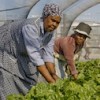
SOUTH AFRICA: Greening Project Creates Income and Food Security
Frances Mandla is visibly filled with pride. Together with her colleague, Nouniform Nqevu, she stands tall and smiling in front of a wide bed of lush spinach. The harvest will be their ticket to a better life. A life where there is enough money to buy food, clothes and pay school fees.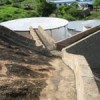
Harvesting Water to Save Crops and Lives
Peter Kivuti, a 51-year-old farmer from Eastern Kenya, never relied on meteorological weather predictions all his life - until three years ago. It was then that rainfall in the region become less predictable.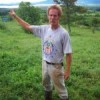
MEXICO: Responsible Tourism in a Lost Rural Paradise
It's a mixture of volunteer work and tourism. The visitor pays to spend a few weeks in contact with nature and carry out the chores of an organic farm. The idea behind it all is to cultivate environmental awareness.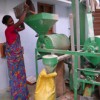
INDIA: Buoyed by Growing Market, More Farmers Go Organic
He had decided to grow watermelons this summer on his one-acre (.405 hectare) plot, and so Veera Narayana went about preparing the arid red earth by first ploughing it and then lighting fires in the furrows.AGRICULTURE-AFRICA: Land Grabs in Poor Countries Set to Increase
After weeks of rumours sparked by the leaking of a draft World Bank position paper on so-called land grabs in poor countries, the international financial institution has officially released its report on the surge in farmland purchases and leasing which have elicited controversy for over two years.Biking Across the Americas, Spotlight on Children
Damián López, of Argentina, has been riding his bicycle the length of the Americas for the past three years. His mission? In addition to completing the long journey, he wants to shine the spotlight on children who are at risk due to violence or abandonment.
SOUTHERN AFRICA: Adapt or Perish
A changing climate will prompt changes in behaviour across Southern Africa. And when it comes to adaptation, Swazi farmer Bongani Phakathi is a frustrated man a few steps ahead of his neighbours.NICARAGUA: Extreme Poverty Falls – But Opposition Asks ‘How’?
An independent study has confirmed that extreme poverty in Nicaragua fell by 7.5 percentage points between 2005 and 2009, an achievement clouded by criticism of the environmental costs, a supposed lack of transparency and the paternalism of the country's social programmes.« Previous Page — Next Page »


 Farming on the Outskirts of Juba. Credit: UN Photo/JC McIlwaine
Promoting human and planetary health is a central focus of the United Nations, as laid out in the 2030 Sustainable Development Goals (SDGs). World hunger and unsustainable farming practices continue to be pressing concerns for the world. According to the 2025 State of Food Security and Nutrition in the World report by the Food and Agriculture Organization (FAO), 673 million people faced hunger in 2024. There are stark regional disparities, with the FAO projecting that 60% of the world population facing hunger will reside in Africa by 2030. Globally, the prevalence of food insecurity has remained consistently higher for women than men.
Sustainable and efficient national food systems are essential in preserving health, education, environmental well-being, peace, economy, and security. However, creating sustainable food systems can be a challenging endeavor, as food production takes a heavy toll on the environment. The agricultural sector accounts for a significant portion of greenhouse gases. Finding safe, sustainable, and ethical strategies to feed the world is crucial in ensuring planetary longevity. A recent initiative from 2023, the EU Regulation on Deforestation-free Products (EUDR), seeks to advocate for sustainable food systems. The main driver of deforestation is the expansion of agricultural land used to produce commodities like cattle, wood, cocoa, coffee, etc. The EUDR is part of the 2020 European Green New Deal and the EU Biodiversity Strategy for 2030 and aims to limit Europe’s consumption of products linked with deforestation by requiring that companies prove that their products are deforestation-free. Despite aiming to achieve major strides in sustainability, policies such as EUDR also raise socioeconomic concerns for targeted countries. Many emerging Latin American economies are impacted by the policy, and have raised the question of how developing countries can grapple with the tensions between economic development and advancing sustainability.
IPS has been at the forefront of providing compelling and insightful stories on communities facing hunger as well as the cost of food production. IPS uses statistics from FAO, the World Food Programme (WFP) and the International Fund for Agricultural Development (IFAD) to bring relevant and hard-hitting facts to readers. This gathering of information and data from such organizations helps bring the best stories from IPS journalists working in the different regions in consultation with experts on the ground.

The Week with IPS

NEXT STOP - SDGs
Tracking global progress towards a sustainable world
Tracking global progress towards a sustainable world

