Languages
Tuesday, November 10, 2026



News and Views from the Global South
Humanitarian Emergencies

Tegucigalpa Learns to Live with Climate Challenges
In slums lining several hillsides in the Honduran capital, mitigation works are under way to protect the neighbourhoods from flooding and landslides, which completely obliterated several areas when Hurricane Mitch hit the country fifteen years ago.
Refugees of Libyan War Protest at World Social Forum
“We need a solution. The U.N. has created the problem, and they should do their work and fix it,” says Bright, a young Nigerian stuck in the Choucha refugee camp in Tunisia, a few kilometres from the Libyan border.
Canada Pulls Out of U.N. Body to Fight Desertification
Canada is pulling out of the United Nations convention that fights droughts in Africa next year, making it the only country in the world not participating in the United Nations Convention to Combat Desertification (UNCCD).
Tug-of-War Over Nuclear Future
Pushed and pulled in opposite directions, the future of Japan’s energy plans in the wake of the accident at the Fukushima Daiichi nuclear power plant two years ago is emerging as a fight between national economic advancement and what anti-nuke activists call “the lives of the people”.
Who Will Aid the Aid Workers?
Fifty-six-year-old Perween Rehman had dedicated her life to humanitarian work. As head of the Orangi Pilot Project's Research and Training Institute (OPP-RTI), she spent years working in one of the largest informal settlements in Pakistan’s port city of Karachi, helping to overhaul a primitive sanitation system that was expected to serve Orangi’s 1.5 million inhabitants.
Obama Boosts Syria Support as Congress Pushes Military Intervention
As the Syrian uprising enters its third year, the United States and its allies are preparing to materially increase their support of the armed opposition in Syria.
Water Crisis Hitting Food, Energy – And Everything Else
How much water does it take to turn on a light? It took 10,000 litres to make your jeans. Another three big bathtubs of water was needed for your two-eggs-toast-coffee breakfast this morning.
Little Hope for the Children Abducted in Mali’s War
One of Amina Diallo’s sons, 14-year-old Salif, has been missing since August last year. She thinks Islamists kidnapped him while he was on his way to the market in their hometown of Gao, in northern Mali, and recruited him as a child soldier.
Climate Change Now Seen as Security Threat Worldwide
Defence establishments around the world increasingly see climate change as posing potentially serious threats to national and international security, according to a review of high-level statements by the world’s governments released here Thursday.
Syrian Delegates Push for Peaceful Resolution of Conflict
Amidst ongoing violence between the Syrian regime and opposition forces, and serious international discourse on arming the opposition, some Syrian civil society leaders are insisting upon a non-violent approach toward conflict resolution.Palestinians Prepare a Bitter Welcome for Obama
The rumbling drone of a fleet of U.S. helicopters carrying security and administrative personnel could be heard long before the eight choppers came into view over the Ramallah horizon on their way to the Palestinian Authority (PA) presidential compound in the West Bank de facto capital Ramallah.
Stories Sprout like Warnings in Japan’s Tsunami Wasteland
As a survivor of Japan’s deadliest tsunami in living memory, Shun Ito dedicates his mornings to evoking stories of heroism that helped to save lives in this port town that was decimated on that fateful March afternoon two years ago.
‘Born in War, Grown up in War, Now Time for Rehabilitation’
Sungu Mizele, a Congolese national living in Yambio, in South Sudan’s Western Equatoria state, earns a living selling the fruit and vegetables that she grows in her backyard, at the local town market. On average, she earns nine dollars a day. But on a good day, when she has fresh supplies, she can earn up to 31 dollars.
Low Expectations Colour Obama’s Israel Trip
With Barack Obama set to travel on his first trip to Israel as president, expectations for a major breakthrough on the long-stalled Israeli-Palestinian “peace process” are low to nonexistent.
Taliban Victims Seek Support
People disabled through bomb and suicide attacks by the Taliban in the Federally Administered Tribal Areas and the nearby Khyber Pakhtunkhwa province are seeking support for themselves, and demanding strict action against the Taliban.
Peace Laureate Obama Urged to Back Arms Trade Treaty
Eighteen Nobel Peace Prize recipients called Thursday for President Barack Obama to take a leadership role in supporting a “historic” internationally binding agreement that would regulate the global arms trade, including instituting a strict ban on arms sales to states involved in egregious human rights abuses.
Afghanistan Faces “Massive Economic Constriction” after U.S. Withdrawal
Next year’s drawdown of U.S. forces and decline in U.S. aid will leave in its wake an Afghan political system lacking legitimacy and stability, according to interviews with Afghanistan experts, news reports and congressional studies.
Public Pays for Fukushima While Nuclear Industry Profits
Two years after Japan's Fukushima Daiichi nuclear disaster, the country faces 100 to 250 billion dollars in cleanup and compensation costs, tens of thousands of displaced people and widespread impacts of radiation.
At Home, and Not at Home
The influx of hundreds of thousands of war-weary refugees from Syria to Lebanon is putting an almost unbearable strain on many of the communities that have taken them into their homes. A domestic economic crisis compounded by the arrival of such large numbers of refugees is weighing heavily on many impoverished areas.
‘Every Day Is a Fukushima Memorial’
Japan prepares to mark the second anniversary of the Mar. 11 triple disaster - an earthquake, tsunami and a critical nuclear reactor accident - with much soul searching across the country.U.S. Austerity Ripples Outward
Since the 2008 financial crisis, and most recently with the broad federal spending cuts beginning Mar. 1, experts have warned that an austerity-minded political system could bring about dramatic changes in the U.S. foreign aid model.« Previous Page — Next Page »





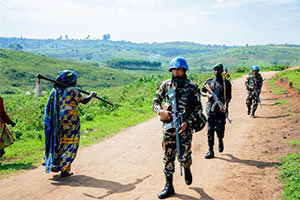 MONUSCO Peacekeepers and FARDC Soldiers Patrol Fataki Area. Credit: UN Photo/Jorkim Jotham Pituwa
Conflict, human rights violations, natural disasters, and famine have been at the forefront of concerns for humanitarian organizations. The escalation of humanitarian crises has led to over 239 million people in need of humanitarian assistance at the start of 2026, as estimated by OCHA’s Global Humanitarian Overview. The 2025 humanitarian appeal received only $12 billion, the lowest funding in over a decade, which has left 24 million fewer people reached in comparison to 2024. Conflict has remained the primary driver of crisis.
Humanitarian emergencies massively impact progress towards the Sustainable Development Goals (SDGs), adversely affecting economic development, inequality, education, planetary well-being, and poverty. Millions of people are faced with reduced access to essential services, including shelter, food, healthcare, and access to clean drinking water. UN Organizations such as UNHCR and the United Nations Children’s Fund (UNICEF) are committed to providing direct relief to affected communities when state governments cannot.
The United Nations 2024 Summit of the Future discussed measures that will be taken to reduce global inequality and promote peacekeeping efforts around the world. The recent UN Climate Change Conference (COP30) in Belém, Brazil, agreed to mobilize $1.3 trillion annually for climate action by 2035, operationalize the loss and damage fund, and triple adaptation finance. However, a fossil fuel transition commitment was not secured, despite climate change and the greenhouse effect being major contributors to humanitarian crises worldwide.
Countries across the world have also rallied to end humanitarian crises, as witnessed in conflicts such as Palestine and Ukraine. IPS is committed to providing relevant and in-depth reports of humanitarian emergencies around the world and their implications.

The Week with IPS

NEXT STOP - SDGs
Tracking global progress towards a sustainable world
Tracking global progress towards a sustainable world