Languages
Tuesday, May 5, 2026



News and Views from the Global South
Humanitarian Emergencies

From Child Laborer to Activist, Tara Banjara Asks World to Pledge to End the Scourge
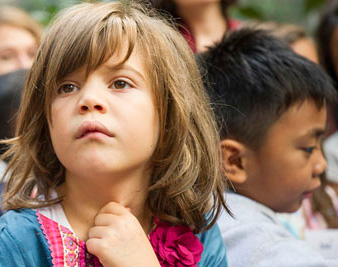
Tara Banjara was four and a half years old when her parents put her to work on the roads, cleaning the garbage and rubble out of potholes to prepare for construction in Nemdi village, Rajasthan, India. She worked in the wind, cold, and rain with her mother, day in and day out, year in and year out. She would return home shattered, too exhausted to eat before falling asleep each night.
It’s Time To Globalise Compassion, Says Nobel Laureate Kailash Satyarthi
A mere 53 billion US dollars per annum – equivalent to 10 days of military spending – would ensure all children in all countries benefit from social protection, Nobel Laureate Kailash Satyarthi told the 5th Global Conference on the Elimination of Child Labour.
Undocumented Migration Puts Pressure on New Chilean Government for Solutions
The pressure of the influx of migrants, especially Venezuelans, has reached a critical level in northern Chile, and is felt as far as the capital itself, forcing the government that took office in March to create a special interministerial group this month to propose solutions that respect their human rights.
Alarm Bells for Africa, Child Labour in Agriculture Requires Urgent Action
The Global Estimate on Child Labour estimates 160 million children are in child labour worldwide – an increase of 8.4 million children in the last four years – with millions more at risk due to the impacts of COVID-19.
Inequality Tightens Its Grip on the Most Vulnerable
Please do not say you were not aware that the world produces enough food to feed all human beings on Earth, while nearly double the combined European Union’s population go to bed hungry… every single night.
Call to Freedom for Millions of Children Trapped in Child Labour as Global Conference Comes to Africa
Children washing clothes in rivers, begging on the streets, hawking, walking for kilometres in search of water and firewood, their tiny hands competing with older, experienced hands to pick coffee or tea, or as child soldiers are familiar sights in Africa and Asia.
The Time to Support the Global South is Now
While the Russian war of aggression against Ukraine is shaking up the European security order, other parts of the world are being particularly affected by the war’s ‘side effects’.
Pakistan’s Campaign to Contain Polio in Face of Vaccine Hesitancy
Pakistan's North Waziristan district authorities have launched an aggressive vaccination drive after a polio case surfaced after 15 polio-free months in the country. The disease was detected in a 15-month-old toddler about 15 kilometers away from the Afghanistan border. This area was considered a Taliban militant’s hub until 2014.
War and Famines – Warnings of Potential Outcomes of the War in Ukraine
An entirely unnecessary and all too tangible nightmare continues to scourge Ukraine. Without doubt, one catastrophe after another still awaits. Much of Ukraine’s harvest, of paramount importance to global food supply, is at risk of being lost due to Vladimir Putin’s and the Russian army’s belligerent actions. Last year, Ukraine harvested a record of 106 million tonnes of grain – 25, or even 50 percent of this amount is currently feared to be lost during this year while most experts add that “this is an optimistic forecast.”
Projections for a Pandemic Future: in Whose Interest?
In what has been defined a historic consensus decision aimed at protecting the world from future infectious diseases crises, on 1st December 2021, the special session of the World Health Assembly agreed to kickstart a global process to draft and negotiate a convention, agreement or other international instrument to strengthen pandemic prevention, preparedness and response.
Women Leading Humanitarian Efforts in Ukraine, Now Include them in Leadership, say UN Women and CARE
A joint UN Women and CARE report on the gender disparities in the wake of the Ukrainian crisis calls for donors and humanitarian partners to take greater care to promote the voices of women and marginalized communities in the humanitarian effort.
Sri Lanka: Debt Crisis, Neocolonialism and Geopolitical Rivalry
Sri Lanka is in the throes of an unprecedented economic crisis. Faced with a shortage of foreign exchange and defaulting on its foreign debt repayment, the country is unable to pay for its food, fuel, medicine, and other basic necessities. Notwithstanding the austerities that would be entailed, a bail out by the International Monetary Fund (IMF) has been accepted as the only way out of the dire economic situation.
Today is the Time for Transformation
“I first think about my children. They are why we were forced to leave - because our children are always our first concern.” These are the moving words of Victoria, who fled the brutal war in Ukraine with her two daughters. Her eyes welling up with tears, she recalled their dangerous journey from Ukraine. She and her two school-aged daughters were forced to leave behind everything they have ever known.
Civil Society Responds — as Health-Care Facilities in Ukraine Come Under Attack
Alongside the devastation caused by bombs and bullets, the war in Ukraine has wrought another danger that can be as deadly as the violence itself: the disruption of access to health services for people who will not survive if cut off from health care.
Ukraine’s EU Membership Ambition
Before the war, Ukraine's dream to become part of the EU was exactly that – a dream. But the new political reality could make it come true. Russia’s invasion of Ukraine changed and to some extent even destroyed the familiar international political reality. Up until 24 February, Russia had been integrated into the global economy, had excellent growth prospects, and the construction of the Nord Stream 2 gas pipeline was almost finished.
Breaking Menstruation Taboos and Leaving No Girl Behind
Fourteen-year-old Hadiza smiles as she clutches a purple bag in her hands. Inside the cloth bag is a Menstrual Hygiene Management kit, an essential item that gives her dignity and enables her to continue with school even when menstruating.
In Sri Lanka, Things Fall Apart
When I ended last month’s column hoping that April would not prove to be hapless Sri Lanka’s ‘cruellest month’ (in the words TS Eliot), I hardly anticipated the current turn of events.
Pacific Community-Led Health Missions Arrive with Critical Support to Tonga and Kiribati Grappling with COVID-19 Surges
Before the pandemic emerged in 2020, health services in many Pacific Island countries were under-resourced, under-funded and under-staffed. Now following recent outbreaks of COVID-19, advancing the capacity and development of health and medical services in vulnerable nations, such as Tonga and Kiribati, is increasingly urgent.
Transgender Ukrainian Refugees Impacted as War with Russia Continues
Soon after Russia invaded her country, Anastasiia Yeva Domani found herself forced to abandon the regime of vital medicines she was taking. The transgender activist could no longer get hold of the hormone medicines she needed to regularly take in Ukraine as supply chains were disrupted and the vast majority of pharmacies were closed.
Rising Food Prices: Global Risks & Vulnerabilities
The breakout of the conflict in Ukraine and the following imposition of heavy Western sanctions on Russia are causing sharp price increases in food and energy commodities —of which both Ukraine and Russia represent key exporters — as well as disruptions to global supply chains, impacting the post-pandemic economic recovery.
Road to European Dream Paved by Extortion and Exploitation
Last June, Mit Al Korama's youth gathered in front of one of their homes on a summer evening to tell stories of citizens from the village and neighboring villages who had successfully crossed the Mediterranean to Europe.« Previous Page — Next Page »