Languages
Saturday, November 28, 2026



News and Views from the Global South
Development & Aid

Ethiopia’s Protest Leaders Say No Change in Government
Despite speculation that the first anti-government protest in eight years, which was held this week in Ethiopia's capital, Addis Ababa, might signal new levels of political tolerance by the government, leaders of the political party that organised the protest say this cannot be further from the truth.
Looking to Cameroon’s Women Senators
Marlyse Aboui, a 40-year-old nurse, has still not gotten over the astonishment she felt when she heard that Cameroon’s President Paul Biya had nominated her to the senate.U.S. Denounces Egyptian NGO Trial Results
President Barack Obama’s administration and several major rights groups are reacting with frustration to the decision of an Egyptian court, announced Tuesday night, to convict 43 civil society organisations and 16 U.S. employees of illegal use of foreign funds.
Children Help Take Care of Havana Bay
On a piece of paper, Jennifer Rivas draws a beach, with little girls carrying bags of trash and signs that say “Let’s take care of the environment.” The 10-year-old is part of an educational programme, Friends of the Bay, that involves 322 schools in the Cuban capital.
When the Health System Is Taken Ill
Leaning on her daughter’s arm in the post-operative ward of a hospital in Srinagar, capital of the northern Indian state of Jammu and Kashmir, Raja Begam views the anti-infection pill she is being offered with a large dose of suspicion.“Syria Peace Meeting Will Not Happen in June”: UN Envoy
A conference on ending the fighting in Syria will not happen in June, as planned, because both sides in the conflict are unprepared to attend, the U.N.'s international envoy Lakhdar Brahimi said.
In Besieged Refugee Camp, Syrian Medics Struggle to Provide
It was nine in the morning when the shell landed in front of nine-year-old Hella al-Abtah's house in the Yarmouk Palestinian refugee camp in Damascus. Hella survived the initial blast but was critically wounded in the head, and her father rushed her to the Palestine Hospital, blood pouring from the laceration.
Quantitative Easing: Impact on Emerging and Developing Economies
The global economy is awash with successive waves of liquidity generated over the past few years by the four most advanced economies, viz., the United States, the European Union, (EU), Japan and the United Kingdom, known as the G4. This liquidity has taken the form of “quantitative easing” (QE).
Skyscrapers, Land Rovers in One of World’s Poorest Countries
Lined up along the streets of central Maputo, Mozambique’s capital city, are expensive, European-style bars and restaurants with sophisticated names like Café Continental, Nautilus, 1908 and Mundos.
Landgrabbing to Provide Horn of Africa with Electricity
Ethiopia’s long-term hydropower strategy is proving to be both a source of economic sustenance and contention. In becoming Africa’s leading power exporter through the construction of a series of dams across the country, Ethiopia could threaten the lives of millions who depend on the Nile River’s waters.
For First Time, U.S. to Lease Offshore Wind Blocks
The U.S. government announced Tuesday that it would be going forward with long-discussed plans to auction federal leases off the Atlantic Ocean coast for the development of offshore wind energy.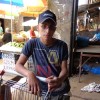
Palestinian Child Labourers Face Grim Future
Hazem Maher, 16, from Hebron in the southern West Bank, works a backbreaking 12-hour day in the fruit and vegetable market in the city of El Bireh, next to Ramallah. He earns just over 15 dollars a day as a porter.
Africa Leading the New Patterns of Growth
The old theories governing the way that countries produce and trade are being replaced. The pattern of trade is being transformed by increasingly sophisticated technology and innovations in transportation; and the topography of actors is shifting to reflect new poles of growth.
Despite Peace Talks, Forced Displacement Still Climbing in Colombia
Drugs and arms traffickers are muscling in on Colombia's Pacific coastal region, forcibly displacing local people, according to a new report by the Consultancy for Human Rights and Displacement (CODHES).
Ecuador’s Fragile Páramo Ecosystem Threatened by Climate Change
The “páramos” or high plateaus of Ecuador, a crucial source of water, are showing signs of extreme fragility and a troubling loss of capacity to conserve this vital resource and sustain the survival of numerous species found nowhere else on earth.
Reviving Zimbabwe’s ‘Growth Points’
More than three decades after Zimbabwe’s independence, the idea of developing its rural areas seems to have been laid to rest, as points intended for development have been turned into beer outlets, which seem to be more lucrative than industry.
Driving Against Gender Stereotypes
It is swerves and roundabouts for Keddy Olanya, a 32-year-old wife and mother of three from Gulu, northern Uganda, who is one of only a handful of female drivers negotiating the country’s potholed roads on a bodaboda or motorbike taxi.
Japan Seeks to Remake Asia-Africa Relationship
Acutely aware of China’s strong presence in resource-rich Africa, Japan, the world’s third largest economy, is beefing up its relations with the continent. Participants at a high-level donor conference hosted by Japan this week stressed the need for closer engagement, not through the traditional grants and assistance loans that have hitherto defined the relationship, but rather through trade and investment led by the Japanese private sector.Obama Pledges to Bring Mental Health “Out of Shadows”
President Barack Obama tried Monday to jumpstart a new national discussion on mental health, sponsoring a conference with Vice-President Joe Biden aimed at reducing social stigma around the issue.
Historic Arms Trade Treaty Signed at U.N.
The United Nations witnessed a historic moment Monday with the signing of the Arms Trade Treaty, first adopted in April by the General Assembly, and the first time the 85-billion-dollar international arms trade has been regulated by a global set of standards.
U.S. Increasing Solitary Confinement, Impact Uncertain
The U.S. federal prison system’s use of solitary confinement and other forms of “segregated housing” has increased substantially over the past five years, according to new data released by the U.S. Congress’s official independent watchdog.« Previous Page — Next Page »


 2026 High-level Political Forum on Sustainable Development. Credit: UN Photo/Eskinder Debebe
In 2015, the United Nations and its Member States adopted the Sustainable Development Goals (SDGs) in an effort to make the world a more sustainable and peaceful place for future generations. Progress on the 17 SDGs has been uneven, and inequality persists across the globe. 10 years after adoption, the 2025 UN SDGs Report revealed that only 35% of the SDG targets are on track, with more than half moving too slowly, and 18% moving backwards from the 2015 baseline. Poverty remains one of the world’s most pressing issues, with hunger, violence, and inequality impeding the opportunities for all people to achieve success. In September 2024, the United Nations Summit of the Future introduced a new goal: to eradicate global poverty by 2030, ensure universal rights to basic services, and increase the overall standard of living in terms of industrialization, economic well-being, citizen health, and literacy. Furthermore, recent shifts in United States foreign aid policy – notably, major budget cuts to USAID and the termination of thousands of development programmes– have severely threatened vital lifelines of financial aid to impoverished communities around the world. Additionally, the United States’ withdrawal from the Paris Climate Agreement has undercut international efforts at sustainable development. With the upcoming 2030 deadline, the UN Secretary-General has called for urgent multilateralism across six priority areas: food systems, energy, digital connectivity, education, jobs and social protection, and climate and biodiversity. IPS sheds light on marginalized communities that struggle on a daily basis to survive and have their stories heard and respected.
Updated by Yilan Batista and Shuli Wong August 2026

The Week with IPS

NEXT STOP - SDGs
Tracking global progress towards a sustainable world
