Languages
Sunday, November 8, 2026



News and Views from the Global South
Population

Fishing Communities Will Face Warmer, Acid Oceans
Eating fish has been an integral part of the Caribbean's cultural traditions for centuries. Fish is also a major source of food and essential nutrients, especially in rural areas where there are scores of small coastal communities.
Las Pavas Extracts a Miracle from God
The rural community of Las Pavas in northern Colombia received this year’s National Peace Prize Wednesday in recognition of its peaceful struggle for land that is claimed by an oil palm company, in a case that became an international symbol of the conflict over land in this country.
Cancer a Heavy Burden for Cash-Strapped Cuban Families
The meagre budgets of Cuban families are put to the test when one of the members is diagnosed with cancer. Although treatment is free of cost, only extended networks of support help alleviate the economic impact of the disease, which is now the number one cause of death.
Little Preparation for a Great Disaster
Despite the government’s early warnings and evacuation of up to 800,000 people from vulnerable areas, the category 5 - the highest level - Typhoon Haiyan (Yolanda to Filipinos) has left some communities and coastal zones in the central Philippine islands of Visayas in complete ruins.
Small Islands Demand U.N. Protection
Threatened by rising seas, some of the world's small island developing states (SIDS) are demanding that the U.N.'s new set of Sustainable Development Goals place a high priority on the protection of oceans and marine resources.
Ethiopia’s Indigenous Excluded from Rapid Growth
As the construction of a major transmission line to export electricity generated from one of Ethiopia’s major hydropower projects gets underway, there are growing concerns that pastoralist communities living in the region are under threat.
Caught Between Afghan and Pakistani
Seventeen-year-old Usmanullah Shah has never been to Afghanistan, the land of his forefathers. The son of Afghan parents who fled to Pakistan 34 years ago to escape war, he shudders at the thought of going there.
The Sickest Places in the World
Parts of Indonesia, Argentina and Nigeria are among the top 10 most polluted places on the planet, according to a new report by U.S. and European environmental groups.Bodies of Migrants Found in Niger Desert
The bodies of 87 migrants were found in Niger's northern desert after they died of thirst just a few kilometres from the border of Algeria, their planned destination, security officials said.
In Haiti, Cholera Claims New Victims Daily
Some 2,400 kilometres from New York City, where victims of Haiti's cholera epidemic are suing the United Nations in a U.S. federal court, the disease continues to burn through the populace with no end in sight.
Ivoirians Face an Incomplete Justice
“We are sad. We want our president back,” Yao Amandine told IPS from a street corner in the Ivorian economic metropolis, Abidjan, after the International Criminal Court ruled against granting former Ivorian President Laurent Gbagbo a conditional release on Tuesday.
Teen Pregnancy Rooted in Powerlessness
Before we begin, perhaps we can set aside the stereotypes: no, she didn’t "mess herself up by following boys around", and no, it is not in fact her fault that she became pregnant.
Waiting for the Next Superstorm
One year ago, Hurricane Sandy ravaged the Northeast United States, causing an estimated 68 billion dollars in damage and paralysing the world’s financial nerve centre.
Too Many Indians Find It’s Better to Die
When Sarath, 29, a security staffer with a private firm in Kattakada town in India’s southern Kerala state hanged himself at his office premises, his death became a grim reminder of what statistics in the country have been showing for some time now: more and more young Indian men are succumbing to socio-economic pressures and are committing suicide.
Caught Between Two Sudans
When Chris Bak returned two weeks ago to the disputed border town of Abyei, which voted this week on whether to join Sudan or South Sudan, he barely recognised it as the place where he grew up. “Everything is dirty,” he told IPS. “We were just going around and around, but we didn’t [recognise] this place.”Ecuador-Colombia Settlement Won’t End Spraying
The secrecy surrounding a friendly settlement in a case that Ecuador brought against Colombia in the International Court of Justice for damage caused by anti-drug spraying along the border has further angered those affected by the fumigation.
Four Years after a Tamil Defeat, the Diaspora Regroups
Seated at a desk piled high with court documents and yellowed newspapers, Visvanathan Rudrakumaran remembers leaving Sri Lanka and coming to New York for the first time, three decades ago.
Refugees Eating Dogs to Beat Starvation
Acute food shortages have reached desperate levels in the Yarmouk refugee camp in Damascus. Leading religious figures in the camps have issued a fatwa permitting the killing and consumption of cats, dogs, mice, rats and donkeys.
Power Struggle Rises Over Tanzania’s Pangani River
As farmers and herders fight over dwindling water levels in the Pangani River Basin in northeastern Tanzania, a new dispute is emerging between farmers and the state-run power utility firm over this precious resource.
Tanzania’s Coastal Communities Forced to Drink Seawater
The freshwater drinking supply of the coastal town of Pangani in northeast Tanzania is becoming increasingly contaminated as salt water steadily seeps in from the Indian Ocean.
The United States of Drought
As the planet heats up and larger populations demand larger water supplies, the United States will be left high and dry if it fails to address a worsening water shortage.« Previous Page — Next Page »





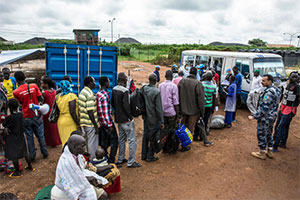 One Thousand Internally Displaced Persons (IDPs) Relocated from Tomping Camp in South Sudan. Credit: UN Photo/Isaac Billy
It took hundreds of thousands of years for the world’s human population to cross one billion in 1804. Approximately 200 years later, the population has multiplied sevenfold. In 2023, the global population crossed 8 billion, and is expected to reach 9 billion before 2050. With the planet more crowded than ever, it is essential to keep track of population trends, urbanization, migration, and reproduction across the world.
Life expectancy has seen significant strides in the past century, largely due to economic development and increased standards of living. On the contrary, trends in global fertility are shifting, with certain regions in Africa and Asia reporting higher rates, while parts of Europe and North America report stagnant or lower rates. This is in part due to differences in sexual and reproductive healthcare, as well as societal and economic conditions around the world. For example, child marriage is prevalent in certain societies, where childbearing is also considered a familial duty. Meanwhile, stagnating economies frequently experience lower marriage and childbearing rates.
The increase in migration and urban development around the world is also linked to global population trends. By 2050, it is expected that approximately 66 percent of all people will live in cities. Furthermore, global crises such as warfare and natural disasters also prompt transnational migration. Transnational migration is linked to a variety of socioeconomic issues in both host and receiving countries: migrants often leave developing countries with less access to educational and economic opportunities and arrive in developed countries where they are frequently the targets of ethnic, racial, and cultural discrimination, and economic exploitation. Recent crises in Europe and the United States demonstrate the importance of advocating for migrants worldwide. As migrants from the Global South are increasingly stripped of their legal and civic rights in unlawful deportations, or targeted in acts of identity-based violence, it is essential to keep track of population trends and protect the human rights of migrant populations. Climate-related disasters are now a major driver of displacement, with nearly half of all new internal displacements in 2025 being disaster-related.
IPS is devoted to covering issues surrounding population trends, migration, and reproduction through its compelling articles, which use both statistics and human stories to provide readers with robust and informative viewpoints.

The Week with IPS

NEXT STOP - SDGs
Tracking global progress towards a sustainable world
Tracking global progress towards a sustainable world
