Languages
Sunday, November 8, 2026



News and Views from the Global South
Population

Critics Warn Pacific Pact Could Jack Up Drug Costs
As a new round of talks behind a major proposed free trade area, the Trans-Pacific Partnership (TPP), get underway this week, the United States is pushing several developing countries to accept provisions that critics say would make it more difficult for their citizens to access medicine.
Metrosexualism in Cuba: Macho Minds in Pampered Bodies
More and more young men in Cuba are moving away from the traditional masculine aesthetic and are spending hours in front of the mirror or at the gym. But they are not any less “machista” in behaviour, according to specialists meeting in the capital.
Turkish Women Push Back Against Patriarchy
Among the many issues bringing protestors together at Gezi Park, the now-iconic site of struggle in Istanbul’s Taksim Square, is the demand for women’s liberation.
Quakes Could Collapse Kathmandu
As the chief of building codes and earthquake safety of the Lalitpur Municipality, located about 10 km from Nepal’s capital, Kathmandu, Sainik Raj Singh has the tough job of cracking down on builders who fail to comply with the government’s construction regulations.Curbs on Abortion Spread Across East Europe
A “virus” of restrictive abortion legislation is spreading from Eastern Europe, health experts and rights campaigners have said, amid Church pressure and misguided government attempts to stop falling birth rates.
Q&A: “Women’s Rights Are Human Rights”
On Thursday, the international community recognises World Population Day, a time of assessment, discussion and projections for the future that necessarily gives great weight to the rights of women and girls and particularly their sexual and reproductive health.
War or Peace, Sri Lankan Women Struggle to Survive
It has been four years since the guns fell silent in Sri Lanka’s northern Vanni region, after almost three decades of ethnic violence. Unfortunately peace does not mean the end of hardship for the most vulnerable people here: the women.
Saving Côte d’Ivoire’s Fragile Forests and People
As the Côte d’Ivoire government clears its protected forests of illegal occupiers, particularly in the Dix-Huit Montagnes region, environmentalists say that this crucial move might lead to conflict in an already tense region.
Needed in Brazil: Integrated Urban Transport System
Bus lanes, cycle paths and pedestrian walkways are viable solutions to the transport collapse in Brazil's big cities. But economic interests, red tape and the lack of strategies for an integrated system are delaying a process that the protests raging across the country for the last few weeks have made an urgent issue.
Q&A: “The Middle Class Is Making Its Voice Heard in Brazil Today”
The protests on the streets of Brazil are the result of the expansion of the middle class, who want their demands to be heard, said Rebeca Grynspan after visiting the country to inaugurate the World Centre for Sustainable Development.
OP-ED: Moving Forward to End Violence Against Women
Last year, as rebels captured the main towns in Northern Mali, UN Women registered a sudden and dramatic increase of rapes in the first week of the takeover of Gao and Kidal, in places where most women never report this violence to anyone, not even health practitioners.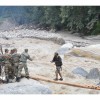
In the Land of the Gods, Disaster Response Falls Short of Divine
Over 580 bodies have so far been found. Hundreds more will likely never turn up. Survivors say they are suspended in a kind of nightmare, either haunted by memories of their brush with death or desperate for news of loved ones. At least 3,000 are reported to be missing.
A Latin America With Opportunity for All
Latin America has had a good decade. Over the last 10 years, economic growth averaged 4.2 percent, and 70 million people escaped poverty. Macroeconomic stability, open trade policies and pro-business investment climates have supported and will continue to support strong growth in the years to come.
Q&A: World Needs a Plan for Expected Waves of Climate Refugees
Untold thousands dead and thousands more stranded or missing - these are the latest figures from various reports on the devastation caused by flash floods in the Indian state of Uttarakhand.
China Leads Battle Against Poverty, Says U.N.
The United Nations has singled out China - the world's most populous country with over 1.3 billion people - as one of the key success stories in the longstanding battle against poverty.
At Forty, CARICOM Has Few Laurels to Rest On
Four decades after they signed the treaty establishing the Caribbean Community (CARICOM), government leaders are gathering in Trinidad and Tobago, the birthplace of the integration process, as they seek to give greater meaning to the CARICOM Single Market and Economy (CSME) that encourages the free movement of nationals across the 15-member grouping.
Fleeing with What’s Most Important
If you were forced to flee your home to survive, what would you take? What could you take? Jean Claude “Van Damme” Ndongizimana, 20, escaped from the eastern Democratic Republic of Congo with just the bag in which he kept his profits from selling milk and the clothes on his back.Native People’s Land Demands Gain Visibility in Argentina
The native people of Argentina are achieving unprecedented visibility for their demands. However, they are still faced with hurdles to more rapid progress towards their claims.
Cultural Engagement Key to Improving U.S.-Iran Relations – Report
Increasing U.S.-Iran cultural exchanges could lay the groundwork for better relations between the two countries, believes a prominent think tank here, despite the prevalence of stereotypical memes of the United States as the "Great Satan" and Iran as part of the "Axis of Evil".
Afghan Refugees Dig Their Heels into Pakistani Soil
Muhammad Shakoor, 42, calls Pakistan home. Born in Afghanistan’s eastern Nangarhar province, he was bundled across the border during the Soviet invasion of his country in 1979 by his family fleeing the chaos of war.
Are Humans Responsible for the Himalayan Tsunami?
On the outskirts of Rudraprayag, a town in the northern Indian state of Uttarakhand whose many temples draw tourists and Hindu pilgrims with magnetic force, visitors often stop for a meal at a popular hotel built right on the river Alakananda.« Previous Page — Next Page »





 One Thousand Internally Displaced Persons (IDPs) Relocated from Tomping Camp in South Sudan. Credit: UN Photo/Isaac Billy
It took hundreds of thousands of years for the world’s human population to cross one billion in 1804. Approximately 200 years later, the population has multiplied sevenfold. In 2023, the global population crossed 8 billion, and is expected to reach 9 billion before 2050. With the planet more crowded than ever, it is essential to keep track of population trends, urbanization, migration, and reproduction across the world.
Life expectancy has seen significant strides in the past century, largely due to economic development and increased standards of living. On the contrary, trends in global fertility are shifting, with certain regions in Africa and Asia reporting higher rates, while parts of Europe and North America report stagnant or lower rates. This is in part due to differences in sexual and reproductive healthcare, as well as societal and economic conditions around the world. For example, child marriage is prevalent in certain societies, where childbearing is also considered a familial duty. Meanwhile, stagnating economies frequently experience lower marriage and childbearing rates.
The increase in migration and urban development around the world is also linked to global population trends. By 2050, it is expected that approximately 66 percent of all people will live in cities. Furthermore, global crises such as warfare and natural disasters also prompt transnational migration. Transnational migration is linked to a variety of socioeconomic issues in both host and receiving countries: migrants often leave developing countries with less access to educational and economic opportunities and arrive in developed countries where they are frequently the targets of ethnic, racial, and cultural discrimination, and economic exploitation. Recent crises in Europe and the United States demonstrate the importance of advocating for migrants worldwide. As migrants from the Global South are increasingly stripped of their legal and civic rights in unlawful deportations, or targeted in acts of identity-based violence, it is essential to keep track of population trends and protect the human rights of migrant populations. Climate-related disasters are now a major driver of displacement, with nearly half of all new internal displacements in 2025 being disaster-related.
IPS is devoted to covering issues surrounding population trends, migration, and reproduction through its compelling articles, which use both statistics and human stories to provide readers with robust and informative viewpoints.

The Week with IPS

NEXT STOP - SDGs
Tracking global progress towards a sustainable world
Tracking global progress towards a sustainable world
