Languages
Sunday, November 8, 2026



News and Views from the Global South
Population

Shining a Spotlight on the Strengths & Challenges of Civil Society in the Balkans
It is an incredible privilege to welcome you all to the ‘International Civil Society Week’. I am going to remind us of the reasons that make it so important for us to be here in Belgrade this week.
Attacks on Media in the Balkans Sound Alarm Bells for Democracy
Anti-government protesters invading Serbia’s state-owned television station, demanding that their voices be heard. Journalism bodies writing to the Albanian prime minister over plans to censor online media outlets. A Belgrade corruption-busting reporter forced to flee his house that had been torched; a Montenegrin investigative journalist shot in the leg outside her home.
Smears, Laws, Lack of Cooperation: Tools Against Activists
The murder of Brazilian politician and human rights activist Marielle Franco just over a year ago and attacks on other rights activists around the world have galvanised civil society organisations, with the United Nations heightening its own strategy to protect rights defenders.
Migrant Farm Workers, the Main Victims of Slave Labour in Mexico
"They mislead the workers, tell them that they will be paid well and pay them much less. The recruiters and the employers deceive them," complained Marilyn Gómez, a migrant farm worker in Mexico.
Finding a Way to Food Sustainability
There’s much to think about regarding food this month. April is Reducing Food Waste Month in the United States, as efforts mount here to reduce food loss and waste, while globally Sunday Apr. 7 was World Heath Day.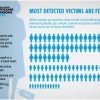
Why New York Should Not Decriminalize Sex Trade
Prostitution policies are bubbling up again in legislative circles across the United States, but few representatives seem to have much clarity on the issue. 2020 presidential candidate Senator Kamala Harris has given mixed messages on her thinking, while Bernie Sanders has said he simply has “no answer.”
Q&A: 607 Island Atolls Means it’s Hard to Distribute Leprosy Healthcare to All Micronesians
During his 22-year career in the health sector, Marcus Samo has seen the Federated States of Micronesia (FSM) suffer from an increased burden of disease while at the same time the resources to address them have either remained the same or decreased.
As Marshall Islands Integrates Healthcare Services, Experts Offer a Word of Caution
In Jack Niedenthal’s office in Majuro, there is an ominous reminder of the dark history of the Marshall Islands—once the site for dozens of nuclear tests conducted by the United States between 1946 and 1962. But it also provides a strong message about the future of island nation.
Women Activists Protest Torture & Imprisonment Under Repressive Regimes
Faced with an uneven battle against right wing nationalist governments, repressive regimes and extremist groups, scores of civil society organizations (CSOs) are gearing themselves to fight back.
Invested in Gender Diversity
Over the past decade, there has been mounting evidence that greater levels of gender diversity can have a positive impact on corporate performance and economic growth.
Smart Cities hold Key to Sustainable Development
Asia and the Pacific’s phenomenal development has been a story of rapid urbanization. As centres of innovation, entrepreneurship and opportunity, cities have drawn talent from across our region and driven economic growth which has transformed our societies.
An Indigenous Nation Battles for Land and Justice in Bolivia
The ancient Qhara Qhara nation began a battle against the State of Bolivia in defence of its rich ancestral lands, in an open challenge to a government that came to power in 2006 on a platform founded on respect for the values and rights of indigenous peoples.
Sierra Leone: Bio Government’s First Year
If the government of Sierra Leone’s President Julius Maada Bio were to be graded on their first year’s performance in office, it is likely that their report card would read, “promising start, which they must surpass in the years ahead”.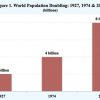
2, 4, 8 and ? Billion People
Two, four and eight billion people is the extraordinary doubling and redoubling of the world’s population that occurred in slightly less than a century. World population, which had grown to 2 billion by 1927, doubled to 4 billion by 1974 and will reach 8 billion by around 2023.
‘The First City Completely Devastated by Climate Change’ Tries to Rebuild after Cyclone Idai
The city of Dondo, about 30 kilometres from Beira, central Mozambique, didn’t escape the strong winds of Cyclone Idai. It is estimated that more than 17,000 families were displaced and more than a dozen schools were destroyed in the city.
Making it in India: Women Struggle to Break Down Barriers Starting a Business
Radhika Baburao Shinde was all of 12 years old when she was married off to a man who was 10 years older. She was sent away to live with her new husband, a truck driver, and his family in remote, drought-prone Satara district, 330 kilometers southwest of Mumbai. She left school and went to work as a laborer on her husband’s family farm.
Bridging the Gaps for the Disabled
People with disabilities are being left behind, and steps must be taken to ensure their inclusion in the world of education and work.
Rising Inequalities in Asia-Pacific have become a Major Obstacle to Accelerating Progress
2019 will be a defining year for the 2030 Agenda; and the regional forums will pave the way for our first stocktaking on the SDGs in the General Assembly in September.
Safe Menstrual Practices Important for Progress
As menstruation continues to be shamed in many communities, one organisation is rising up to the challenge to ensure “safe menstruation for all women of Bangladesh.”
Cyclone Idai: A Time to Reassess Disaster Management
It was one of the worst tropical cyclones hit Southern Africa in recent times. Cyclone Idai, which has been characterised by heavy rains and flooding including mudslides in some parts of Mozambique, Zimbabwe, and Malawi, has left more than 750 dead, with thousands marooned in remote rural areas, whilst others are still unaccounted for. More than 1,5 million people are affected by the cyclone in the region.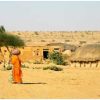
Changing Weather Will Affect Living Standards of Half of India’s Population
The India Meteorological Department (IMD) on January 16 declared that 2018 was the sixth- warmest year in the last 117 years or since 1901, when recording started. Pointing towards changing weather and climate parameters, it also noted that the last monsoon rainfall was the sixth-lowest since 1901.« Previous Page — Next Page »





 One Thousand Internally Displaced Persons (IDPs) Relocated from Tomping Camp in South Sudan. Credit: UN Photo/Isaac Billy
It took hundreds of thousands of years for the world’s human population to cross one billion in 1804. Approximately 200 years later, the population has multiplied sevenfold. In 2023, the global population crossed 8 billion, and is expected to reach 9 billion before 2050. With the planet more crowded than ever, it is essential to keep track of population trends, urbanization, migration, and reproduction across the world.
Life expectancy has seen significant strides in the past century, largely due to economic development and increased standards of living. On the contrary, trends in global fertility are shifting, with certain regions in Africa and Asia reporting higher rates, while parts of Europe and North America report stagnant or lower rates. This is in part due to differences in sexual and reproductive healthcare, as well as societal and economic conditions around the world. For example, child marriage is prevalent in certain societies, where childbearing is also considered a familial duty. Meanwhile, stagnating economies frequently experience lower marriage and childbearing rates.
The increase in migration and urban development around the world is also linked to global population trends. By 2050, it is expected that approximately 66 percent of all people will live in cities. Furthermore, global crises such as warfare and natural disasters also prompt transnational migration. Transnational migration is linked to a variety of socioeconomic issues in both host and receiving countries: migrants often leave developing countries with less access to educational and economic opportunities and arrive in developed countries where they are frequently the targets of ethnic, racial, and cultural discrimination, and economic exploitation. Recent crises in Europe and the United States demonstrate the importance of advocating for migrants worldwide. As migrants from the Global South are increasingly stripped of their legal and civic rights in unlawful deportations, or targeted in acts of identity-based violence, it is essential to keep track of population trends and protect the human rights of migrant populations. Climate-related disasters are now a major driver of displacement, with nearly half of all new internal displacements in 2025 being disaster-related.
IPS is devoted to covering issues surrounding population trends, migration, and reproduction through its compelling articles, which use both statistics and human stories to provide readers with robust and informative viewpoints.

The Week with IPS

NEXT STOP - SDGs
Tracking global progress towards a sustainable world
Tracking global progress towards a sustainable world
