Languages
Friday, October 16, 2026



News and Views from the Global South
Population

Rainwater Harvesting Improves Lives in El Salvador
Filling a jug with water to supply her household needs used to be an ordeal for Salvadoran villager Corina Canjura, because it meant walking several kilometers to the river, which took up a great deal of time, or else paying for water.
The Tuxá Indigenous Paradise, Submerged under Water
The Tuxá indigenous people had lived for centuries in the north of the Brazilian state of Bahia, on the banks of the São Francisco River. But in 1988 their territory was flooded by the Itaparica hydropower plant, and since then they have become landless. Their roots are now buried under the waters of the reservoir.
Marginalised Minorities and Homeless Especially Hard-hit by Mexico’s Quake
Maricela Fernández, an indigenous woman from the Ñañhú or Otomí people, shows the damages that the Sept. 19 earthquake inflicted on the old house where 10 families of her people were living as squatters, in a neighbourhood in the center-west of Mexico City.
The Urbanization of Malnutrition
Rapid urbanization is increasingly shifting the impacts of malnutrition from rural to urban areas. One in three stunted under-five children out of 155 million across the world now lives in cities and towns.
Indigenous Land Conflicts Finally Garner Attention in Argentina
The territorial claims of hundreds of indigenous communities, which extend throughout most of Argentina's vast geography, burst onto the public agenda of a country built by and for descendants of European colonisers and immigrants, accustomed to looking at native people as outsiders.
Parliamentarians a “Fourth Pillar” of Sustainable Development
Investing in youth and the population dividend, women's health, sustainable development objectives, and the key role of parliamentarians to promote transparency, accountability and good governance to achieve the 2030 Agenda on Sustainable Development topped the agenda of a two-day conference of Asian and African lawmakers in New Delhi last week.
Monitoring Progress on UN’s Sustainable Development Goals
Two years ago, world leaders joined together to endorse a new and ambitious agenda not to reduce poverty but to eradicate it, not to lessen hunger but to end it once and for all, and not to overlook inequality but jointly to attack it.
Mexico’s Disaster Response System Severely Stretched by Quake
Central Mexico faced Wednesday the challenge of putting itself back together after the powerful 7.1-magnitude quake that devastated the capital and the neighbouring states of Mexico, Morelos and Puebla the day before.
Latin America in Search of Sustainable Food Systems
A paradigm shift is needed regarding how food is produced, consumed and marketed in Latin America and the Caribbean, in order to curb health problems related to poor nutrition.
Taking Stock of SDG Actions on UN’s Development Agenda
Taken together, the 2030 Agenda for Sustainable Development (SDGs) and the Paris Agreement on Climate Change, provide humanity with a masterplan for a sustainable way of life on this planet.
“I Decide for Myself”: South Sudanese Woman Shows Power of Knowledge
Elizabeth Ayumpou Balang is a teacher at a nursery and primary school in Rumbek, a town in central South Sudan. It is her dream job, but it did not come easily. Like many girls in South Sudan, Ms. Balang was married, and became a mother, while just a teenager.
We Can Value Humanitarians Even if President Trump Does Not
As we watch disasters unfold – the flooding in Houston, Texas as well as the floods in India, Bangladesh, and Nepal that have killed over 1,200 people – we are grateful for the many humanitarians who risk their lives to help others.
Robots: A Solution to Declining and Aging Populations?
Are humanoid robots or androids a solution to declining and aging populations? Given the prospects of demographic decline and population aging coupled with growing opposition to immigration, countries are increasingly turning to and investing in advanced robotics and androids to address shrinking workforces and rising numbers of elderly.
Latin America Calls for Free Movement of Persons in Global Compact on Migration
Latin America and the Caribbean called for the free movement of persons to be included in the Global Compact on Migration, which will be negotiated within the United Nations in 2018, in the first meeting held by any of the world’s regions to decide on the position to be adopted on the future agreement.
Alliance to the Rescue of 33 Million Latin American Rural Poor
“There are 33 million rural dwellers in Latin America who are still living in extreme poverty and can’t afford a good diet, clothes or education, and we are not going to help them move out of poverty if we use the same strategies that worked 20 years ago,” FAO regional representative Julio Berdegué told IPS.
Population Aging: Hallmark of the 21st Century
While rapid population growth may be the defining feature of the 20th century, with world population nearly quadrupling from 1.6 to 6.1 billion, the hallmark of the 21st century is likely to be population aging.
A Hostage to Parliament, Temer Sacrifices Indigenous Rights to Save Himself
Brazilians now have new reasons to yearn for and at the same time fear the parliamentary system of government. It facilitates quick solutions to political crises such as the one that is currently affecting the country, but it also further empowers reactionary forces and has led to backsliding on gains such as indigenous rights.
Climate Change Brings Migration from the Dry Corridor to Nicaragua’s Caribbean Coast
If the impact of drought and poverty in the municipalities of the so-called Dry Corridor in Nicaragua continues pushing the agricultural frontier towards the Caribbean coast, by the year 2050 this area will have lost all its forests and nature reserves, experts predict.
Water Is Precious, Fragile and Dangerous – It Can Sustain or Destroy
Water is precious, fragile, and dangerous. It can sustain or destroy.
US Lags Far Behind in Banning Dental Health Hazard
The United States is lagging far behind its Western allies – and perhaps most of the key developing countries – in refusing to act decisively to end a longstanding health and environmental hazard: the use of mercury in dentistry.
Value of Water Is on the Rise
In the wake of recent water-related disasters in Bangladesh, including water-logging and floods that displaced thousands of families, a high-level consultation in the capital Dhaka on valuing water will look at ways to optimize water use and solutions to water-related problems facing South Asia.« Previous Page — Next Page »





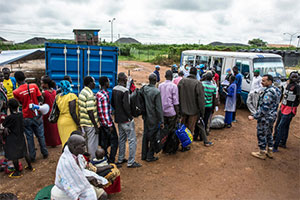 One Thousand Internally Displaced Persons (IDPs) Relocated from Tomping Camp in South Sudan. Credit: UN Photo/Isaac Billy
It took hundreds of thousands of years for the world’s human population to cross one billion in 1804. Approximately 200 years later, the population has multiplied sevenfold. In 2023, the global population crossed 8 billion, and is expected to reach 9 billion before 2050. With the planet more crowded than ever, it is essential to keep track of population trends, urbanization, migration, and reproduction across the world.
Life expectancy has seen significant strides in the past century, largely due to economic development and increased standards of living. On the contrary, trends in global fertility are shifting, with certain regions in Africa and Asia reporting higher rates, while parts of Europe and North America report stagnant or lower rates. This is in part due to differences in sexual and reproductive healthcare, as well as societal and economic conditions around the world. For example, child marriage is prevalent in certain societies, where childbearing is also considered a familial duty. Meanwhile, stagnating economies frequently experience lower marriage and childbearing rates.
The increase in migration and urban development around the world is also linked to global population trends. By 2050, it is expected that approximately 66 percent of all people will live in cities. Furthermore, global crises such as warfare and natural disasters also prompt transnational migration. Transnational migration is linked to a variety of socioeconomic issues in both host and receiving countries: migrants often leave developing countries with less access to educational and economic opportunities and arrive in developed countries where they are frequently the targets of ethnic, racial, and cultural discrimination, and economic exploitation. Recent crises in Europe and the United States demonstrate the importance of advocating for migrants worldwide. As migrants from the Global South are increasingly stripped of their legal and civic rights in unlawful deportations, or targeted in acts of identity-based violence, it is essential to keep track of population trends and protect the human rights of migrant populations. Climate-related disasters are now a major driver of displacement, with nearly half of all new internal displacements in 2025 being disaster-related.
IPS is devoted to covering issues surrounding population trends, migration, and reproduction through its compelling articles, which use both statistics and human stories to provide readers with robust and informative viewpoints.

The Week with IPS

NEXT STOP - SDGs
Tracking global progress towards a sustainable world
Tracking global progress towards a sustainable world
