Languages
Friday, November 20, 2026



News and Views from the Global South
Poverty & SDGs
BRAZIL: Lending a Hand to Less Developed Countries
Mothers' milk banks that are helping reduce infant mortality in Guatemala and are starting to be set up in Africa as well form part of the numerous social technologies developed by Brazil that are driving the fast growth of its international development cooperation.
ZAMBIA: Unsolved Riddle of Sustaining Water Utilities
Sebastian Chilekwa’s job title at the Luapula Water and Sewerage Company is "Managing Director of Dilemma". Or it should be.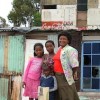
SOUTH AFRICA: New, Assertive Women’s Voices in Local Elections
Noncedo Pulana lacks many things, but she is certainly not short of confidence as she prepares to stand for election as Khayelitsha ward councillor. She feels her long years as an activist in the sprawling township have prepared her to do a better job.ALGERIA: Civil Society Demands End to State of Emergency
The lifting of the state of emergency that has been in force in Algeria for nearly 20 years has emerged as a rallying point for groups united for democratic change.
UN Women Head Unveils Empowerment Agenda
Despite birthing 100 percent of the world's children, growing 70 percent of the world's food and performing 60 percent of the world's labour, women only receive a fraction - a mere 10 percent - of the world's income.GUATEMALA: High Staple Food Prices Drive Up Hunger
The rise in prices of corn, beans and other staple foods, driven up by damages to crops caused by extreme weather events, is making it even harder for the poor to afford a basic diet in Guatemala, which has the highest rate of child malnutrition in Latin America.
PHILIPPINES: ‘Wanted, Full-Time Mothers’
It’s definitely not your typical job advertisement. "Wanted: Mothers; must be mature, strong and stable, self-confident, humorous and know how to cook; must have a positive and cheerful attitude towards life; must be willing to work as a full-time mother for the long term."
COTE D’IVOIRE: Protecting Public Health Despite Political Impasse
The political stand-off between Alassane Ouattara, certified by the United Nations as winner of Nov. 28 elections, and the incumbent president, Laurent Gbagbo, who has refused to step down, is stretching into its eighth week.
ARGENTINA: Guarani Effort to Strengthen Culture Through Tourism
Since recovering part of their territory in 2005, an indigenous Guaraní community in the northeastern Argentine province of Misiones is working to maintain and expand a cultural tourism initiative.
Mexico Tempted to Shift From Tortillas to Ethanol
Farmers' protests and the rise in corn tortilla prices in late December put temporary brakes on the Mexican Senate, which was preparing to lift the national ban on utilising maize to make fuel alcohol, or ethanol.SOUTH AFRICA: How Better ARV Prices Were Won
South Africa’s recently-awarded tender for antiretroviral drugs halved drug costs for the world’s largest ARV programme. Driven by a better-prepared and more aggressive government, the deal may stand up to criticism better than initially thought.
RWANDA: Forest Conservation Calls for Carrot and Stick
For years, the various campaigns for sustainable use of forests just passed Pascal Segatashya by. But Rwanda's ambitious Forest Conservation Project eventually found him - and it has transformed his life and livelihood.
Q&A: “In Mexico, We Have Let the Violent Ones Do the Talking”
"In Mexico, we have let the violent ones do the talking," says journalist Marcela Turati, author of "Fuego Cruzado" (Crossfire), a new book that tells the stories of victims of President Felipe Calderón's war on drugs, which has left an official death toll of 30,000 in four years.
COTE D’IVOIRE: New Techniques, New Profits for Tomato Farmers
Even while the country has faced civil war and political crisis, innovative research organisations have worked to meet the challenges of food security and rural poverty.
Set on Fire – New Form of Sexist Violence in Argentina
"I knew he beat her but I never imagined that she would end up like this," Elsa Jerez told IPS, talking about her 24-year-old daughter Fátima Catán, a victim of domestic violence in Argentina who died of severe burns to her body.
SWAZILAND: Free Primary Education – If You Can Afford It
The new school year opened with hope - and hunger - in Swaziland this week: an estimated 140,000 orphans and vulnerable children are among the small, eager faces in the mountain kingdom's classrooms. Poverty and the AIDS pandemic threaten to make an early mark on the next generation.EAST EUROPE: Midwives Struggle to Deliver Home Births
Women’s rights in Eastern Europe have been put into the spotlight as a Hungarian midwife faces five years in prison for assisting with home births.
Malawi Missing Its Local Government
An hour and fifteen minutes each day: Melina Kalunga has plenty of time to measure how long it takes to resolve a legal battle over Malawi's Electoral Commission.
MALI: Cotton and Food Security Closely Linked
Many Malian farmers are boycotting cotton this year, instead planting cereals. Cotton isn't edible, but observers say that the shift could weaken food security.
MAURITIUS: Renewable Energy Gets a Boost
A new initiative to support production of renewable energy in Mauritius may provide a model for other countries to follow suit.Health System Failing Nigeria’s Youngest Citizens
Despite some progress, Nigeria is lagging behind its peers in reducing deaths among children under five. The mortality rate remains worryingly high for newborn infants - 700 children less than 28 days old die in the country every day.« Previous Page — Next Page »


 Romani people in Cairo, Egypt, forage through trash. Credit: UN Photo/Armineh Johannes
In 2015, the United Nations adopted the Sustainable Development Goals (SDGs) in an effort to promote “peace and prosperity for people and the planet.” To achieve that goal, it is essential to provide equal opportunities and access to basic services to all people. The 2025 UN SDG Report found that 35% of the 169 SDG targets are on track or making moderate progress, while 18% have reversed compared to the 2025 baseline. One in ten people still live in extreme poverty, one in eleven experience food insecurity, and over 1.1 billion people live in slums without access to clean water and sanitation. It is imperative to acknowledge the societal, technological, economic, and political issues that sustain poverty in countries around the world. Eradicating poverty will require significant frameworks in policy and governance on a national and international scale to ensure that all people will have equal access to basic services and economic opportunities by 2030. Furthermore, a dramatic reduction of United States foreign aid in 2025, including the termination of 83% of USAID programmes, threatens to erode years of fragile development gains.
Throughout the world, violent conflict and natural disasters also contribute to extreme poverty. The complete destruction of infrastructure and blockage of aid has significantly impoverished Palestine since October 7th. The destructive impact of Hurricane Maria in Puerto Rico left $91 billion in damage. An inadequate US government response also revealed significant and enduring questions within the issue of mitigating poverty: how do we rebuild infrastructure after its destruction? How do we restimulate economic development and bring in financial aid after disasters? Similar questions have been raised in the realm of regional cooperation, as devastating floods have wrecked hundreds of thousands of homes across multiple Southeast Asian nations in the past few years. Furthermore, the COVID-19 pandemic has greatly exacerbated the global poverty crisis, particularly in developing countries, setting back the United Nations goal of eradicating poverty by 2030.
IPS is committed to providing comprehensive features that focus on the persisting environmental, sociopolitical, and systemic issues that sustain poverty, and the steps taken worldwide towards poverty eradication.

The Week with IPS

NEXT STOP - SDGs
Tracking global progress towards a sustainable world
Tracking global progress towards a sustainable world

