Languages
Sunday, October 4, 2026



News and Views from the Global South
Financial Crisis
Q&A: U.S. Women’s Commissions Under the Budget Axe
State and local Commissions on the Status of Women (CSW) are facing shrinking budgets and even total elimination at a time when women are some of the hardest hit by the financial crisis, says Susan Rose, vice chair of Human Rights Watch's Santa Barbara Committee.Swaziland’s Cooperatives No Threat to Banks
Nomsa Tsabedze is one of the many people at the Bunye Betfu, Buhle Betfu Credit and Savings Cooperatives waiting to apply for a loan to pay for her children’s school fees.Anger Boils Over as Ranks of Jobless Youth Swell
When images of North London's gutted and burning buildings, broken shop windows and refuse-lined streets appeared on TV screens and front-page headlines during the four-day Tottenham riots last August, many dismissed the damage as the work of "hoodlums" and "delinquents".Cameroon’s Economy Suffers as Boko Haram Infiltrates Country
Ahmadou Lamine has been forced to close his business selling fuel imported from Nigeria, known locally as "zoa-zoa", because of the Islamic extremist group Boko Haram.EUROPE-DEVELOPMENT: The “Indignados” Still Have Wind in Their Sails
Months of protest across the European Union, sparked by ‘indignant’ youth demanding an end to the brand of free market capitalism that has blighted the continent with an unemployment epidemic, finally bore fruit on Jan. 30 when Jose Manuel Barroso, president of the European Commission, proposed an ambitious jobs scheme.New Rule Puts Brakes on U.S. Public Housing Demolitions
Earlier this week, the U.S. Department of Housing and Urban Development (HUD) announced the publication of a new notice which significantly tightens its procedures for the processing of public housing demolition applications by local housing authorities.UNICEF Funding Falls Short Leaving Millions of Children at Risk
If the United Nations Children’s Fund (UNICEF) had 1.28 billion dollars it could help 97 million people around the world.Malawi’s Consumers Have a Right to Fuel and Forex Black Market
The black market for foreign exchange and fuel is booming in the midst of an acute scarcity in Malawi. The shortage is so severe that even the Consumer Association of Malawi, an influential consumer rights body, has come out in support of the black market.Political and Economic Turmoil Threaten Women’s Progress
As UN Women celebrated its first birthday, its executive director Michelle Bachelet stressed that political upheveal and shrinking budgets are no excuse to push back the hard-won gains made by the women's movement globally.Once a Food Chain, Now a Corporate Supply Chain – Part 2
While Indian retailers are losing sleep over the possible entrance of multinationals like Walmart into the dense South Asian consumer market, very little thought has been given to the Indian small farmer, who stands to lose even more at the hands of the world's biggest commercial food retailer.Occupy DC Protesters Stay Put Amid Eviction Threats
Two days after some 400 people were arrested during a protest organised by Occupy Oakland on the U.S. west coast, members of Occupy DC say they have no plans to leave despite the threat of police action.PORTUGAL: Going Underground in Hard Times
The underground economy in Portugal is booming thanks to the steep increases in taxation and prices demanded by a "troika" of international creditors to address the country's economic crisis.ICELAND: Recovering Dubiously From the Crash
Three years ago, thousands of Icelanders were standing outside Iceland’s parliament building chanting "incompetent government" in an attempt to bring down the conservative government that had been seen as responsible for the collapse of the country’s banking system.ZIMBABWE: To Yuan or Not to Yuan, That is the Question
From downtown shops that stock cheap clothing and shoes that fall apart after one wear, to mining concessions in platinum, gold and diamonds - the Chinese finger is now in virtually every Zimbabwean pie.U.S.: “Money Isn’t Speech, Corporations Aren’t People”
In most mainstream media the words "corruption" and "election fraud" accompany images of makeshift polling stations manned by armed guards in Burma or burning tires beside tattered ballot boxes in South Sudan – the insidiousness of stolen elections and a crumbling democracy is very seldom associated with the United States.U.S.: A Credit Union to Bail Out People, Not Big Banks
Occupy activists from Wall Street to San Francisco's financial district have dramatised their anger with big financial institutions by blocking JP Morgan Chase Bank doorways, dancing atop Wells Fargo counters, pitching a tent in a Bank of America lobby, hanging banners across Citibank windows, and accompanying the actions with the now-familiar chant "Banks got bailed out, we got sold out."U.N. Predicts One Billionth Tourist Arrival in 2012
The United Nations, which commemorated the birth of the world's seven billionth baby last October, is predicting the arrival of the one billionth tourist later this year - perhaps in Europe, the United States, South America or Asia.GREECE: Austerity Plan Breaches Last Line of Defence of Greek Workers
As the Eurozone falls deeper into its sovereign debt crisis, the labour movement in Greece is being cudgelled to its knees by an austerity programme that has so far failed to bring any positive change for the crumbling Mediterranean country.Woe Betide the Return of the Zimbabwean Dollar
Tinashe Zuze’s story is a typical one of Zimbabwe’s professionals who have shunned formal employment. Instead of working for someone else, Zuze left his job as a bank teller and entered into the world of "wheeling and dealing" in illegal foreign currency.DEVELOPMENT: Little Tobin, Less Robin
Europe’s apparent failure to forge broad agreement on introducing a financial transactions tax marks the latest setback for organisations counting on a similar worldwide fee to fund development aid in austere times.HUNGARY: Civil Society Steps in as Opposition
The massive overhaul of Hungary’s political system by the conservative Fidesz party is raising fears the country’s days as a liberal democracy may be numbered. With opposition parties powerless, it is civil society that has awakened to support a more participatory democracy.« Previous Page — Next Page »


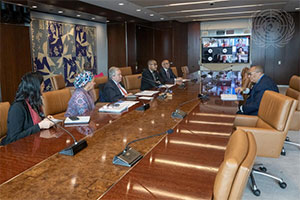 Secretary-General Meets with Members of Debt Expert Group. Credit: UN Photo/Eskinder Debeb
Financial crises are often defined by banking panics, recession, loss of market value, and deflation. Various financial crises at the turn of the 20th century, such as the Asian Crisis of 1997-1998 and the 2007-2008 Global Financial Crisis, have had immense impacts on the world economy. The COVID-19 pandemic also caused a financial crisis when mass lockdowns triggered staggering unemployment rates, a stagnation of economic growth, and led to the 2020 stock market crash. With the Russian invasion of Ukraine, the world has also witnessed a global energy crisis with shortages and increased prices in oil, gas, and electricity markets. According to UNCTAD’s World of Debt 2025, global public debt surpassed $100 trillion in 2024, with developing country debt growing twice as fast as developed economies since 2010. Burdens of debt servicing come with economic slowdowns and demands of austerity from lenders, with some economists arguing that this will lead to a new “lost decade” for the Global South. IPS brings you worldwide coverage of these financial developments and how we should manage these crises.

The Week with IPS

NEXT STOP - SDGs
Tracking global progress towards a sustainable world
Tracking global progress towards a sustainable world
