Languages
Tuesday, September 29, 2026



News and Views from the Global South
Green Economy

Europe is disintegrating while its citizens watch indifferent
We are witnessing the slow agony of the dream of European integration, disintegrating without a single demonstration occuring anywhere, among its 500 millions of citizens. It is clear that European institutions are in an existential crisis but the debate is only at intergovernmental level.Core Principals of Climate Finance to Realize the Paris Agreement
The Paris climate change conference brought together 197 countries and over 150 Heads of State – the largest convening of world leaders in history – to agree on measures and work together to limit the global average temperature rise.
The UAE’s Journey Towards Clean Energy
The discovery of hydrocarbon reserves brought tremendous prosperity for the UAE and made it a central player in the global energy market. With one of the highest gross domestic product per capita levels in the world, the UAE has generally used its wealth wisely to stimulate sustainable economic growth. However, volatility in oil markets, growing unrest across the region and the growing threat of climate change has concentrated minds on the need for immediate and decisive action.
Global Renewable Energy Investments a Win-Win Scenario
The Paris climate change agreement adopted at the end of 2015 has put renewable energy at the heart of global energy system with investments expected to grow further even amidst the decline in fossil fuels.
Energy from All Sources, a Game of Chance in Brazil
Brazil, which boasts that it has one of the cleanest energy mixes in the world, is now plagued by corruption, poor market conditions, and bad decisions – a near fatal combination.
Hydropower at Front and Centre of Energy Debate in Chile, Once Again
The Chilean government’s approval of a hydroelectric dam in the Patagonia wilderness has rekindled the debate on the sustainability and efficiency of large-scale hydropower plants and whether they contribute to building a cleaner energy mix.
Nevis Has A Date With Geothermal Energy
Legislators on the tiny volcanic island of Nevis in the northern region of the Lesser Antilles say they are on a path to going completely green and have now set a date when they will replace diesel-fired electrical generation with 100 per cent renewable energy.
Innovative Project to Provide Renewable Energy 24/7 to Chilean Village
A novel energy project in Chile will combine a pumped-storage hydroelectric plant operating on seawater and a solar plant, to provide a steady supply of clean energy to a fishing village in the Atacama Desert, the world’s driest.
TAIWAN: Polls Harken End of Nuclear Power
Taiwan may soon be the first nation in Asia to resolve to become a nuclear free nation after four decades of reliance on nuclear power.
Caribbean Journalists Prepare to Report on Climate Change
Environmentally committed journalists in the Caribbean point to a major challenge for media workers: communicating and raising awareness about the crucial climate change agreement that emerged from the 21st Conference of the Parties (COP21) in Paris.
Brazil’s Amazon River Ports Give Rise to Dreams and Nightmares
River port terminals in the northern Brazilian city of Santarém are considered strategic by the government. But what some see as an opportunity for development is for others an irreversible change in what was previously a well-preserved part of the Amazon rainforest.
Opinion: Address Development and Climate Crises Together
The world today faces a crisis of climate and a crisis of development. Both are consequences of the nature of growth of the world economy over the last two centuries, especially during the recent period.Climate Talks in Final Phase With No Resolution on Funding
As the Paris climate talks move to its conclusion Friday, civil society groups are expressing serious concerns about the continued deadlock on a proposed package for funding amounting to about 100 billion dollars a year by 2020.
Antigua: Surrounded by Sea but Catchments are Empty
Antiguan Veronica Yearwood no longer panics when she hears that the rainfall forecast for the tiny Caribbean island is again lower than average rainfall.
Vertical Farming – Agriculture of the Future
Infrared thermometer in hand, Nelson Pérez checks the water temperature in the trays where dozens of small lettuce plants are growing in a nutrient-rich liquid in this vertical farm in Panama.Climate Summit May be Heading for a Showdown Over Financing
The two-week long Paris summit, which is expected to adopt a landmark international treaty on climate change by mid-December, may be heading for a political showdown over one of the most controversial issues at the ongoing talks: financing.
Addressing Climate Change and Poverty as one in Malawi
The government of Malawi has been struggling to end poverty since independence in 1964, banking its strategies on the proceeds from its agro based economy. Sadly, climate change entered the scene and dramatically disrupted the farming sector.
Climate Deal Needs Enough Public Financing
Investing in a low carbon infrastructure, particularly renewable energy, is key to addressing climate change. The really big investment challenges are in the developing world where access to modern energy services is far below what is needed to achieve the Sustainable Development Goals; indeed, almost two billion people still lack access to electricity.
Opinion: NGOs Still Leading the Global Debate on Climate
Civil society organizations, known as NGOs, have for decades used their non-government status to prod officials, politicians and business on climate issues. Veteran campaigners Greenpeace, Friends of the Earth, Oxfam, Kenya’s tree planters, India’s Chipko tree-hugging protectors and indigenous movements worldwide first raised the issues of protecting the Earth and its atmosphere.
Farmers Urge Solutions at Climate Change Talks
Recognizing that agriculture plays a significant role in global warming, farmer associations say they want to offer solutions, and they’re urging governments to include them in negotiations during the United Nations Climate Change Conference taking place Nov. 30 to Dec. 11 in Paris.
Climate Showdown Starts in Paris
Paris has finally arrived. During the next two weeks, a massive conference centre in the outskirts of the French capital will play host to the ultimate United Nations conference and the single most important climate change event in decades.« Previous Page — Next Page »


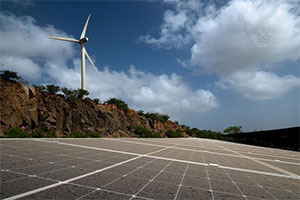 Renewable Energy in Cabo Verde. Credit: UN Photo/Mark Garten
A green economy is an economic model that aims to reduce environmental risks and build a sustainable future. Many of the UN SDGs seek to facilitate a green economy, such as ensuring access to affordable and reliable clean energy, building sustainable cities and communities, and implementing urgent action to combat climate change. Various key negotiations have strived to achieve a green economy, such as the Green New Deal and the Inflation Act of 2022. COP30, held in Belém, Brazil in 2025, agreed to mobilize $1.3 trillion annually for climate action and launched the Belém Mission to 1.5°C. However, the conference was not able to develop a fossil fuel reduction roadmap. Recent years have witnessed a sharp transformation in the geopolitical landscape of international sustainability cooperation. In March 2025, the United States stepped back from formal multilateral support for the SDGs, while China is on the rise as an international leader in renewable energy production. The actions of these global powers may shape shifting alliances on environmental governance. IPS is dedicated to sharing timely news on international developments in building a sustainable future.

The Week with IPS

NEXT STOP - SDGs
Tracking global progress towards a sustainable world
Tracking global progress towards a sustainable world
