Languages
Friday, October 2, 2026



News and Views from the Global South
Green Economy

Climate Showdown Starts in Paris
Paris has finally arrived. During the next two weeks, a massive conference centre in the outskirts of the French capital will play host to the ultimate United Nations conference and the single most important climate change event in decades.
Native Seeds Help Weather Climate Change in El Salvador
Knife in hand, Domitila Reyes deftly cuts open the leaves covering the cob of corn, which she carefully removes from the plant – a process she carries out over and over all morning long, standing in the middle of a sea of corn, a staple in the diet of El Salvador.
Paris Climate Summit Opens With Dire Warning
When the climate summit opened in Paris on Monday, the mood was overwhelmingly pessimistic -- largely about the current state of the global environment.
Addressing Climate Change Through Sustainable Development
Climate change impacts are already upon us. Sea levels are rising, glaciers and ice are melting. People in poor countries are struggling to cope and adapt. Even developed countries are facing adverse consequences, taxing their own adaptive capacities to increased flooding, drought and fires. We cannot afford to wait.
“Paris Is Not the End of a Climate Change Process but a Beginning”
Chilean President Michelle Bachelet says the climate summit in Paris “is not the end of a process but a beginning,” and that it will produce “an agreement that, although insufficient with respect to the original goal, shows that people believe it is better to move ahead than to stand still.”
Hunger Heralds Climate Change’s Arrival in Botswana
A perfect storm of lower rainfall and a growing population beckons for Botswana. But others find climate change is already in the fields and paddocks. “As climate change ushers in more stress on the water sector, it is increasingly a concern that losses in rangeland productivity will result in food insecurity, especially in rural areas,” a country analysis report unveiled recently on Botswana states.
Analysis: Are Young People the Answer to Africa’s Food Security?
Are you young, energetic, creative, ambitious and need a job? Africa's agriculture sector needs you!
Private Nature Reserves in Latin America Seek a Bigger Role
Private voluntary nature reserves in Latin America should be seen as allies in policies on the environment, climate change mitigation and the preservation of biological diversity in rainforests, say experts.
Solar Power Keeps the Midnight Oil Burning at the University of Dodoma
Power cuts wreak havoc on most lives, but when you have an exam the next day and you have to do well, without light to study by you are stuck. But those dark days in the dorm may soon be over.
Opinion: Risks? What Risks?
We humans are acutely aware of risks. From our earliest times, the risks we faced were from hunger, predatory animals, extreme environmental conditions and, as our numbers grew, from other human tribes.
Uruguay Puts High Priority on Renewable Energies
Uruguay is modifying its energy mix with the aim of achieving carbon neutrality by 2030, by means of a strategy that bolsters non-conventional clean energy sources through public-private partnerships and new investment. A majority of this South American country’s energy already comes from renewable sources.
Leading Powers to Double Renewable Energy Supply by 2030
Eight of the world’s leading economies will double their renewable energy supply by 2030 if they live up to their pledges to contribute to curbing global warming, which will be included in the new climate treaty.
Climate Change Threatens Flavour of Argentine Wine
Purple garlic that is losing its color? More translucent wine? Climate change will also affect the flavours of our food in the absence of measures to mitigate the impacts of global warming, which are already being felt in crops that are basic to local economies, such as in the Argentine province of Mendoza.
Zimbabwe’s Mega Dam Project Could Flounder in the Face of Climate Change
Zimbabwe's planned Batoka Gorge power project on the Zambezi River is expected to generate 2,400 megawatts (MW) of electricity, upward from an initial 1,600 MW, but the worsening power cuts that are being blamed on low water levels have renewed concerns about the effects of climate change on mega dams.
Central America Seeks Recognition of Its Vulnerability to Climate Change
For decades, the countries of Central America have borne the heavy impact of extreme climate phenomena like hurricanes and severe drought. Now, six of them are demanding that the entire planet recognise their climate vulnerability.
Opinion: It’s Time to Put Local Communities in Charge of Liberia’s Forests
Liberian President Ellen Johnson Sirleaf recently affirmed her commitment to the land rights of Liberia’s local communities, who rely on the forests for their livelihoods and have cared for them for generations.
Pakistan: Looking to Hydropower to Assure More Reliable Electricity
“We are lucky a local dam will give us cheap and uninterrupted power supply. Currently, we remain without electricity for 14-16 hours every day,” Muhammad Shafique, a schoolteacher in Upper Dir, told IPS.
Toasting to a More Sustainable Planet with Argentine Wine
The region of Cuyo in west-central Argentina is famous for its vineyards. But it is one of the areas in the country hit hardest by the effects of climate change, such as desertification and the melting of mountain top snow. And local winegrowers have come up with their own way to fight global warming.
Before Renewable Power Plant is Completed, Geothermal Overtakes Hydro in Kenya
In its quest to generate more reliable, climate-friendly electric energy, Kenya has become the first country in the world to make use of temporary geothermal wellheads, which are currently injecting an extra 56 megawatts into the national grid.
OPINION: Time to Reform the Global Casino
The year 2015 highlights the global shift from traditional money-based, gross domestic product (GDP)-measured economic growth to the new models of sustainable, inclusive human development embodied in the United Nations Sustainable Development Goals (SDGs) ratified by its 193 member nations.
Native Women Green the Outskirts of the City, Feed Their Families
The hands of women who have migrated from rural areas carefully tend to their ecological vegetable gardens in the yards of their humble homes on the outskirts of Sucre, the official capital of Bolivia, in an effort to improve their families’ diets and incomes.« Previous Page — Next Page »


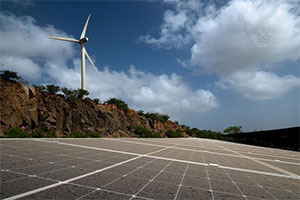 Renewable Energy in Cabo Verde. Credit: UN Photo/Mark Garten
A green economy is an economic model that aims to reduce environmental risks and build a sustainable future. Many of the UN SDGs seek to facilitate a green economy, such as ensuring access to affordable and reliable clean energy, building sustainable cities and communities, and implementing urgent action to combat climate change. Various key negotiations have strived to achieve a green economy, such as the Green New Deal and the Inflation Act of 2022. COP30, held in Belém, Brazil in 2025, agreed to mobilize $1.3 trillion annually for climate action and launched the Belém Mission to 1.5°C. However, the conference was not able to develop a fossil fuel reduction roadmap. Recent years have witnessed a sharp transformation in the geopolitical landscape of international sustainability cooperation. In March 2025, the United States stepped back from formal multilateral support for the SDGs, while China is on the rise as an international leader in renewable energy production. The actions of these global powers may shape shifting alliances on environmental governance. IPS is dedicated to sharing timely news on international developments in building a sustainable future.

The Week with IPS

NEXT STOP - SDGs
Tracking global progress towards a sustainable world
Tracking global progress towards a sustainable world
