Languages
Monday, November 23, 2026



News and Views from the Global South
Economy & Trade

Argentina Seeks to Restructure Debt Held by Vulture Funds
As a sign of Argentina’s willingness to repay its bondholders, President Cristina Fernández introduced a bill for a new swap of the foreign debt held by “holdout” creditors who refused earlier restructurings after the country’s late 2001 default.
U.S. Executives’ Pay on “Inexorable Upward Climb”
Three years after the passage of landmark legislation aimed at strengthening regulation of major U.S. companies, one of the most criticised disparities characterising today's corporate culture – the outsized compensation offered to top executives – continues to grow.
Israeli Lobby Looks to 2008 Law to Justify Request for More U.S. Aid
Israel and its domestic U.S. lobby are already in the early stages of the next 10-year aid package, which would not go into effect until 2017 and will be the first since Congress passed the Naval Vessel Transfer Act of 2008, which requires in part that U.S. military aid to Israel ensure that Israel maintains its "Qualitative Military Edge" (QME) over any combination of states and non-state actors.
World’s Top Chefs Cook for Change
For Denmark’s leading chefs, it’s not only the “taste” that counts. Many have an ambitious goal to “revise the relationship between people and food,” use local ingredients, produce less waste and go completely organic.
Zimbabwe Sails Close to Economic Rocks
For President Robert Mugabe to defeat the opposition in the Jul. 31 election by hook or by crook may have been a walk in the park, but beating the economic crisis will be another matter. The stock market fell 11 percent the day he was sworn in, the biggest fall in a day since 2009.U.S. Court Ruling Boosts Vulture Funds at Developing World’s Expense
A recent U.S. court ruling over a fight between Argentina and its creditors on Wall Street will increase global poverty by making it easier for "vulture funds" to seize the assets of indebted nations, according to anti-debt campaigners who are urging the U.S. government to overturn the decision.
Q&A: Everyone Loses in War Over Amazon Dams
In the war over major hydropower dams in the Amazon jungle, everyone loses - even the winners who manage to overcome the opposition and build them, but who suffer delays, costs that are difficult to recoup, and damage to their image.
Exclusive Bus Lanes Speed Things Up in Buenos Aires
A new system of exclusive lanes for bus rapid transit appears to be benefiting public transport passengers and bus drivers in the most congested part of the centre of the Argentine capital.
U.S. Sells Attack Helicopters to Indonesia amid Rights Concerns
U.S. Secretary of Defence Chuck Hagel announced Monday that Washington is going forward with a controversial sale of eight attack helicopters to the Indonesian government, despite concerns that the gunships will be used for internal repression.
Uruguay Prepares for Iron Rush
A bill that would regulate large-scale mining operations is making its way through Uruguay’s two houses of parliament, despite a lack of political consensus and vocal opposition from environmental organisations and other sectors of civil society.
New Initiative Aims to Integrate Agriculture and Conservation
It took Brazil four decades to overcome food insecurity and earn a place as a major global food supplier. Now its experiences will contribute to the evidence base for a new initiative that seeks to reconcile agriculture and the conservation of biological diversity.
Civil Society Calls for Vote on Drilling in Ecuador’s Yasuní Park
The Ecuadorean government’s decision to allow oil drilling in the Yasuní National Park, one of the most biodiverse areas of the planet, has caused alarm among environmentalists and indigenous people, who are calling for a referendum on the issue.Tajikistan, Where Iranian Money Takes a Bath?
An Iranian entrepreneur who is the subject of U.S. and EU sanctions for laundering oil money on behalf of Tehran is operating a successful family of businesses in Tajikistan.Cheap Power Stymies Renewables in Kyrgyzstan
Almost five years ago, as his village in northern Kyrgyzstan endured daily power outages, rays of light always emitted from Sabyr Kurmanov’s garage. They came from his egg incubator, a 12-volt contraption powered by something he and his neighbours have in abundance – wind.
U.S. Selling Cluster Bombs Worth 641 Million to Saudi Arabia
Arms control advocates are decrying a new U.S. Department of Defence announcement that it will be building and selling 1,300 cluster bombs to Saudi Arabia, worth some 641 million dollars.
Five Caribbean States Join Pilot for Energy Efficiency
Every year, the Caribbean's electric sector burns through approximately 30 million barrels of fuel. Overall, the region imports in excess of 170 million barrels of petroleum products annually.
Nicaragua’s New Canal Threatens Biggest Source of Water
The law passed in Nicaragua to grant a concession to a Chinese company to build a canal between the Pacific and Atlantic oceans repealed legislation that protects Lake Cocibolca and its tributaries.
Mining in Chile Going Back Underground
Declining mineral content, the need to preserve the environment, and technological advances are causing big mining companies to turn back to underground mining in what is a rising trend in Chile and around the world, experts say.
GM Seeks New Pastures in Pakistan
After a string of setbacks in India in recent years, the genetically modified seed industry is now targeting Pakistan as its next frontier, say activists.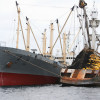
U.S. Major Holdout on Landmark Maritime Labour Convention
A landmark international agreement on labour standards for seafarers came into effect this week, marking the first comprehensive international effort aimed at ensuring safe and decent working conditions for the world’s 1.5 million-plus maritime labourers.
Civil Society Trial Finds Oil Corp Guilty in Colombia
An “ethical and political trial on pillaging of natural resources” in Colombia condemned three foreign corporations, including Canada’s Pacific Rubiales Energy, which has dozens of oil and natural gas operations around the country.« Previous Page — Next Page »


 UN Commission on International Trade Law Holds Colloquium on Harmonizing Law in Age of Digital Trade and Finance. Credit: UN Photo/Manuel Elías
Trade has historically been a geopolitical tool that can both be used to propel development as well as entrench inequalities. In various nations in East Asia and Latin America, increased trade, as often seen in export booms, has allowed them to achieve influential standings within the global economy. On the other hand, many low-income countries in Sub-Saharan Africa, Asia, and Latin America struggle to maintain a robust trade performance, and oftentimes are subjugated to exploitative trade dynamics through intense extraction of their natural resources. In recent decades, international trade has reached a new era as emerging economies across the world are rising in economic preeminence. Stable international trade is crucial to world peace as global interconnectedness facilitates reliable diplomacy. Nevertheless, significant challenges are on the rise. Notably, a major wave of United States tariff escalations in January 2025 lifted US import taxes to their highest level since the 1930s, changing market dynamics and forcing renegotiations with global trading partners.These articles are aimed at informing readers about the complexities of trade and its varying effects on development, with a special focus on the consequences of the global economic crisis, the potential of fair trade and the gender implications of trade policies.
Updated by Yilan Batista and Shuli Wong August 2026

The Week with IPS

NEXT STOP - SDGs
Tracking global progress towards a sustainable world
