Languages
Wednesday, November 25, 2026



News and Views from the Global South
Economy & Trade

Small Step to Set Up the Biggest Marine Park
The world’s largest marine park is due to be launched in the Cook Islands located in the Pacific Ocean about 3,000 km from New Zealand. Covering an area of almost a million square kilometres, the park will be three times the size of Australia’s Great Barrier Reef Marine Park and twice as large as the Chagos Archipelago in the Indian Ocean that topped the list of marine protected areas (MPAs) for two years.
Capitalising on Natural Disasters in Guatemala
In a country as vulnerable to natural disasters as Guatemala, a “state of public calamity” is frequently declared – to the joy of contractors, which find a good opportunity to line their pockets.
Cuban Women Face Challenges of Self-Employment
Beatriz Lemes took her time deciding, and finally agreed “apprehensively” to take the job of heading a state-run company that is making the transition to financial autonomy, a system that is spreading throughout Cuba and is testing women’s capacities, among other things.
Debate on Asbestos Safety Reaches Brazil’s Supreme Court
Brazil’s Supreme Court is assessing the level of risk posed by asbestos to human health, while industry defends its use under controlled conditions, and associations of people with asbestos-related diseases argue that it should not be used under any circumstances, even with regulations.
Israel ‘Pillaging’ Palestinian Resources
By mining natural resources from the occupied Palestinian territories for its own economic purposes, Israel is committing the war crime of pillage in the Dead Sea area, according to a report released Monday by Palestinian human rights group Al Haq.
Women Spend 40 Billion Hours Collecting Water
As the weeklong international conference on water concluded Friday, it was left to one of the keynote speakers from the United Nations to focus on a much neglected perspective on water and food security: the role of women.
PACIFIC ISLANDS: Marine Protected Areas Bolster Conservation Efforts
The world's smallest island nations wield more power than their sizes would suggest, with millions of square kilometres in their domains, said leaders of Pacific Island nations gathered at a special forum here in the Cook Islands.Five Years of Protests in Nicaragua for a Partial Pension
Luisa Gutiérrez, 65, dances a frenzied mambo on an unusual dance floor: a street in the Nicaraguan capital. Dozens of cars line up behind her, honking their horns impatiently, while she, surrounded by elderly people with canes, walkers and protest signs, dances to demand a government pension.
U.S.: Government and Industry Partner to Promote Electric Cars
A 120-million-dollar grant from the U.S. Department of Energy to the nationwide Electric Vehicle (EV) Project aims to promote and expand the use of electric vehicles in the United States.
Sweden to Fund Innovations in Water Sector
When the international community was struggling to ward off a potential decline in development aid in early 2000, it came up with a novel idea: a proposal for "new and innovative sources of financing", including a tax on airline tickets and a levy on foreign exchange transactions.
As Temperatures Rise in Sri Lanka, Drought Wreaks Havoc
It is a time of extreme heat and anxiety in Sri Lanka. Even the rains last week felt like a sudden burst of cold water on the smouldering asbestos sheets on most Sri Lankan household roofs, creating a blast of cold air before the heat returns once the rains end.
Spain Hit by Epidemic of Despair
Rising rates of depression and suicide are among the most obvious signs of the increase in mental illness resulting from the economic crisis in Spain.Irregular Migrants Face the Boot in Greece
A crackdown on irregular migration has entered its fourth week in Greece. The government is shutting the Greek-Turkish northeastern border across river Evros, and removing massive numbers of undocumented migrants from big urban centres into makeshift detention camps.
Could Water Strife Lead to ‘Mass Killings’ in the Future?
As the world faces possible water scarcities in the next two to three decades, the U.S. intelligence community has already portrayed a grim scenario for the foreseeable future: ethnic conflicts, regional tensions, political instability and even mass killings.
Study Damns Mekong Dams
Impoverished Laos is unlikely to cancel a Thai project to build a mega dam across the Mekong River at Xayaburi, despite warnings from the International Union for Conservation of Nature (IUCN) that it could devastate the region’s rich biodiversity.
Feed Europe, Feed the World
A huge moment for reform of the industrial farming system in Europe has many stakeholders on edge. Farmers who are feeling the crunch of rising input costs – from fertilisers to fuel – believe they can benefit greatly from a transition to more traditional and sustainable farming methods.
Small Arms Trade Bigger Than Ever, Report Says
The goal of curbing small arms proliferation appears more elusive than ever, according to a report released this morning by the independent research project Small Arms Survey.U.S. Foreign Weapons Sales Triple, Setting Record
U.S. weapons sales around the world have massively expanded over the past year, setting several records. Agreements for foreign arms sales in 2011 totalled around 66.3 billion dollars – three times higher than the previous year and constituting an "extraordinary increase", according to the Congressional Research Service.
‘Eating’ Water Latest and Rising Threat to a Thirsty World
Paradoxically, the water we "eat" is likely to become one of the growing new dangers to millions of the world’s thirsty, hungering for this finite natural resource.
Philippines Floods Prompt Climate Action
This year’s floods, one of the worst in Philippine history, destroyed a staggering 57 million dollars worth of crops, pushing this climate vulnerable country to implement disaster risk reduction measures.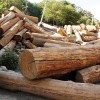
Whose Timber is it Anyway?
With Pakistan’s last major stands of deodar (cedar) threatened by a ‘timber mafia’, the local people in the Chitral district of Khyber Pakhtunkhwa province are resorting to direct action to stop the denudation of their picturesque alpine homeland.« Previous Page — Next Page »


 UN Commission on International Trade Law Holds Colloquium on Harmonizing Law in Age of Digital Trade and Finance. Credit: UN Photo/Manuel Elías
Trade has historically been a geopolitical tool that can both be used to propel development as well as entrench inequalities. In various nations in East Asia and Latin America, increased trade, as often seen in export booms, has allowed them to achieve influential standings within the global economy. On the other hand, many low-income countries in Sub-Saharan Africa, Asia, and Latin America struggle to maintain a robust trade performance, and oftentimes are subjugated to exploitative trade dynamics through intense extraction of their natural resources. In recent decades, international trade has reached a new era as emerging economies across the world are rising in economic preeminence. Stable international trade is crucial to world peace as global interconnectedness facilitates reliable diplomacy. Nevertheless, significant challenges are on the rise. Notably, a major wave of United States tariff escalations in January 2025 lifted US import taxes to their highest level since the 1930s, changing market dynamics and forcing renegotiations with global trading partners.These articles are aimed at informing readers about the complexities of trade and its varying effects on development, with a special focus on the consequences of the global economic crisis, the potential of fair trade and the gender implications of trade policies.
Updated by Yilan Batista and Shuli Wong August 2026

The Week with IPS

NEXT STOP - SDGs
Tracking global progress towards a sustainable world
