Languages
Sunday, September 27, 2026



News and Views from the Global South
Climate Action

Climate Hypocrisy Ensures Global Warming
Rich country governments claim the high moral ground on climate action. But many deny their far greater responsibility for both historic and contemporary greenhouse gas (GHG) emissions, once acknowledged by the Kyoto Protocol. Climate injustice Worse, responsibility has not been matched by commensurate efforts, especially by the largest rich economies in the G7, which dominates the G20. Its continued control of international economic resources and policymaking blocks progress on climate justice.
Global Biodiversity Agenda: Nairobi Just Added More to Montreal’s Plate
As the last working group meeting of the Post 2020 Global Biodiversity Agenda concluded here on Sunday, the delegates’ job at COP15 Montreal just got tougher as delegates couldn’t finalize the text of the agenda. Texts involving finance, cost and benefit-sharing, and digital sequencing – described by many as ‘most contentious parts of the draft agenda barely made any progress as negotiators failed to reach any consensus.
Healthy Planet Needs ‘Ocean Action’ from Asian and Pacific Countries
As the Second Global Ocean Conference opens today in Lisbon, governments in Asia and the Pacific must seize the opportunity to enhance cooperation and solidarity to address a host of challenges that endanger what is a lifeline for millions of people in the region.
Centering Gender in the Next Biodiversity Agenda: A Long Way to Montreal
“I often hear, ‘What do women have to do with biodiversity?' And I want to ask them back, 'What do men have to do (with biodiversity)?’,” says Mrinalini Rai, a prominent gender equality rights advocate at the 4th Meeting of the Open-Ended Working Group of the UN Biodiversity Convention, which started this week in Nairobi.
Who Should Be the Next UN Climate Change Head?
Patricia Espinosa’s six years as Executive Secretary of the UN’s climate change secretariat ends on July 15th. During her time in charge, she has led efforts to operationalize the 2015 Paris Agreement and inject greater urgency into the diplomatic process. Although progress has been difficult, COP26 in Glasgow added some momentum and arguably brought the UN process to the start of its next stage: implementation.
Plastic Pollution Will Kill All of Us!
Have you ever watched the movie “Free Willy”? A young boy, Jesse, had an Orca whale friend named Willy. Jesse freed Willy into the wild ocean believing that it was the best decision to make for his friend. Well, that was a long time ago.
Southern Winds in Magallanes Fuel Green Hydrogen in Chile
Patagonia’s strong winds are driving projects that will place Magallanes, in the extreme south of Chile, in a privileged position to produce and export green hydrogen and help the country move towards carbon neutrality.
Farmers in Senegal Adopt Farming as a Business to Beat Climate Change
Onions and rice are a conspicuous part of every meal in Senegal, including the famous Poulet Yassa. However, climate change makes it hard for smallholder farmers to grow enough staple food with extra to sell for income.
World Environment Day: Burden of Environmental Decline Falls Heavily on Poor and Vulnerable
Barnabas Kamau’s home sits on a wetland in Rumuruti Laikipia County in the Rift Valley region - considered Kenya’s breadbasket. He settled in the area 15 years ago, attracted by the wetlands’ fertile grounds as they provide favourable farming and livestock activities conditions.
Gender Sensitivity Key to Achieving Climate Justice
While the climate crisis affects virtually every aspect of life, its impacts are not felt equally. A person’s vulnerability to climate change varies depending on their position in society, such as socioeconomic status, dependence on natural resources, and capacity to respond to natural hazards. Since different genders often experience different social standings, gender has emerged as a key element to consider for effective climate planning and adaptation.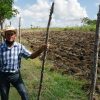
Cuban Farmers Fight Land Degradation with Sustainable Management
Thorny bushes and barren soil made it look like a bad bet, but Cuban farmer José Antonio Sosa ignored other people’s objections about the land and gave life to what is now the thriving La Villa farm on the outskirts of Havana.
Reclaiming Our Future
The Asia-Pacific region is at a crossroads today – to further breakdown or breakthrough to a greener, better, safer future. Since the Economic and Social Commission for Asia and the Pacific (ESCAP) was established in 1947, the region has made extraordinary progress, emerging as a pacesetter of global economic growth that has lifted millions out of poverty.
Give Edible Insects a Chance as an Alternative High-Quality Protein Source, say Scientists
Growing up in Samoya Village of Bungoma County in the Western part of Kenya, Elvis Wanjala has fond childhood memories of the rainy season, chasing and catching black-bellied winged termites in the rain.
Six Ways Rwanda Is Building Resilient and Sustainable Transport Systems
Over the last decade, Rwanda has invested in building efficient and resilient transport systems. Guided by the country’s Green Growth and Climate Resilience Strategy (GGCRS), the Government of Rwanda has carried out numerous initiatives to promote sustainable mobility and the green economy at large.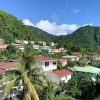
English and Dutch Caribbean Rally Around UN Sustainable Development Framework
When Dominica signed on to the United Nations Multicountry Sustainable Development Framework for the English and Dutch Speaking Caribbean (MSDCF) in March, the country joined others like Saint Lucia, St. Vincent, and the Grenadines, Suriname, and Aruba as part of a 5-year framework to plan and implement UN development initiatives.
Landmark UN Report Issues Stark call for Sustainable Land Management to Save Human Health
With 50% of humanity affected by land degradation, the world must move to a ‘crisis footing’ to conserve, restore and use land resources sustainably, a major UN report has said.
Kenyan Community Project Saving Forests, Saving Livelihoods
Despite an abundance of fisheries reserves along Kwale County’s lush coastline located on the south coast of Kenya, fishers can no longer cast a net just past the coral reef and expect an abundant crab or prawn harvest.
Commonwealth Climate Finance Hub to Boost Belize’s Delivery of Climate Change Projects
In September 2020, at the height of the COVID-19 pandemic, the UK-based Commonwealth Secretariat announced that it had dispatched highly skilled climate finance advisors to four member nations to help them navigate the often-complicated process of accessing climate funds. Belize, the Caribbean Community’s (CARICOM) only Central American member, was one of the recipients.
Climate Risk Insurance in Pacific Small Island Developing States: Possibilities, Challenges and Vulnerabilities
The World Bank lists Fiji, Kiribati, Marshall Islands, Federated States of Micronesia, Nauru, Palau, Samoa, Solomon Islands, Tonga, Tuvalu and Vanuatu as Pacific Small Islands Developing States (PSIDS). . Some listings also include the Cook Islands, Niue and Tokelau. In September 2019, these countries had a combined population of 2.3 million spread over hundreds of islands spread over an area roughly equivalent to 15% of the surface area of the earth. Of these, the most populated country – Fiji – has a population of 900,000. The World Bank’s World Development Indicators reveal that annual per capita GDP of these islands fell from $4,340 in 2018 to $3,768 in 2020. It has probably fallen further during the pandemic.
Africa Commits to Green Recovery from COVID-19 Amid Daunting Challenges
Climate change activist Mithika Mwenda, the Executive Director of the Pan African Climate Justice Alliance (PACJA), is not reluctant to engage African governments to do what’s necessary to commit to post-COVID-19 green growth strategies.
Traditional, Time-Tested Methods and a Modern App Helps Beat Climate Change
Even as erratic weather and extremely high temperatures increase pest infestation and affect harvests, a combination of traditional methods, integrated pest management through intercropping and multilayering is helping farmers in Ahmednagar and Aurangabad districts of Maharashtra, India.« Previous Page — Next Page »


The Week with IPS

NEXT STOP - SDGs
Tracking global progress towards a sustainable world
Tracking global progress towards a sustainable world
