
Tuesday, November 10, 2026



News and Views from the Global South
Climate Change

Want to Go for Inclusive Climate Action? Then Start with Integrating Gender Equality into Climate Finance
Gender equality and women’s rights have progressed immensely since the adoption of the most visionary agenda on women’s empowerment, the Beijing Declaration and Platform for Action, 25 years ago.
The Future Pacific Island Children Want
For 13-year-old Karen Semens, growing up on Pohnpei -- one of the four main island states in the Federated States of Micronesia, which comprises of more than 600 islands in the western Pacific Ocean -- the main challenge is being a girl. “In our culture, girls don’t have the same rights and opportunities nor do they get credit and recognition for their achievements as boys do. This prevents us from speaking our minds. For example in family meetings, only men make the decisions. I would like all girls to be treated as equals and have a say in decision making,” the 8th grade pupil from the Ohmine Public Elementary school in Pohnpei, tells IPS.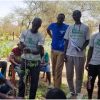
Senegal Farmer Succeeds with Regenerative Agriculture & Begins Teaching Others
Souylemane Samb sits under a crowded tent on a hot Senegalese day. He wears a canvas vest with Trees for the Future printed across the back.
The Italian Pyramid: Scientific Observatory at the Top of the World
 Hello! Are you Italian?
No, I’m from Nepal.
Oops.
Kaji Bista is the staff manager of the Ev-K2-CNR’s innovative Pyramid International Laboratory/Observatory (known as the Italian Pyramid) at 5,050 m a.s.l. located in Lobouche.

Climate-Smart Agriculture means More Time for Eswatini Women Farmers
Aside from the seven hours Mantfombi Msibi (63) would spend daily during the Eswatini farming season planting, applying herbicides and weeding her 1.2-hectare maize field, she would also spend E1 750 ($125) on tractor services. It was a huge cost of both time and money. But this season, Msibi will be benefiting from climate-smart farming technology that has opened up a new world of farming to her, saving her time in the process.
Protecting the environment should be everyone’s concern
The Bangladesh parliament, led by the parliamentary standing committee on environment, recently declared a planetary emergency in Bangladesh. This is ground breaking in that most other parliaments around the world have declared a climate change emergency, but none have also added a biodiversity emergency as the Bangladesh parliament has. So ours is a twin track emergency, not just a single track.
Belize Passes Milestone Law to Safeguard Fisheries
 The Environmental Defence Fund and its partners in conservation are this month celebrating a major milestone in Belize’s efforts to safeguard its fisheries.

Three Financial Firms Could Change the Direction of the Climate Crisis – and Few People Have Any Idea
A silent revolution is happening in investing. It is a paradigm shift that will have a profound impact on corporations, countries and pressing issues like climate change. Yet most people are not even aware of it.
Preserving World’s Biodiversity: Negotiations Convene at FAO Headquarters
“The world out there is watching and waiting for results,” Elizabeth Maruma Mrema warns while talking to IPS regarding the preservation of biodiversity of our planet.
India’s Orange Farmers Search for Sustainable Agriculture
Hillol Datta, 26, travelled for two days from Kolkata to Jampui Hills – a picturesque hill station in the north eastern province of India – to see its fruit-laden orange orchards. However, after driving for several hours, all the young traveller saw were bald patches along the hill slopes and scattered rows of areca (nut) palm trees.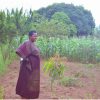
Ugandan Farmer Ends Food Insecurity for Family & Community
In Aboke, Uganda, a modest restaurant serves locals breakfast, lunch and dinner. Carol Agoa isn’t just the owner and cook, she also supplies all of the food for her restaurant.
A Post-2020 Global Biodiversity Framework Aims at Reinforcing Efforts to Save World’s Ecosystem
The UN’s highly-touted socio-economic agenda, which lays out an ambitious global plan for “people, planet and prosperity”, has been dominated by “goals, targets and deadlines.”
Mr. Ban Ki-moon begins second term in office as President and Chair of GGGI
On February 20, 2020 – Mr. Ban Ki-moon, 8th Secretary-General of the United Nations, has officially begun his second term in office as the President of the Assembly and Chair of the Council of the Global Green Growth Institute (GGGI). In his letter to Members of GGGI, President and Chair Mr. Ban reaffirmed his commitment to raise awareness of the Institute and its work to tackle climate change and help countries accelerate achievement of the Sustainable Development Goals (SDGs).
As Planet Burns, One Million Species in World’s Eco-System in Danger of Extinction
When UN Secretary-General Antonio Guterres addressed the 193-member General Assembly last December, he focused on the smoldering climate crisis-- pointing out that the last five years have been the hottest ever recorded.
Biodiversity & Agriculture: Nature’s Matrix & Future of Conservation
When we were children, a long auto trip would require a stop every hour or so to clean the windshield of the insects that had been intercepted.
Tackling Climate Change and Preserving the Water Body: A Bangladeshi Perspective
For any riverine country, the state of the water body around big cities and conditions of major rivers hold a leadership position in the overall climate effects and how the water body is protected and preserved impacts the entire economy and living standards of that country. Bangladesh is renowned for the geomorphic features that include massive rivers flowing throughout the country. Within the border of Bangladesh lie the bottom reaches of the Himalayan Range water sources that flow into the Bay of Bengal totaling the number of rivers by a count of 700. The length of river bodies is about 24,140 km. There are predominantly four major river systems: the Brahmaputra-Jamuna, the Ganges-Padma, the Surma-Meghna, and the Chittagong Region river system. The Brahmaputra is the 22nd longest (2,850 km) and the Ganges is the 30th longest (2,510 km) river in the world. (1) The river system works as a backbone for agriculture, communication, drinking water source, energy source, fishing and as the principal arteries of commercial transportation in Bangladesh. During the annual monsoon period between June and October, the rivers flow about 140,000 cubic meters per second and during the dry period, the numbers come down to 7000 cubic meters per second.
That Mobile Game that’ll Generate Climate Solutions from Players Around the World
The United Nations Development Programme is leading a climate change effort that might finally address concerns many advocates have: bridging the gap between people and governments.
How Encroachments, Willows and Silt Ate up Half of Kashmir’s Own Sea
Warming himself with a kangri (a firepot) kept under his pheran (a long winter cloak worn by Kashmiris), 66-year-old Mohammad Subhan Dar sat chatting with a bunch of his fellow villagers on a January afternoon on the edge of the road overlooking Wular Lake in Saderkote-Bandipora, northern India.
Pulses for a Sustainable Future
Reducing poverty and inequalities, eliminating hunger and all forms of malnutrition and achieve food security for all – these are some of the most important objectives of the Sustainable Development Goals. Still, the rate of poverty and inequalities is increasing and over 820 million people are going hungry. In addition, 2 billion people in the world are food insecure with great risk of malnutrition and poor health. This alarming situation is further aggravated by current trends such as the rate of population growth, impacts of climate change, loss of biodiversity, soil degradation and many others. Transition to more sustainable food systems can provide adequate solutions to all these challenges. Pulses could play an important role in this transition, having nutritional and health benefits, low environmental footprint, and positive socio-economic impacts as well. What is required to promote and support the production and consumption of more pulses? This question is particularly relevant now, since 10 February is the World Pulses Day.
Globalization of Indifference: Ai Weiwei and the Refugee Crisis
Humans belong to a species that is constantly on the move . Since some Homo Sapiens 125,000 years ago began to move from the African continent, humans can be found all over the world, even in such utterly inhospitable places as the icebound plateaus of Antarctica. By moving, humans have tried to escape inadequate food-supply or otherwise unacceptable living conditions. Natural forces have forced them to leave, or even more commonly – violent actions by other humans. With them migrants have brought their means of expression and interaction, some of them expressed through their art.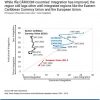
Strengthening Caribbean Regional Integration
The Caribbean economies have long recognized the value of working together. Improving regional integration—for instance, through more intraregional trade and policy coordination—can help the region’s small-size economies build greater resilience and scale, as well as enhance bargaining power on the global stage.« Previous Page — Next Page »





As unsustainable human consumption and production systems are driving changes in average temperatures and weather patterns, "abnormal" is increasingly becoming the norm. So far, a lack of financing has been standing in the way of a comprehensive global plan for climate adaptation, and a global financial crisis has contributed to an increasing reliance on public-private partnerships. Our Climate Change page provides you with the latest news about international and local efforts to address what's frequently been called "the challenge of our time", the forces behind the climate change and the impact it has on the world's most vulnerable populations. Along the way, we bring you stories on growing citizen awareness, new scientific data, and emerging climate policies towards sustainable development.

The Week with IPS

Tracking global progress towards a sustainable world

