
Thursday, November 12, 2026



News and Views from the Global South
Environment

Mexico’s Cities Not Ready for Climate Change
Towns on Mexico’s Caribbean coast are behind schedule on the design and implementation of plans to face the challenges of climate change, in spite of the urgency of measures to reduce vulnerability.
Biofuels Get a Dubious Boost
In an unexpected move, European parliamentarians have approved a new biofuel regulation that will take emissions from indirect land use change into account. The new text allows the biofuel sector to expand, sending a clear signal to world food markets and jeopardising food security for the world's poorest.
Climate Change Takes Centre Stage in U.S.-China Talks
The United States and China have agreed on a suite of potentially far-reaching initiatives aimed at cutting greenhouse gas emissions in the world’s two largest economies and largest polluters.
Battle Over Seeds Heats Up in Argentina
The debate over the reform of Argentina’s seed law has pitted transnational corporations that make transgenic seeds against social and rural organisations and academics opposed to the expansion of monoculture in defence of biodiversity and food security.
Q&A: Hurricanes Are Getting Stronger in the Caribbean
Rather than talk about forecasts for hurricanes at the start of this year’s season, Cuban meteorologist José Rubiera prefers to discuss the importance of reducing the country’s vulnerability and improving preparedness.
Indonesia’s Recurring Forest Fires Threaten Environment
Indonesia's forest fires, a predictable annual ritual, will continue to have serious implications for health and the environment in Southeast Asia unless the government strengthens forest protection, warn environmental groups.
Saving Côte d’Ivoire’s Fragile Forests and People
As the Côte d’Ivoire government clears its protected forests of illegal occupiers, particularly in the Dix-Huit Montagnes region, environmentalists say that this crucial move might lead to conflict in an already tense region.
U.S. Has “Largely Failed” to Protect Marine Species
Environmentalists on Monday filed a petition with the U.S. government requesting regulatory safeguards for 81 particularly vulnerable marine wildlife species, from corals to sharks.
Over a Barrel, Caribbean Seeks Finance for Clean Energy
When James Husbands, a 24-year-old Barbadian businessman, began weighing the possibility of manufacturing solar water heaters, there was already a prototype on the island that had been designed and installed by an Anglican priest living there in the early 1970s.
Fighting Drought, One Pond at a Time
 Bangladesh, a country of 150 million people who depend on rice as their main staple, is gearing up for drought. Already huge areas of the rice-producing regions are on a knife's edge, as elusive rains and hotter temperatures team up on thirsty paddy fields and threaten to disrupt food supply.

U.S. Navy’s “Green Fleet” Sparks Praise and Cynicism
The United States military, an organisation that consumes 90 percent of the country's federal oil allowance, is trying to become a greener institution.
Cyclone-Resistant Construction Materials, Cuban Style
Houses with sturdy masonry walls and reinforced concrete roofs, looking like they could survive any tropical storm or hurricane, are sprouting up on the outskirts of this city in central Cuba, thanks to the development of local production of construction materials.
Living Laboratory for Coping with Drought in Brazil
The first surprise on arriving at Abel Manto's farm is how green it is, in contrast with the dry brown surroundings. His beans and fruit trees seem oblivious to the persistent drought in the semi-arid hinterland of northeast Brazil, the worst in 50 years.
Green Economy Not Taking Off in Latin America
A year after endorsing the principles of the green economy at the Río +20 summit, Latin America is making little progress towards sustainable development models, according to experts.
U.S. Court Overturns Key Extractives Transparency Rule
A federal judge here on Tuesday struck down a key new regulatory provision that would require large U.S.-listed extractives companies to disclose payments made to foreign governments, a rule that rights groups had long pushed as a way to cut down on corruption in developing countries.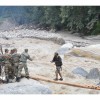
In the Land of the Gods, Disaster Response Falls Short of Divine
Over 580 bodies have so far been found. Hundreds more will likely never turn up. Survivors say they are suspended in a kind of nightmare, either haunted by memories of their brush with death or desperate for news of loved ones. At least 3,000 are reported to be missing.U.S. Weighing Increase in Herbicide Levels in Food Supply
Environmental safety groups are stepping up efforts to prevent a reportedly dangerous yet widely used herbicide from being sold in the United States, even as the country’s primary environmental regulator is considering increasing the amount of the herbicide allowed in the U.S. food supply.
Obama Announces New U.S. Focus on Wildlife Trafficking
President Barack Obama on Monday announced a series of new initiatives to combat spiking levels of international poaching and draft a new national plan on wildlife trafficking, an industry that has grown so significantly in recent years that the president now calls it an “international crisis”.
Q&A: World Needs a Plan for Expected Waves of Climate Refugees
Untold thousands dead and thousands more stranded or missing - these are the latest figures from various reports on the devastation caused by flash floods in the Indian state of Uttarakhand.
Media Scholars Decry Financial Crisis, Call for Action
Communications scholars from around the world deplored the global financial crisis and called on their peers to take more active roles in the search for solutions at a recent four-day conference in Dublin, Ireland.
China Leads Battle Against Poverty, Says U.N.
The United Nations has singled out China - the world's most populous country with over 1.3 billion people - as one of the key success stories in the longstanding battle against poverty.« Previous Page — Next Page »





Through our global network of local writers, we are continuing our award-winning coverage of global and local environmental challenges, with a focus on the people for whom the ecosphere matters in a direct way: rural dwellers who have little means to protect themselves against adverse conditions; communities that need to switch to sustainable development in order to survive; poor women and children, who are the most vulnerable in natural disasters. Sponsored by the United Nations Environment Program (UNEP), the United Nations Development Program (UNDP) and The World Bank (WB), IPS also maintains the award-winning Tierramérica, a specialised information service on environment and development.

The Week with IPS

Tracking global progress towards a sustainable world


