
Thursday, October 8, 2026



News and Views from the Global South
Environment
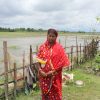
Women Advocates for Harvesting Rainwater in Salinity-Affected Coastal Bangladesh
Like many other women in Bangladesh's salinity-prone coastal region, Lalita Roy had to travel a long distance every day to collect drinking water as there was no fresh water source nearby her locality.
Why Investing in Water, Sanitation and Hygiene Pays Off
As the devastating images of flooding in Pakistan went round the world and the country declared a state of emergency, some 4,000 miles away in Stockholm, delegates had just arrived for World Water Week – an annual focal point for global water issues.
Civil Disobedience – How to Make Enemies and Influence People
Blocking metros and highways in rush-hour traffic to stop commuters getting to work. Vandalizing petrol pumps to put them out of use. Halting sporting events such as the French Open and the British Grand Prix. Disrupting bemused art lovers by gluing oneself to priceless masterpieces.
How to Make COP27 a Success
Each year, low-emitting countries like Bangladesh are the greatest sufferers and, paradoxically, pay the biggest price in losses and damages resulting from climate change.
The Swedish Elections: A Victory for Populism
After general elections on the 12th September, Sweden is on the threshold of a new era. The Sweden Democrats (SD) won almost 21 percent of the votes and thus became the largest in a bloc of right-wing parties that now have a collective majority in the parliament. A nation that for a long time prided itself of being a beacon of tolerance and openness will now experience a historical transformation. The Sweden Democrats was once founded by Nazi sympathisers and for decades shunned by mainstream politicians. However, SD has now tipped the political scale in a country previously known for its stable and predictable politics, and some of the party’s former foes are now willing to co-rule with them.
Pacific Community’s Agricultural Gene Bank Wins Global Award
Safeguarding plentiful, nutritious supplies of food for the present generation of Pacific Islanders and those who come in the future is a frontline goal in the wake of the pandemic and the continual threat of climate extremes to island farming. But the region, where 50 to 70 percent of people depend on agriculture and fisheries for sustenance and income, is now one step ahead in that objective. The region’s agricultural gene bank, established by the development organisation, Pacific Community (SPC), is now acclaimed as world-class and a leader in building future food supplies.
Guatemalans Fight Extractive Industries
The majority of the Guatemalan population continues to oppose mining and other extractive projects, in the midst of a scenario of socio-environmental conflict that pits communities defending their natural resources against the interests of multinational corporations.
Why Are Politicians Able to Read – and Understand – Some Texts and Not Others?
Day after day, the world's scientific community, based on solid investigations, elaborates dozens of studies identifying the causes of the existing emergencies facing humanity. They also prepare understandable summaries and conclusions and propose feasible solutions to the current crises and ways to prevent major future risks.
Mexico’s Electric Mobility, Stuck in Fossil Fuel Traffic
The Mexico City government began testing an elevated route for electric buses with great fanfare on Sept. 11, in a bid to promote more sustainable transport. The initiative is part of an incipient promotion of electromobility in the country, amidst pro-fossil fuel energy policies.
Climate Change Crisis Nonacceptance
Many people around the world, especially those among the political far-right, do not accept the climate change crisis. Over the years their thinking, behavior, and policies dismissing climate change have largely continued and impaired global efforts to address global warming and environmental degradation.
Reimagining Urban Agriculture With Vertical Farming
Cities across the world including New Jersey and California, a State that is home to a multi-billion dollar agricultural industry, have continued to experience climate change linked extreme events including scorching temperatures, extreme heat events, heavy storms and flooding with devastating impacts on agriculture, food security, and food systems.
Remedy in Sight to Subdue an Invasive Poisonous Enemy in Kenya’s Drylands
Hannah Sakamo is worried. She is about to lose yet another goat in less than a month. A pastoralist in Eldepe village, Marigat Sub-County, Baringo County in Kenya’s Rift Valley region, her household’s lifeline is at stake. The goat in question, whose days are now numbered, has consumed pods, or the fruits of the invasive species, Prosopis juliflora, locally known as mathenge.
Great Wind and Solar Potential Boosts Green Hydrogen in Northern Brazil
Brazil could become a world leader in the production of green hydrogen, and the northeastern state of Ceará has anticipated this future role by making the port of Pecém, with its export processing zone, a hub for this energy source.
Pakistan Flooding Shows ‘Adapting’ to Climate Change Can Be a Dangerous Illusion
One third of Pakistan is now under water. The scope of the destruction is difficult to fathom, not just the enormity of the devastation its people are facing today, but also the damage to its infrastructure, its buildings, and its economy that will weigh heavily on the country for months and even years to come.
What Must COP27 Deliver?
Preparations for COP27 in November are proceeding apace and we are now well past the halfway mark between the preparatory meetings in June in Bonn and the start of the summit in Sharm El-Sheikh, Egypt. The agenda for Sharm El-Sheikh is complex and challenging. Furthermore, the meeting is taking place during a time of international turmoil. So, what are the factors influencing whether Sharm El-Sheikh can be a success? And what, exactly, does COP27 need to deliver?
Africa Struggles with Neo-Colonialism
After a quarter century of economic stagnation, African economic recovery early in the 21st century was under great pressure even before the pandemic, due to new trade arrangements, falling commodity prices and severe environmental stress.
Optimism Prevails Despite Uncertainty Over Revolution to Build Africa’s Food Systems
The 2022 Africa Green Revolution Forum (AGRF) Summit ended in Kigali, Rwanda, with policymakers, activists, researchers, business leaders, and agricultural experts divided over the right pace to build resilient agri-food systems on the continent.
United We Stand to Achieve Sustainable Development
The world today faces a future that is in peril. Our challenges have become more complex and interconnected, as we see the impacts of the COVID-19 pandemic, an uneven economic recovery, a climate emergency, growing inequalities, and an increase in conflicts globally. This year also marks a grim milestone, with over 100 million people forcibly displaced.
Africa Needs More Action, Fewer Words to Secure Food and Nutrition
For more than five years, Ritta Achevih was harvesting one bag of maize or less from her small plot each season. She could hardly provide enough healthy food for her big family.
In the Face of Scarcity, Cubans Dream of Once Again Drinking Their Daily Cup of Coffee
While the Cuban government's plans to increase production begin to bear fruit, Mireya Barrios confesses that she seeks every possible way to enjoy a cup of coffee every day, in the face of high prices and scarcity.
Climate Collapse Is Not Inevitable But ‘Great Leap’ Needed
In 1972 the Club of Rome alerted the world to the harm human economic systems were doing to the health of our planet in its seminal, best-selling report, The Limits to Growth. With the devastating impacts of the climate crisis hitting home harder than ever, especially in the Global South, that warning about the dangers of exponential economic growth has been fully vindicated.« Previous Page — Next Page »





Through our global network of local writers, we are continuing our award-winning coverage of global and local environmental challenges, with a focus on the people for whom the ecosphere matters in a direct way: rural dwellers who have little means to protect themselves against adverse conditions; communities that need to switch to sustainable development in order to survive; poor women and children, who are the most vulnerable in natural disasters. Sponsored by the United Nations Environment Program (UNEP), the United Nations Development Program (UNDP) and The World Bank (WB), IPS also maintains the award-winning Tierramérica, a specialised information service on environment and development.

The Week with IPS

Tracking global progress towards a sustainable world


