Languages
Wednesday, October 21, 2026



News and Views from the Global South
Water & Sanitation

Thirsty Land, Hungry People
Gazing out over the parched earth of Sri Lanka’s Northern Province, one might think these farmlands have not seen water in years. In fact, this is not too far from the truth.
Latin America on a Dangerous Precipice
“We could be the last Latin American and Caribbean generation living together with hunger.”
Puerto Rico’s Green Crusaders Still Going Strong
The heart of Puerto Rico’s central mountain range is the site of an extraordinary story of struggle and triumph.
OPINION: A Roadmap to Living – and Thriving – in Harmony with Nature
In Nagoya, Japan, in 2010, the international community made a commitment to future generations by adopting the Strategic Plan for Biodiversity 2011–2020 and 20 Aichi Biodiversity Targets.
Outgunned by Rich Polluters, Africa to Bring United Front to Climate Talks
As climate change interest groups raise their voices across Africa to call for action at the COP20 climate meeting in December and the crucial COP21 in Paris in 2015, many worry that the continent may never have fair representation at the talks.
Blistering Drought Leaves the Poorest High and Dry
The last time there was mud on his village roads was about a year ago, says Murugesu Mohanabavan, a farmer from the village of Karachchi, situated about 300 km north of Sri Lanka’s capital, Colombo.
Championing Ocean Conservation Or Paying Lip Service to the Seas?
President Barack Obama this week extended the no-fishing areas around three remote pacific islands, eliciting praise from some, and disappointment from those who fear the move did not go far enough towards helping depleted species of fish recover.
Climate-Smart Agriculture is Corporate Green-Washing, Warn NGOs
On the sidelines of the U.N.'s heavily hyped Climate Summit, the newly-launched Global Alliance for Climate-Smart Agriculture announced plans to protect some 500 million farmers worldwide from climate change and "help achieve sustainable and equitable increases in agricultural productivity and incomes."
Water: A Defining Issue for Post-2015
A gift of nature, or a valuable commodity? A human right, or a luxury for the privileged few? Will the agricultural sector or industrial sector be the main consumer of this precious resource? Whatever the answers to these and many more questions, one thing is clear: that water will be one of the defining issues of the coming decade.
Climate Change an “Existential Threat” for the Caribbean
When it comes to climate change, Prime Minister Ralph Gonsalves doesn’t mince words: he will tell you that it is a matter of life and death for Small Island Developing States (SIDS).
Will Governments Keep Their Promises on the Human Right to Water?
It was a dramatic moment at the United Nations when it voted in 2010 to affirm water and sanitation as a human right.
Latin America at a Climate Crossroads
World leaders gathered at the Climate Change Summit during the United Nations General Assembly on Sep. 23 will have a crucial opportunity to mobilise political will and advance solutions to climate change.
Will the Upcoming Climate Summit Be Another Talkathon?
As the United Nations hosts a Climate Summit Sep. 23, the lingering question is whether the meeting of world leaders will wind up as another talk fest.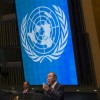
OPINION: A Climate Summit to Spark Action
On Sep. 23, I have invited world leaders from government, business, finance and civil society to a Climate Summit in New York so they can show the world how they will advance action on climate change and move towards a meaningful universal new agreement next year at the December climate negotiations in Paris.World Bank Tribunal Weighs Final Arguments in El Salvador Mining Dispute
A multilateral arbitration panel here began final hearings Monday in a contentious and long-running dispute between an international mining company and the government of El Salvador.
A Flood of Energy Projects Clash with Mexican Communities
Since January, villagers and townspeople near the Los Pescados river in southeast Mexico have been blocking the construction of a dam, part of a multi-purpose project to supply potable water to Xalapa, the capital of the state of Veracruz.
U.N. Climate Summit: Staged Parade or Reality Show?
The much-ballyhooed one-day Climate Summit next week is being hyped as one of the major political-environmental events at the United Nations this year.
When a Disaster Leaves Bathrooms in its Wake
When the 2004 Asian Tsunami lashed the coasts and island territories of India, one of the hardest hit areas were the Andaman and Nicobar Islands (ANI), which lie due east of mainland India, at the juncture of the Bay of Bengal and the Andaman Sea.
Struggling to Find Water in the Vast Pacific
Pacific Island states are surrounded by the largest ocean in the world, but inadequate fresh water sources, poor infrastructure and climate change are leaving some communities without enough water to meet basic needs.
New Technology Boosts Fisherfolk Security
As the United Nations gears up to launch its newest set of poverty-reduction targets to replace the Millennium Development Goals (MDGs) in 2015, the words ‘sustainable development’ have been on the lips of policymakers the world over.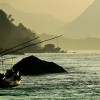
Large Dams “Highly Correlated” with Poor Water Quality
Large-scale dams are likely having a detrimental impact on water quality and biodiversity around the world, according to a new study that tracks and correlates data from thousands of projects.« Previous Page — Next Page »





The Week with IPS

NEXT STOP - SDGs
Tracking global progress towards a sustainable world
Tracking global progress towards a sustainable world
