Languages
Thursday, November 19, 2026



News and Views from the Global South
Featured

AIDS Response Is Leaving African Men Behind
Mention gender inequality in AIDS and the fact that more women than men live with HIV pops up. But another, rarely spoken about gendered difference is proving lethal to men with HIV.
Glaciers and Fruit Dying in Peru with no Response from COP20
Snow-capped mountains may become a thing of the past in Peru, which has 70 percent of the world’s tropical glaciers. And farmers in these ecosystems are having a hard time adapting to the higher temperatures, while the governments of 195 countries are wrapping up the climate change talks in Lima without addressing this situation facing the host country.
What Future for the ACP-EU Partnership Post-2015?
“There are still prospects for a meaningful ACP-EU partnership, capable of contributing and responding concretely and effectively to the objectives of promoting and attaining peace, security, poverty eradication and sustainable development,” according to the top official of the African, Caribbean and Pacific Group of States (ACP).
Climate Change Creates New Geography of Food
The magnitude of the climate changes brought about by global warming and the alterations in rainfall patterns are modifying the geography of food production in the tropics, warned participants at the climate summit in the Peruvian capital.
Want Economic Growth? Lessen Inequality
For years, many policy makers, including economists, have clung to the belief that if states do nothing to boost income equality, market forces will cause wealth to trickle down to the poorest citizens and contribute to overall growth.
Afghan Concern Over Western Disengagement
The U.S./NATO International Security Assistance Force Joint Command lowered its flag for the last time in Afghanistan on Dec. 8, after 13 years. The ISAF mission officially ends on Dec. 31, and will be replaced on Jan. 1, 2015 by “Resolute Support”, a new, narrow-mandate mission to train, advise and assist the Afghan National Security Forces.
U.S. Faulted for Undermining Torture Convention
The timing was inadvertently impeccable as two stinging reports on harsh interrogation techniques - by the Central Intelligence Agency (CIA) in the United States and former military regimes in Brazil - were released on the eve of the 30th anniversary of the U.N. Convention Against Torture.
Pushing for Gender Equity at COP20
Despite international acknowledgement that women are disproportionately affected by climate change, the Lima climate negotiations have been slow to deliver progress on recognising their importance, while threats of pushback loom on the horizon.
Faiths United Against Nuclear Weapons
“Never was there a greater need than now for all the religions to combine, to pull their wisdom and to give the benefit of that combined, huge repository of wisdom to international law and to the world.”
Africa Sets Demands for Post-2015 Climate Agreement
The post-2015 global climate change agreement should be flexible and fully resourced or else condemn Africa to another cycle of poverty resulting from the adverse effects of climate change.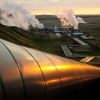
The Rapid Rise of Green Bonds
Most countries joining the growing list of nations pursuing clean geothermal power have been confronted with a huge financial challenge.
Mangrove Conservation Paves the Way to a Sustainable Future
 When the Asian tsunami washed over several Indian Ocean Rim countries on Boxing Day 2004, it left a trail of destruction in its wake, including a death toll that touched 230,000.

Nuclear States Face Barrage of Criticism in Vienna
Sarcastic laughter erupted when a civil society representative expressed his “admiration for the delegate of the United States, who with one insensitive, ill-timed, inappropriate and diplomatically inept intervention” had “managed to dispel the considerable goodwill the U.S. had garnered by its decision to participate” in Vienna Conference on Humanitarian Impact of Nuclear Weapons.
Release of Senate Torture Report Insufficient, Say Rights Groups
Tuesday’s release by the Senate Intelligence Committee of its long-awaited report on the torture by the Central Intelligence Agency (CIA) of detainees in the so-called “war on terror” does not go far enough, according to major U.S. human rights groups.
Latin America Faces the Novelty and Challenge of Ageing
The eternally young Latin America is also ageing, due to the rise in life expectancy and the drop in birth rates - a demographic revolution that poses new challenges in a region that has begun to move slowly away from its status as the most unequal part of the world.
Starvation Strikes Zimbabwe’s Urban Dwellers
As unemployment deepens across this Southern African nation and as the country battles to achieve the United Nations Millennium Development Goals (MDGs) ahead of the December 2015 deadline, thousands of urban Zimbabweans here are facing starvation.
Marginalised Communities Warn of AIDS/TB “Tragedy” in Eastern Europe and Central Asia
Marginalised communities and civil society groups helping them are warning of a “tragedy” in Eastern Europe and Central Asia (EECA) as international funding for HIV/AIDS and tuberculosis (TB) programmes in the regions is cut back.
Civil Society Support for Marshall Islands Against Nuclear Weapons
Ahead of the Dec. 8-9 Vienna Conference on the Humanitarian Impact of Nuclear Weapons, activists from all over the world came together in the Austrian capital to participate in a civil society forum organised by the International Campaign to Abolish Nuclear Weapons (ICAN) on Dec. 6 and 7.
Only Half of Global Banks Have Policy to Respect Human Rights
Just half of major global banks have in place a public policy to respect human rights, according to new research, despite this being a foundational mandate of an international convention on multinational business practice.
Divestment Campaign Aims to Bleed Dry the Fossil Fuel Industry
Even as the presence of major oil and gas corporations is nearly ubiquitous at the U.N. climate talks in the Peruvian capital known as COP20, fossil fuel divestment campaigns have gained ground in various countries and are moving to counter the influence of the "dirty energy" lobby here.
OPINION: Women Must Be Partners and Drivers of Climate Change Decision-Making
As leaders from around the world gather in Lima, Peru this week to discuss global cooperation in addressing climate change, a woman in Guatemala will struggle to feed her family from a farm plot that produces less each season.« Previous Page — Next Page »


The Week with IPS

NEXT STOP - SDGs
Tracking global progress towards a sustainable world
Tracking global progress towards a sustainable world
