Languages
Saturday, November 21, 2026



News and Views from the Global South
Global Governance

OPINION: Iraq’s Minorities Battling for Survival
Through all of Iraqi President Saddam Hussein’s campaigns of ‘Arabization’, they survived. The diverse Iraqi communities inhabiting the Nineveh plains – Yezidis, Turkmen, Assyrians and Shabak, as well as Kurds – held on to their unique identities and most of their historic lands.History of Key Document in IAEA Probe Suggests Israeli Forgery
Western diplomats have reportedly faulted Iran in recent weeks for failing to provide the International Atomic Energy Agency with information on experiments on high explosives intended to produce a nuclear weapon, according to an intelligence document the IAEA is investigating.
Family Farmers – Forward to the Future
"Who is more concerned than the rural family with regards to preservation of natural resources for future generations?"
OPINION: The Survivors
Oct. 18 is the EU’s Anti-Trafficking Day, as well as the United Kingdom’s Anti-Slavery Day. These events offer a good opportunity to talk about human trafficking within Europe’s borders, but we should not forget that there are victims and survivors all over the world.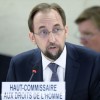
Cash-Strapped Human Rights Office at Breaking Point, Says New Chief
After six weeks in office, the new U.N. High Commissioner for Human Rights (UNHCHR) Zeid Ra'ad al-Hussein of Jordan launched a blistering attack on member states for insufficient funding, thereby forcing operations in his office to the breaking point "in a world that seems to be lurching from crisis to ever-more dangerous crisis."
Bamboo Could Be a Savior for Climate Change, Biodiversity
Bamboo Avenue is a two-and-a-half mile stretch of road in Jamaica’s St. Elizabeth parish. It is lined with giant bamboo plants which tower above the road and cross in the middle to form a shady tunnel. The avenue was established in the 17th century by the owners of the Holland Estate to provide shade for travelers and to protect the road from erosion.
Vanishing Species: Local Communities Count their Losses
The Mountain Chicken isn’t a fowl, as its name suggests, but a frog. Kimisha Thomas, hailing from the Caribbean island nation of Dominica, remembers a time when she could find these amphibians or ‘crapaud’ as locals call them “just in the backyard”.
Despite Public’s War Weariness, U.S. Defence Budget May Rise
Despite the public’s persistent war weariness, the U.S. defence budget – the world’s biggest by far – may be set to rise again, according to a new study released here this week by the Center for International Policy (CIP).OPINION: The U.S. and a Crumbling Levant
As the international media is mesmerised by the Islamic State’s advance on Kobani or ‘Ayn al-Arab on the Syrian-Turkish border, Arab states and the United States would need to look beyond Kobani’s fate and the Islamic State’s territorial successes and defeats.
Curbing Biodiversity Loss Needs Giant Leap Forward
When political leaders from climate-threatened Small Island Developing States (SIDS) addressed the U.N. General Assembly last month, there was one recurring theme: the urgent need to protect the high seas and preserve the world's marine biodiversity.
Facing Storms Without the Mangrove Wall
As the cyclonic storm Hudhud ripped through India’s eastern state of Andhra Pradesh, home to two million people, at a land speed of over 190 kilometres per hour on Sunday, it destroyed electricity and telephone infrastructure, damaged the airport, and laid waste to thousands of thatched houses, as well as rice fields, banana plantations and sugarcane crops throughout the state.
Regional Trade Agreements Cannot Substitute the Multilateral System
Regional trade agreements have grown very rapidly in recent years, and today the World Trade Organisation (WTO) has been notified that 253 are in force.
Family Farming – A Way of Life
It does not make the headlines, but 2014 is the International Year of Family Farming (IYFF) and family farming will be centre-stage at this year’s World Food Day on Oct. 16 at the Food and Agriculture Organisation of the United Nations (FAO).
Biodiversity, Climate Change Solutions Inextricably Linked
The remarkable biodiversity of the countries of the Caribbean, already under stress from human impacts like land use, pollution, invasive species, and over-harvesting of commercially valuable species, now faces an additional threat from climate change.
Corruption, Tax Evasion Fuel Inequality in Latin America
Corruption and tax evasion are flagrant violations of human rights in Latin America, where they contribute to inequality and injustice in the countries of the region, according to studies and experts consulted by IPS.
Uruguay’s Decision Could Come Too Late for Gitmo Detainees
Uruguayan President José Mujica bought time for his plan to host six prisoners of Guantánamo, handing over the decision to the winner of the incoming elections. But time is a scarce resource for the inmates of this United States military prison on Cuban soil.
Cycle of Death, Destruction and Rebuilding Continues in Gaza
When the international pledging conference to rebuild a devastated Gaza ended in Cairo over the weekend - the third such conference in less than six years - the lingering question among donors was: is this the last of it or are there more assaults to come?
OPINION: The Disturbing Expansion of the Military-Industrial Complex
How can we explain that in the 2lst century we are still training millions of men and women in our armed forces and sending them to war?
Curbing the Illegal Wildlife Trade Crucial to Preserving Biodiversity
For over five years, 33-year-old Maheshwar Basumatary, a member of the indigenous Bodo community, made a living by killing wild animals in the protected forests of the Manas National Park, a tiger reserve, elephant sanctuary and UNESCO World Heritage Site that lies on the India-Bhutan border.
Judaisation Means Housing Crisis for Palestinians in East Jerusalem
A deliberate Israeli policy to Judaise East Jerusalem has forced thousands of Palestinians out of their homes and created a chronic housing shortage in the occupied part of the city.
In Pakistan’s Tribal Areas, a Nobel Prize Is a ‘Ray of Hope’
For girls living in northern Pakistan’s sprawling tribal regions, the struggle for education began long before that fateful day when members of the Taliban shot a 15-year-old schoolgirl in the head, and will undoubtedly continue for many years to come.« Previous Page — Next Page »


The Week with IPS

NEXT STOP - SDGs
Tracking global progress towards a sustainable world
Tracking global progress towards a sustainable world
