Languages
Thursday, November 12, 2026



News and Views from the Global South
Headlines

Pandemic Pushes SDGs Further out of Reach of Asia and the Pacific
2022 marks the second anniversary of the COVID-19 pandemic, and while an end to the pandemic is in sight, it is far from over and the consequences will be felt for decades to come. At the same time, the 2030 Agenda for Sustainable Development is becoming increasingly distant. The region must use the 17 Sustainable Development Goals as a roadmap to a fairer recovery.
Ethanol Not Enough to Heal Sugarcane’s Environmental Legacy in Colombia
As a visitor drives across the plains of the department of Valle del Cauca in southwestern Colombia, green carpets dominate the view: sugarcane fields that have been here since the area got its name.
Education Cannot Wait Secures Future of Children in CAR Conflict Zones
Nine-year-old Marguerite Doumkel sits among other children in a classroom in Paoua, a sub-prefecture of Ouham Pende, in the Central African Republic (CAR).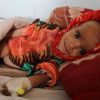
Why We Must Remember Afghanistan
While all eyes are on Ukraine, Afghanistan’s humanitarian crisis has been forgotten. But only with international aid can Afghans build a future.
Uganda Recognizes Pregnant Teens’ Right to Education, but Religion, Stigma Lock Out Most
When schools reopened in Uganda in January, Atim’s baby was 3 months old. The 17-year-old wished to go back to classes but she faced a dilemma—whether to disclose to her teachers that she was a lactating mother.
Youths Trailblazing Paths in Sexual and Reproductive Health Ahead of ICFP Family Planning Conference
Travelling in northern Nigeria, Peace Umanah noticed teenage girls with multiple children – they would be walking with one strapped to their back, holding another by hand and with a protruding belly.
Commission on the Status of Women: The Streets Have Already Spoken
The 66th session of the Commission on the Status of Women (CSW) was just launched. Due to the ongoing impacts of the COVID-19 pandemic, the main annual global forum on gender equality is once again taking place in a hybrid format – both at the UN’s New York headquarters, where government delegations will be meeting, and online, where most civil society activity will take place.
What This Year’s “No 1 Central Policy Document” Tells Us about Beijing’s Food Security and Rural Revitalisation Ambitions
The recently published “No 1 central policy document” (“No 1 document”), China’s national blueprint for rural policy, further demonstrates Beijing’s commitment to safeguarding food security and advancing rural revitalisation. The document’s release comes against an increasingly complicated geopolitical environment which, along with factors, such as disruptions to the global food chain supplies and worsening climate change impacts, have forced Beijing to rethink how its national goals can be achieved.
Bangladeshi Lawyer Rizwana Hasan Awarded International Women of Courage Award
 In an exclusive interview to IPS UN Bureau, journalist Sania Farooqui is in conversation with Bangladeshi lawyer, Rizwana Hasan who was recently awarded the 16th Annual International Women of Courage Awards by the U.S Department of State. Hasan works primarily to protect the environment and defend the dignity and rights of marginalized Bangladeshis. Through landmark legal cases over the past 20 years, Hasan has changed the dynamics of development in Bangladesh to include a people-centered focus on environmental justice.

Over 60% of World Workers Not Recognised, Not Registered, Not Protected
More than 60 percent of the world’s adult labour force –or about 2 billion workers– work in the informal economy. “They are not recognised, registered, regulated or protected under labour legislation and social protection. The consequences can be severe, for individuals, families as well as economies.”
Lessons from Liberia for Scaling Poverty Reduction Globally
For the past three years, BRAC International has been piloting in Liberia an adaptation of its acclaimed Graduation approach, whose impact on reducing extreme poverty was first proven in Bangladesh. The success of the Liberia pilot, which I managed, provides not only further proof of impact but vital lessons that can enhance and accelerate scaling of the approach globally.
War on Ukraine also an Assault on World’s Most Vulnerable People & Countries
Ukraine is on fire. The country is being decimated before the eyes of the world. The impact on civilians is reaching terrifying proportions. Countless innocent people – including women and children – have been killed. After being hit by Russian forces, roads, airports and schools lie in ruins.
Refugees Recount Harrowing Escape from Besieged Ukraine
“I never, ever, believed that anything like this could happen,” says Valia*. “Not for a second.” Just two weeks ago, the English teacher says, she had been living a normal life in Kropyvnytskyi in central Ukraine with her 13-year-old son. But on February 24, she woke up to the news that Russia had invaded her country.
Ukraine Incursion, World Stagflation
Finger pointing in the blame game over Russia’s Ukraine incursion obscures the damage it is doing on many fronts. Meanwhile, billions struggle to cope with worsening living standards, exacerbated by the pandemic and more. Losing sight in the fog of war US Secretary of State Anthony Blinken insists, “the Russian people will suffer the consequences of their leaders’ choices”. Western leaders and media seem to believe their unprecedented “crushing sanctions” will have a “chilling effect” on Russia.
‘A Growing Number of Billionaires Is a Sign of Failure’
It is no secret that economic inequality has risen exponentially in the last few decades, both in India and globally. According to the World Inequality Report 2022, India is one of the most unequal countries in the world in terms of both income and wealth inequality. It is estimated that in 2021, the top 10 percent of Indians held 57 percent of the total national income while the bottom 50 percent’s share was just 13 percent.
How COVID Has Affected the Control of Neglected Tropical Diseases
Neglected tropical diseases is an umbrella term used to describe a group of 20 infectious diseases. These diseases affect over 1.7 billion people. They can disable, debilitate and even kill. The world’s most vulnerable and poorest are most affected.
This is How Hope Trumped the Fog of War in Nairobi
As Russia’s attack began rattling Kyiv with multiple missile and air raids about 5am on 24 February, it suffused the dawn with stains of darkness. It was accompanied with military menaces in countries like Finland and Sweden and raising a warning to anyone who may assist the Ukrainian people – ordinary citizens bereaved, over 2.5 million displaced and boldly defending themselves – from nuclear war.
The Future of Food: Jellyfish, Farmed Insects, 3D Printed Meat?
Between the devastating effects of climate change and the fast advancing new technologies, it seems now evident that the future of food will change. Whether it's new foods like jellyfish, edible insects and cell-based meat, or new technologies like blockchain, artificial intelligence and nanotechnology, the future promises exciting opportunities for feeding the world, says a new report.
UN Re-Surfaces After Long Pandemic Lay-off
After several on-again and off-again pandemic lockdowns, the United Nations is planning to return to normal beginning this week. A circular from Secretary-General Antonio Guterres on March 11 says “based on the new guidelines, we are now able to institute associated changes in our workplace, returning to full operational capability while still prioritizing the health and safety of personnel, and balancing the operational needs of the Organization”.
Africa Needs to Move Quickly on COVID Vaccines to Build Long-term Resilience
Countries on the African continent have a pattern of a six-month break before a new COVID-19 spike happens, researchers at the Tony Blair Institute for Global Change have said in a newly released report.
Exploring the Future of Climate Justice Through My Daughter’s Eyes
People often feel that climate change is difficult to grasp and relate to. I have heard that it’s “too technical, too intangible, or too complicated” for us to care about. As a Latin American mother of two, I confess that for me, relating to climate change is becoming ever more simple. All I do is try to imagine the world my kids will live in in 2050 if we don’t do anything now, and I immediately understand the urgent need for bold, transformative global climate action.« Previous Page — Next Page »





