Languages
Friday, November 27, 2026



News and Views from the Global South
Headlines

OPINION: The Sad Future of Our Planet
It is now official: the current inter-governmental system is not able to act in the interest of humankind.
CORRECTION/Filipino Children Make Gains on Paper, But Reality Lags Behind
Mae Baez sees some of the darkest sides of communications technology.
Lima Agrees Deal – but Leaves Major Issues for Paris
After a 25-hour extension, delegates from 195 countries reached agreement on a “bare minimum” of measures to combat climate change, and postponed big decisions on a new treaty until the 21st Conference of the Parties (COP 21), to be held in a year’s time in Paris.
Dirty Energy Reliance Undercuts U.S., Canada Rhetoric at Climate Talks
While U.S. and Canadian officials delivered speeches about how the world needs to step up to their responsibilities at the U.N. climate negotiations in Lima, Peru, activists from North America demanded clear answers back home on their governments’ relationships with fossil fuel corporations, as well as the future of several major oil projects across the continent.
OPINION: How Shifting to the Cloud Can Unlock Innovation for Food and Farming
The digital revolution that is continuing to develop at lightening speed is an exciting new ally in our fight for global food security in the face of climate change.
OPINION: Europe Has Lost Its Compass
The Swedish Social Democrat government, which took office only two months ago, has just resigned. The far-right anti-immigrant Sweden Democrats sided with the four-party centre-right opposition alliance, and new elections will be held in March next year.
Renewable Energy: The Untold Story of an African Revolution
Africa is experiencing a revolution towards cleaner energy through renewable energy but the story has hardly been told to the world, says Achim Steiner, Executive Director of the United Nations Environment Programme (UNEP).
AIDS Response Is Leaving African Men Behind
Mention gender inequality in AIDS and the fact that more women than men live with HIV pops up. But another, rarely spoken about gendered difference is proving lethal to men with HIV.
Glaciers and Fruit Dying in Peru with no Response from COP20
Snow-capped mountains may become a thing of the past in Peru, which has 70 percent of the world’s tropical glaciers. And farmers in these ecosystems are having a hard time adapting to the higher temperatures, while the governments of 195 countries are wrapping up the climate change talks in Lima without addressing this situation facing the host country.
What Future for the ACP-EU Partnership Post-2015?
“There are still prospects for a meaningful ACP-EU partnership, capable of contributing and responding concretely and effectively to the objectives of promoting and attaining peace, security, poverty eradication and sustainable development,” according to the top official of the African, Caribbean and Pacific Group of States (ACP).
OPINION: Climate Change and Inequalities: How Will They Impact Women?
Among all the impacts of climate change, from rising sea levels to landslides and flooding, there is one that does not get the attention it deserves: an exacerbation of inequalities, particularly for women.
Climate Change Creates New Geography of Food
The magnitude of the climate changes brought about by global warming and the alterations in rainfall patterns are modifying the geography of food production in the tropics, warned participants at the climate summit in the Peruvian capital.
Want Economic Growth? Lessen Inequality
For years, many policy makers, including economists, have clung to the belief that if states do nothing to boost income equality, market forces will cause wealth to trickle down to the poorest citizens and contribute to overall growth.
Afghan Concern Over Western Disengagement
The U.S./NATO International Security Assistance Force Joint Command lowered its flag for the last time in Afghanistan on Dec. 8, after 13 years. The ISAF mission officially ends on Dec. 31, and will be replaced on Jan. 1, 2015 by “Resolute Support”, a new, narrow-mandate mission to train, advise and assist the Afghan National Security Forces.
Georgia Confronts Domestic Violence
The issue of domestic violence is moving to the forefront of public attention in Georgia after a series of killings of women at the hands of their respective spouses or ex-spouses made headlines in local mass media.
U.S. Faulted for Undermining Torture Convention
The timing was inadvertently impeccable as two stinging reports on harsh interrogation techniques - by the Central Intelligence Agency (CIA) in the United States and former military regimes in Brazil - were released on the eve of the 30th anniversary of the U.N. Convention Against Torture.
Pushing for Gender Equity at COP20
Despite international acknowledgement that women are disproportionately affected by climate change, the Lima climate negotiations have been slow to deliver progress on recognising their importance, while threats of pushback loom on the horizon.
Faiths United Against Nuclear Weapons
“Never was there a greater need than now for all the religions to combine, to pull their wisdom and to give the benefit of that combined, huge repository of wisdom to international law and to the world.”
Africa Sets Demands for Post-2015 Climate Agreement
The post-2015 global climate change agreement should be flexible and fully resourced or else condemn Africa to another cycle of poverty resulting from the adverse effects of climate change.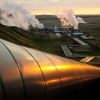
The Rapid Rise of Green Bonds
Most countries joining the growing list of nations pursuing clean geothermal power have been confronted with a huge financial challenge.
Mangrove Conservation Paves the Way to a Sustainable Future
 When the Asian tsunami washed over several Indian Ocean Rim countries on Boxing Day 2004, it left a trail of destruction in its wake, including a death toll that touched 230,000.
« Previous Page — Next Page »


