Languages
Sunday, November 29, 2026



News and Views from the Global South
Headlines

U.S. Increasing Solitary Confinement, Impact Uncertain
The U.S. federal prison system’s use of solitary confinement and other forms of “segregated housing” has increased substantially over the past five years, according to new data released by the U.S. Congress’s official independent watchdog.
Q&A: “The State Does Not Lose Sovereignty If It Respects Indigenous Rights”
"There is a belief that consent is about saying yes or no, about who wins," observed James Anaya, the United Nations special rapporteur on indigenous rights. But consultation with indigenous peoples is a matter of “creating open processes where they can voice their opinions and influence decisions, and where there is the necessary will to seek consensus.”
Q&A: Weather Forecasts to Prevent Strokes and Asthma Attacks in Cuba
A biometeorological forecast model developed in Cuba to sound the alert on weather conditions that exacerbate chronic diseases like asthma, hypertension and vascular disorders could also help predict the impacts of climate change on health.
Q&A: Iran’s Medical Shortages: Who’s Responsible?
For two years, reports have surfaced describing medical supply shortages in Iran, some with devastating consequences, as debate continues to rage about who's responsible - the Iranian government or the sanctions regime.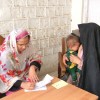
Good Health Lies Just Across the Border
Muzaffar Shah, a shopkeeper from Kabul, sits in a hospital waiting room, desperate for news. He has travelled nearly 300 km to get to the Khyber Teaching Hospital in Peshawar, capital of northern Pakistan’s Khyber Pakhtunkhwa (KP) province, where his wife is now in intensive care.U.N. Can Help Devalue Nukes as Geopolitical Currency
When the 193-member U.N. General Assembly (UNGA) holds is first-ever high-level meeting on nuclear disarmament next September, there is little or no hope that any of the nuclear powers will make a firm commitment to gradually phase out or abandon their lethal arsenals.
Southern Africa Must Unite to Boost Tourism
Competing players in the tourism industry in southern Africa are putting aside their rivalry in pursuit of a common goal – a big boost in tourist numbers to the region.
U.S., China Seek Common Ground on North Korea
U.S. President Barack Obama is set to host his Chinese counterpart Xi Jinping on Jun. 7-8 for their first bilateral meeting as heads of state. Figuring on their agenda is how to address a precarious North Korea, which is armed with a small nuclear arsenal and vying for a bigger one.Poverty No Longer Explains School Dropout in Argentina
Poverty no longer explains the high secondary school dropout rate in Argentina, one of the richest countries in Latin America.
Healing South Sudan’s Wounds
Susana Apai Wani has lived as a widow for more than two decades since her husband, James Wani, was arrested in 1992 by a policeman who accused him of collaborating with the Sudan People’s Liberation Movement, which was a rebel political movement at the time.
The Himalayas Are Changing – for the Worse
Residents of Jhirpu Phulpingkatt, a village nestled in the foothills of the Himalayas, about 110 km from Nepal’s capital Kathmandu, are on red alert.
“I’ve Finally Got My Torah Back”
Growing up as a child, Trisha Arlin had never seen a woman rabbi. Back then, women were not allowed to read the Torah, nor were they allowed to serve in synagogues.
The Battle to Save DRC’s Mothers
"Many hospitals and health centres" that are not run by NGOs "do not meet health standards," according to Dominique Baabo, provincial medical inspector for North Kivu province in eastern Democratic Republic of Congo.
Local Communities Invest Money – and Hope – in Ecotourism
Forty-five-year-old Serah Kei began building her artificial island and eco-lodge resort 26 years ago in Langa Langa Lagoon, located on the Solomon Island’s Malaita Province, about four hours by boat from the nation’s capital, Honiara. Kei, a single mother, paid for the construction by undertaking the laborious task of making and selling ‘shell money’ and finally opened Serah’s Lagoon Hideaway, which accommodates up to twelve visitors, in 2006.
Healthcare for Native People in Brazil Is Ailing
Healthcare for Brazil’s indigenous minority is in poor health, according to U.N. experts, missionaries, social workers and native people themselves.
Syrian Rebel Setbacks Spur Renewed Talk of No-Fly Zones
A series of reversals for Syria’s rebels this month has prompted its supporters here to call for much greater U.S. military intervention in the civil war in order to give them a stronger bargaining position in advance of any peace negotiations.
Walmart, Gap Seek Separate Safety Standards for Bangladesh Factories
Top U.S. companies are now in negotiations to agree on new safety standards for their clothing-producing contractors in Bangladesh, a month after a garment factory’s collapse in Dhaka killed more than 1,100 workers.
India’s Maoists Are Far From Spent
They chopped down trees and used them to barricade the road, then retreated into the dense forests of the remote Sukma district, located in the central Indian state of Chhattisgarh, to await their quarry.
Obama Urged to Sign Arms Trade Treaty Immediately
Advocacy groups here are stepping up a campaign to pressure President Barack Obama to quickly sign on to a new United Nations treaty aimed at regulating, for the first time, the international small-arms trade.
Reactions to Gay Marriage Contradict French, Portuguese Stereotypes
The heated reaction to the legalisation of same-sex marriage has run counter to the widespread image of France as the cradle of the modern republic and equal rights since the 1789 revolution. In contrast, Portugal with its reputation for prudishness, has shown itself to be much more open and tolerant.Kazakhstan’s Green Zone on Slippery Slope
A group of flashmobbers took to the slopes in southeastern Kazakhstan on a crisp March morning this year to spell out a heartfelt SOS with their bodies.« Previous Page — Next Page »


