Languages
Thursday, November 19, 2026



News and Views from the Global South
Asia-Pacific

Myanmar Ethnic Strife Spills Over to Malaysia
Two Myanmar Buddhist politicians who were visiting Malaysia narrowly escaped a late night assassination attempt outside a leading shopping mall in Kuala Lumpur this month. The incident has raised fears of an overseas spillover of the religious violence that has engulfed their state of Rakhine in recent years.
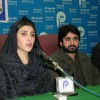
Students Take On the Army
Disturbed by civilian casualties and moved by the plight of people living like refugees in their own country, students from Pakistan’s Federally Administered Tribal Areas (FATA) are demanding an end to army operations against militants on their native soil.
USAID Unveils Five-Year Plan in Afghanistan
Even as most international military forces are slated to leave Afghanistan by the end of 2014, USAID, the foreign aid arm of the U.S. government, is emphasising its sustained commitment to developing Afghanistan’s economy after the withdrawal.
After War Comes Peace, Not Prosperity
Sri Lanka’s war-battered Northern Province had reason to celebrate when the results of a countrywide exam were announced last December. Of the 16,604 students from the province who sat for the exam, 63.8 percent secured the required marks for entry into prestigious national universities.
An Iran in Flux Marks 35th Anniversary of Revolution
Thirty-five years ago today, millions of Iranians embraced a religious leader promising freedom from a corrupt monarchy and national independence. Now many want a better standard of living and improved civil rights.
India’s Gay Voices Crackle to Life
It is Wednesday afternoon in Bangalore, known as India’s tech city for being the hub of information technology companies. In her small four by four-foot studio, Vaishalli Chandra, channel manager of QRadio which is dedicated to the Gay, Lesbian, Bisexual and Transgender (LGBT) community, is in conversation with Ankit Bhuptani, a 21-year-old gay youth from Mumbai.Philippines Makes Tentative Truce With Islamists
After two years of intensive negotiations, the Philippine government and the country’s largest rebel group, the Moro Islamic Liberation Front (MILF), have signed a final peace agreement, which paves the way for a lasting resolution of one of the world’s longest-running intra-state conflicts.
Doctors Resist Deadly Vaccine
A spate of sudden infant deaths following vaccination in India has prompted leading paediatricians to call for stronger regulatory mechanisms to evaluate new vaccines for safety and efficacy before their acceptance into the national immunisation programme.
Energies Clash in Tokyo Election
Tokyo, one of the largest and most energy-guzzling cities in the world, is set to hold elections for a new governor Feb. 9. Analysts say it could prove crucial in stopping the Japanese government from restarting some nuclear reactors this year.
Suicide Brings Azerbaijan’s LGBT Community Out of the Closet
The suicide of a gay rights activist in Azerbaijan is prompting the country’s LGBT community to become more assertive in fighting for civil rights.
Poverty Wages Unraveling Cambodia’s Garment Industry
Cambodia’s garment industry is regularly plagued with strikes and protests. But when armed security forces opened fire on striking workers in the capital city of Phnom Penh on Jan. 3, killing five and injuring dozens, it suddenly became clear that this was not just another protest.
Misread Telexes Led Analysts to See Iran Nuclear Arms Programme
When Western intelligence agencies began in the early 1990s to intercept telexes from an Iranian university to foreign high technology firms, intelligence analysts believed they saw the first signs of military involvement in Iran’s nuclear programme. That suspicion led to U.S. intelligence assessments over the next decade that Iran was secretly pursuing nuclear weapons.
Pakistan Caught Between Talking and Fighting
Whether to make war or peace with the Taliban has become a dilemma for the Pakistani government.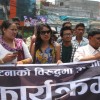
Dalit Women Face Multiplied Discrimination
Maya Sarki, a resident of Belbari in eastern Nepal, was returning home one summer evening last year when she was attacked. She was forced down on the ground and her attacker attempted to rape her.
HIV On a Dangerous Threshold in Sri Lanka
Four thousand HIV infections in a population of 20 million should not be a difficult figure to manage. But experts in Sri Lanka say social customs and strict laws are hindering them from carrying out prevention and awareness campaigns among high-risk groups.
Protesters Resist an ‘Indian Fukushima’
Activists opposed to India’s plans to massively increase civilian nuclear power production are aghast that a plan for an Indo-Japanese nuclear cooperation deal is gaining pace even while Japan is struggling to cope with the fallout of the March 2011 Fukushima nuclear disaster.Asia: The Ghosts of 1914
On the 100th anniversary of the outbreak of World War I, Europe is at peace. There are no major border disputes. The countries form a unified economic bloc instead of a patchwork of jostling alliances.
Rouhani Reaches Out at Davos
Last week at the World Economic Forum in Davos, Switzerland, President Hassan Rouhani tried to persuade world business leaders to invest in Iran, especially in its hydrocarbon and automobile sectors.
Nowhere to Come In From the Cold
As the temperature dips to zero degrees Celsius, a chill has set into the lives of people like 44-year-old Rasool Khan at the Jalozai camp for internally displaced persons (IDPs) in Pakistan. Huddled in tiny tents, with just a plastic sheet over their heads and no heat, they pass sleepless nights in the bitter cold.
A Manufactured Nuclear Crisis
The subtitle of Gareth Porter’s new book, "The Untold Story of the Iran Nuclear Scare," is well-chosen. Large parts of "A Manufactured Crisis" are indeed untold till now. They amount to what the author terms an “alternative narrative”.Tajik Intellectuals Finding Little Room for Reasoned Discourse
Last July, authorities in Tajikistan confiscated the only manuscript of a little-known novelist’s latest book. In what can only be described as an Orwellian sequence, after the manuscript was seized at a Dushanbe printing house, the author was hauled in for interrogation and asked questions like, “who ordered you to write this book?”« Previous Page — Next Page »


The Week with IPS

NEXT STOP - SDGs
Tracking global progress towards a sustainable world
Tracking global progress towards a sustainable world
